
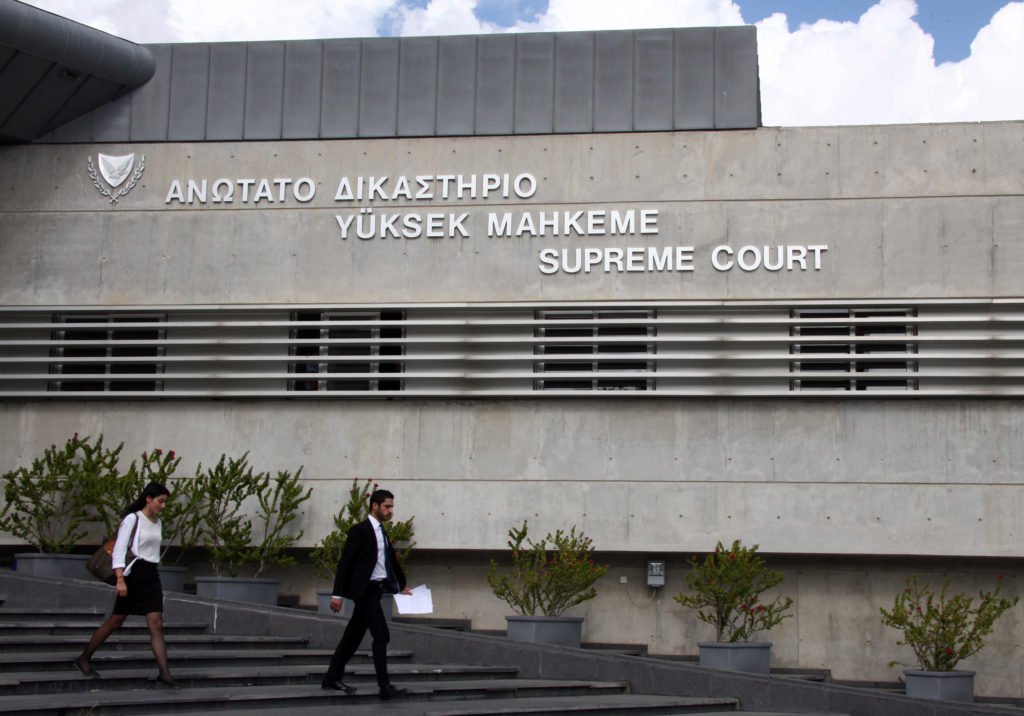
The Supreme Court on Thursday reserved its decision on an application by lawyer Nikos Clerides seeking to annul a search warrant executed at his home, office and vehicle as part of the ‘Sandy’ investigation, while Clerides raised a questions about the police findings that concluded allegations levied in the case were fabricated.
The application to the Supreme Court challenges the legality of the search warrant obtained by police during their investigation into claims publicised by journalist Makarios Drousiotis concerning alleged corruption, abuse, blackmail and interference involving prominent figures in Cyprus.
Clerides’ counsel, Alexandros Clerides, argued that the case was not about what investigators did after the warrant was executed but whether the warrant itself had been lawfully issued and enforced.
The court said investigators had been instructed from the outset not to access private communications that may have been contained on seized devices and that no processing of the content had taken place.
Alexandros Clerides disputed the relevance of that argument, maintaining that the constitutional issue centred on the warrant itself and the police entry onto the premises.
Following the hearing, Alexandros Clerides said the court must examine the application on its merits despite the absence of an objection from the attorney-general.
The legal challenge comes a day after police-chief Themistos Arnaoutis presented the findings into allegations made public through reports connected to the woman known as ‘Sandy’.
Police concluded that no evidence supported the serious criminal allegations levelled against individuals named in the affair and stated that witness testimony, forensic examinations and documentary evidence contradicted the claims.
In response to the police findings, Nikos Clerides questioned key aspects of the investigation and argued that independent criminal investigators should have been appointed.
He claimed the messages he received from ‘Sandy’ dated from 2020 and 2021, whereas the mobile phone examined by investigators related to the period 2025 and 2026.
Clerides questioned why search warrants had not been obtained for devices allegedly used by ‘Sandy’ and the former Supreme Court judge named in the case during the earlier period.
He also challenged the significance of police findings concerning a message-generation application allegedly downloaded in October 2025.
“The only way to examine such a thorny issue was to appoint independent criminal investigators,” Clerides insisted.
He further questioned why police had not publicly identified an individual referred to as “user 6” in communications that allegedly contained threats against his life.
Clerides also argued that investigators had failed to establish a motive explaining why ‘Sandy’ would fabricate and circulate the material.
Police have said they have not yet reached conclusions regarding motive and that this aspect remains under examination.
The ‘Sandy’ affair emerged after Drousiotis published allegations involving an alleged nefarious cabal of political, judicial and financial figures operating under a ‘Rosicrucian brotherhood’.
Central to the claims were purported text messages, photographs, documents and audio recordings said to support accusations of corruption and abuse.
All individuals named in the allegations have denied wrongdoing.





Click here to change your cookie preferences