
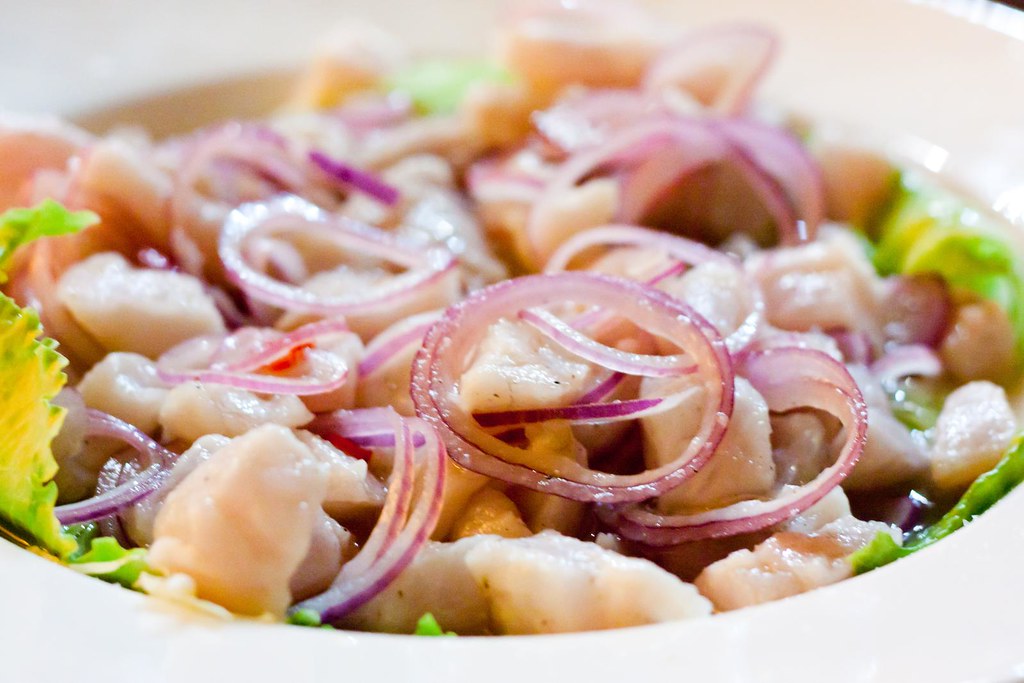
Peru’s Ceviche
Ceviche is widely regarded as Peru’s national dish, a vibrant expression of coastal life, history and cultural exchange that has evolved over centuries. Its origins are often traced to the ancient coastal civilisations of Peru, particularly the Moche, who are believed to have prepared fish marinated in fermented fruit juices or local tumbo before the arrival of citrus fruits.
With the Spanish colonisation in the sixteenth century, limes and onions were introduced, reshaping the dish into the form more recognisable today. Over time, ceviche became deeply embedded in Peruvian identity, reflecting the country’s reliance on the Pacific Ocean and its abundance of fresh seafood.
Traditionally, ceviche consists of raw fish cured in freshly squeezed lime juice, combined with sliced red onion, chilli peppers and coriander, and served with accompaniments such as sweet potato, corn and cancha. The acidity of the citrus effectively “cooks” the fish, creating a delicate balance of textures and flavours.
In Peru, it is commonly prepared and eaten at midday, particularly along the coast, where it is associated with freshness and the height of the sun’s warmth. It is rarely consumed in the evening, a custom rooted in both tradition and concerns over freshness before modern refrigeration.
Regional variations across Peru are significant. In Lima, ceviche tends to be sharp, clean and minimalist, highlighting the quality of the fish. In the northern regions, the dish often incorporates tropical influences, sometimes using lime-based marinades with a slightly sweeter profile.
In the south, preparations may be more robust, occasionally incorporating additional spices or local seafood varieties. The leche de tigre, or tiger’s milk – the citrus marinade left after curing – is also consumed as a drink or appetiser.
Ceviche is celebrated annually on National Ceviche Day in Peru. The dish has also gained international recognition, appearing on restaurant menus across Europe and beyond, where chefs adapt it using local fish while attempting to preserve its essential character.
Seasonally, ceviche is most popular in warmer months, when its refreshing qualities are most appreciated. Its bright acidity and lightness make it particularly suited to summer dining. In Cyprus, although not traditional, ceviche finds natural resonance with the island’s own Mediterranean seafood culture, where fresh fish, lemon and olive oil are central to local cuisine. The parallels between Peruvian coastal cooking and Cypriot seaside traditions highlight a shared appreciation for simplicity and freshness.





Click here to change your cookie preferences