
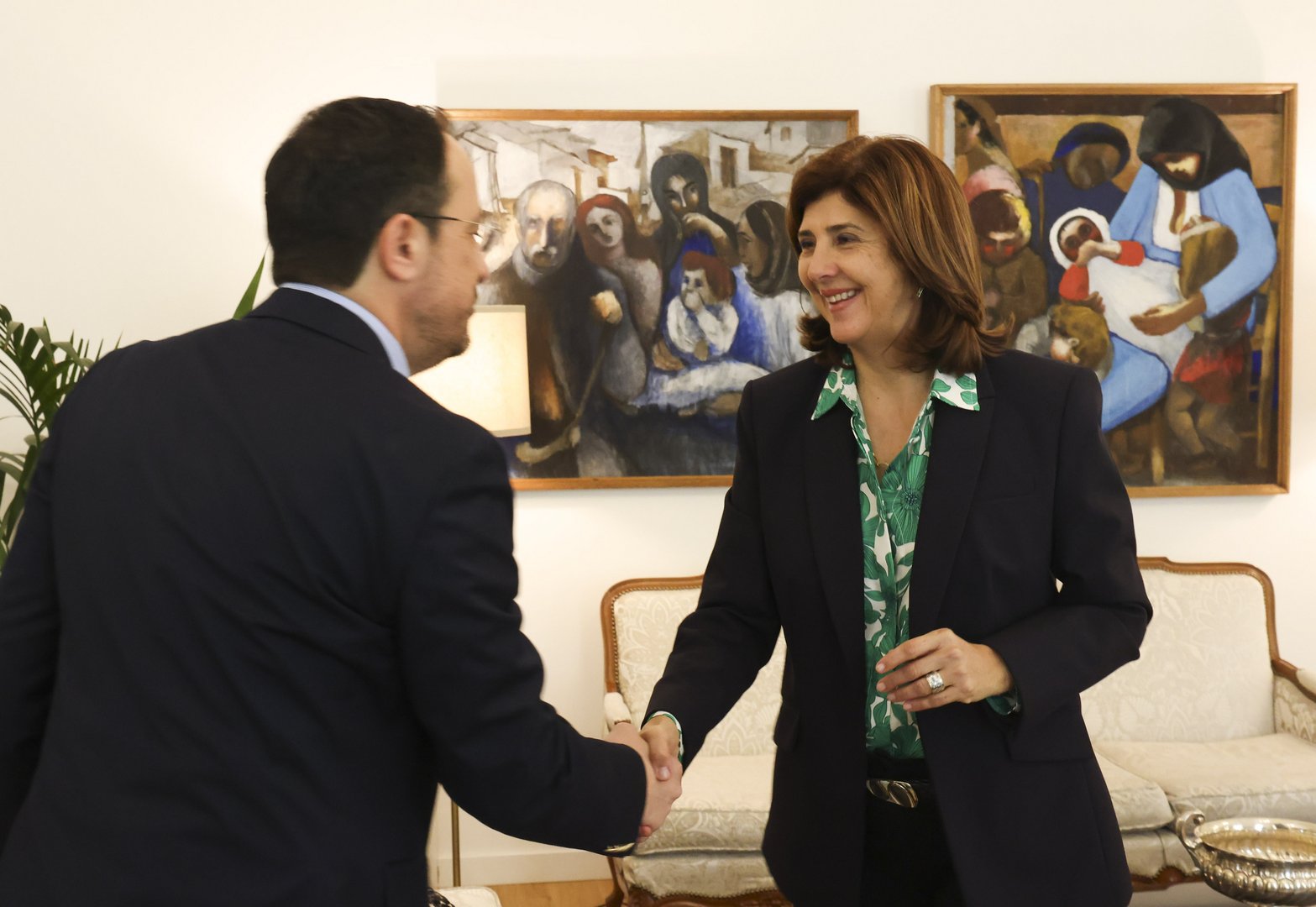
The UN secretary-general’s personal envoy Maria Angela Holguin is back in Cyprus after a four-month absence and is scheduled to have separate meetings with the two leaders on Monday. She will stay here for a week, and her schedule also involves trips to Athens and Ankara. Apart from the odd article, there has been very little speculation about the point of the visit or the agenda of the meetings.
This is indicative of the total lack of interest in the national issue that barely received a mention during the parliamentary election campaign. Diko, which has always marketed its patriotic stance on the Cyprus problem, made a half-hearted attempt to introduce it into the campaign, but nobody wanted to play.
There is just no interest in ‘the problem’ among the Greek Cypriots, especially the younger generation who were not born when the Turkish troops invaded and have always lived in a divided country. It is no coincidence that the dwindling group of the population that might still talk about it is made up of people over 60 who experienced the invasion and lost their homes and livelihoods.
For the younger sections of the population the existing apathy has grown ever since the collapse of the Crans-Montana talks nine years ago, the problem coming off the political agenda in that period. There was a reaction to Turkey’s opening of the fenced area of Varosha and its threats to develop it during this time, but the matter was soon forgotten. It helped that Turkey did not carry out the threat, instead turning the ghost town into a tourist attraction.
President Nikos Christodoulides seems content with the situation despite paying lip service to the need for a resumption of the talks. This was never going to happen for as long as the inflexible Ersin Tatar was the Turkish Cypriot leader banging on about two states, with Ankara’s full support. Christodoulides was thus able to step up the rhetoric about his commitment to a settlement, claiming the status quo was unsustainable, secure in the knowledge that Tatar would not budge from positions.
This policy of fine words and no practical initiatives has continued after the election of the more flexible Tufan Erhurman who supports a bicommunal, bizonal federation, despite Turkey’s insistence on two states. There have been meetings between the two leaders, which led nowhere, not even agreement on the opening of a single crossing point, which was a proposal of the UN secretary-general.
In the meantime, Christodoulides has been pursuing policies that would suggest he has no interest in a federal settlement, the clear implication being that he would be content for things to stay as they are, but without the partition being formalised. His actions indicate that he wants to make the status quo sustainable. This is the reason for his much-touted strategic agreements with the United States and France among others and his claims that he has strengthened the Republic’s defence capability, whatever that could mean.
He has even brought attention to the EU’s mutual defence clause, Article 42(7), in his ongoing effort to foster a sense of security among the Greek Cypriot population, although it would be rather optimistic to think that we could ever rely on its activation. Frigates from EU member-states arrived in Cyprus seas after the drone attack on Akrotiri as a gesture of solidarity, because there was no danger of conflagration.
All this has cultivated a feeling that the status is becoming sustainable in spite of the president’s assertions to the contrary, and the Republic does not need a settlement for its citizens to feel secure. There is no public pressure at all on the president to seek some agreement – even partition – that would guarantee our security once Unficyp withdraws. Greek Cypriots and their president are content with the status quo, as is Turkey, which will make Holguin’s job of eventually bringing the sides back to the negotiating table extremely difficult, if not impossible.




Click here to change your cookie preferences