
Diplomats representing member states of Europe’s border-free Schengen zone remain unconvinced by Cyprus’ efforts to ready itself to join the zone, with six representatives of missions from across the continent expressing their reservations to the Cyprus Mail about the prospect of the island becoming the zone’s 30th member.
“There is no serious way that Cyprus can join the Schengen zone. It could happen, but if it does, it will not be serious,” one diplomat said, speaking on the condition of anonymity.
All those speaking, on condition of anonymity, to the Cyprus Mail explained that the state of the island’s progress towards joining the Schengen zone has developed into a game of personalities more than one of technical evaluations.
They explained that since European Commission President Ursula von der Leyen took office in 2019, and particularly since her second commission was formed in 2024, the commission has been run in a much more “top-down fashion” than ever before.
“In previous colleges of commissioners, for example under Jean-Claude Juncker or Jose Manuel Barroso, the individual commissioners and vice presidents would form policies in their areas of expertise and bring them to the president. Now, von der Leyen tells each commissioner, ‘this is what I want you to do’, and it does not matter if they disagree, she expects them to follow her lead,” one diplomat said.
This philosophy is also applied to Cyprus’ progress towards joining the Schengen zone, as another diplomat explained.
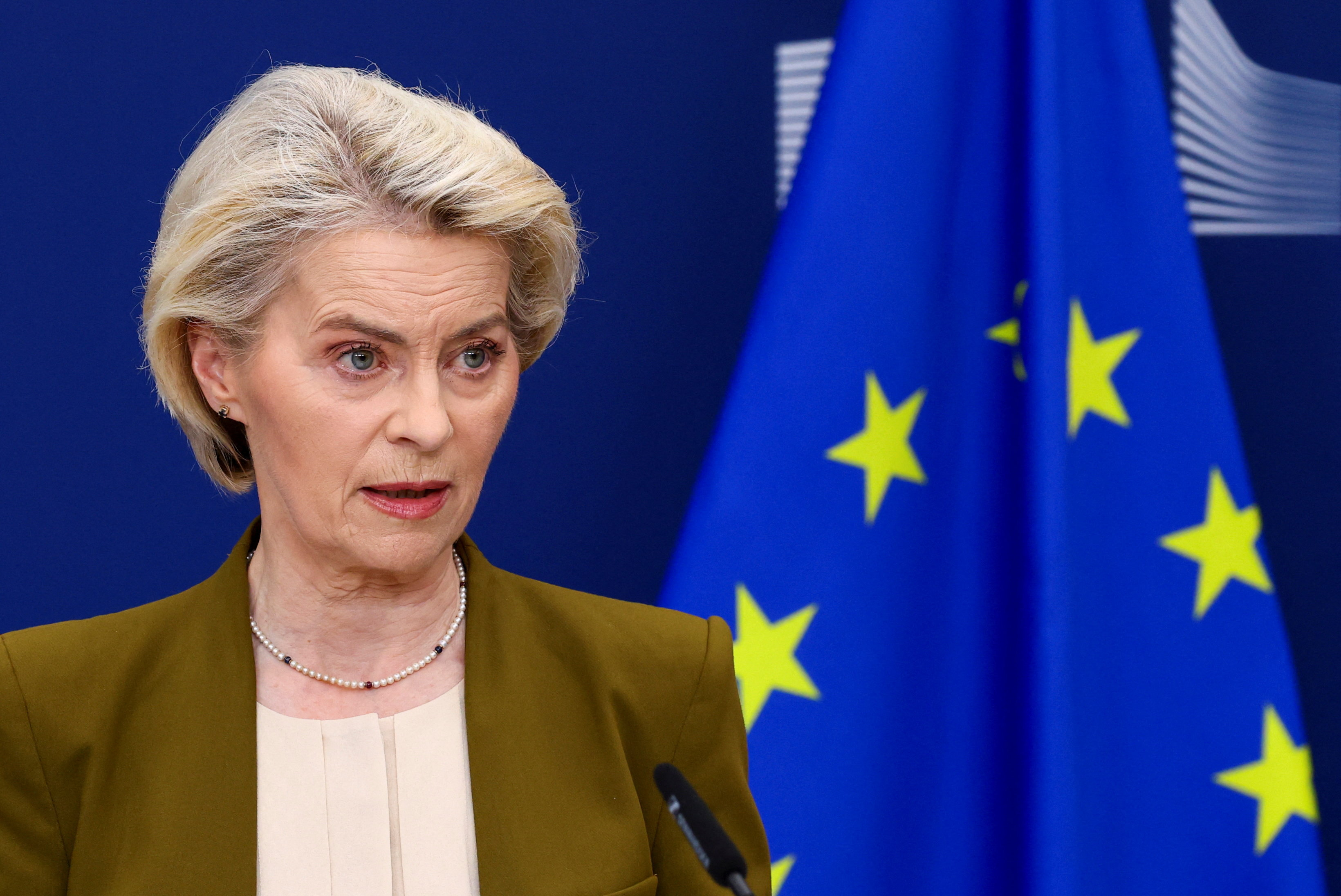
“For years and years, the view across Europe was that Cyprus can never join the Schengen zone without the Cyprus problem being solved. Now, however, von der Leyen has told each member state that Cyprus must join the Schengen zone, and that they must acquiesce to it,” the diplomat said.
At home, the Cypriot government has enlisted the services of an Austrian consultancy firm which employs former Austrian deputy head of mission in Nicosia Martin Kramer to privately evaluate its progress towards meeting the technical requirements to join the Schengen zone.
The choice of an Austrian firm was intentional, too, with Austria having been the major stumbling block for years when Bulgaria and Romania were attempting to join. Nicosia’s view is said to be that if they can get the Austrians onside, others will follow, with members of the Cypriot government having made that explicit to the firm.
One high-profile member of the Cypriot government is said to have told the Austrians that “if we do not get into the Schengen zone, it will be because of you”.
Cyprus’ attempts to meet those requirements have also raised eyebrows among diplomats in Nicosia, with many resolving that the Cypriot government is more likely to offer reassurances that things will be fixed in time rather than fix the gaps themselves.
The frequent offering of reassurances was compared by one diplomat to “a man coming and telling you, ‘I am just taking your wife out for tea’”.
“Before he said anything, you would have assumed everything was fine and normal, but now, you have questions,” he said.
The most pressing issue facing Cyprus’ ambitions of joining the Schengen zone is the existence of the Green Line, with Nicosia’s current stance on how it will operate should Cyprus join the Schengen zone leaving diplomats foreseeing problems arising rather quickly.
According to the diplomats, Cyprus has informed the European Commission that it does not intend to implement the Schengen zone’s new digital entry/exit system at the nine crossing points which connect the island’s two sides, as the Green Line is not, formally, an external border.

However, they said, this will cause issues when third-country nationals arrive on the island at Larnaca or Paphos airport, leave via the north, and then later attempt to enter another Schengen zone state, as it will appear on the entry/exit system that they never left, thus creating problems for both individuals and the system at large.
Given this to be the case, some said that they expect other Schengen zone member states to quickly grow tired of Cyprus short-circuiting the system and thus ask that the entry/exit system be fully implemented at the crossing points.
“Then, they will turn around to the public and say, ‘we did not want to do this, but the big, bad EU is forcing us to’, and they will implement the system, and the crossing points will slow down and effectively become a hard border,” one diplomat said.
With all this in mind, those who spoke to the Cyprus Mail said that almost all Schengen member states which operate diplomatic missions in Nicosia are against the idea, with one citing what they consider to be the negative experience of Cyprus’ initial accession to the European Union in 2004 as a possible precedent.
“There was a fundamental dishonesty there to join the EU and say that your political division would be resolved, and then to have your president go and cry on national television to sabotage the effort for a solution,” he said.
He suggested that while EU capitals may pay lip-service to the prospect, they may be less than willing to act on it and actually allow a vote to be held for Cyprus to join the Schengen zone.

“The Cypriots argue that they are bound by treaty to join the Schengen zone, as were the other nine member states which joined in 2004, but there is no time limit on that treaty. Even France last year, which is a big ally of Cyprus, did not set a time limit on Cyprus’ accession,” he said.
However, another said that in spite of the opposition expressed by diplomats in Nicosia, member states may press on regardless.
“What embassies think may not translate to capitals. Cyprus is very far away for a lot of them, and if one member state does not stand up, they may all go along with it, especially given the pressure being exerted by the commission,” the diplomat said.
Nonetheless, some are already seeking compromise measures, with one diplomat suggesting that Schengen border checks could be juxtaposed at Cyprus’ ports and airports, as they are at the port of Dover and London St Pancras railway station in the United Kingdom.
Some diplomats suggested that the European agency for the management of operational cooperation at the external borders – better known as Frontex – could operate effective Schengen borders in Cyprus, allowing passengers to complete border formalities before boarding “internal” Schengen flights and ferries to Europe.
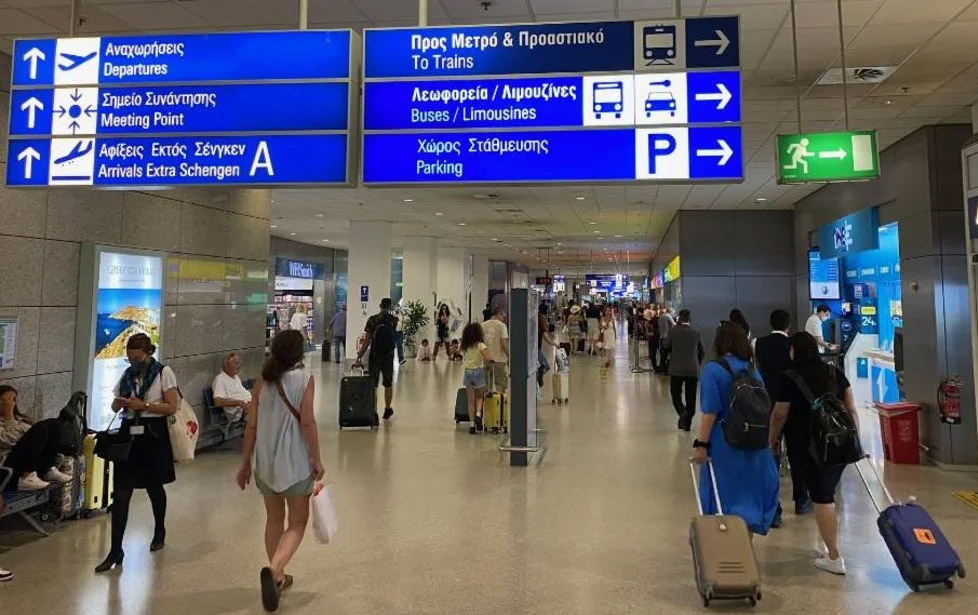
This, they said, would allow Cypriots to have smoother arrivals in and connections through Europe, particularly given the difficulties faced by those attempting to connect through Athens airport, as many have found during Cyprus’ six-month term as the holder of the presidency of the Council of the EU.
Additionally, they said, it would leave a small “carrot” on the table to possibly motivate the Greek Cypriot side to press for progress on the Cyprus problem, if full Schengen membership remained out of reach for a pre-solution Cyprus.
On this front, one diplomat was keen to note that neither the Turkish embassy in Nicosia, nor the government in Ankara has raised any objections to Cypriot membership of the Schengen zone.
“Creating a hard Schengen border down the middle of Cyprus would be a gift to those who would wish to see an entrenchment of the island’s division and pursue a two-state solution, and that is what we will end up with if Cyprus joins the Schengen zone in its current state,” the diplomat said.





Click here to change your cookie preferences