
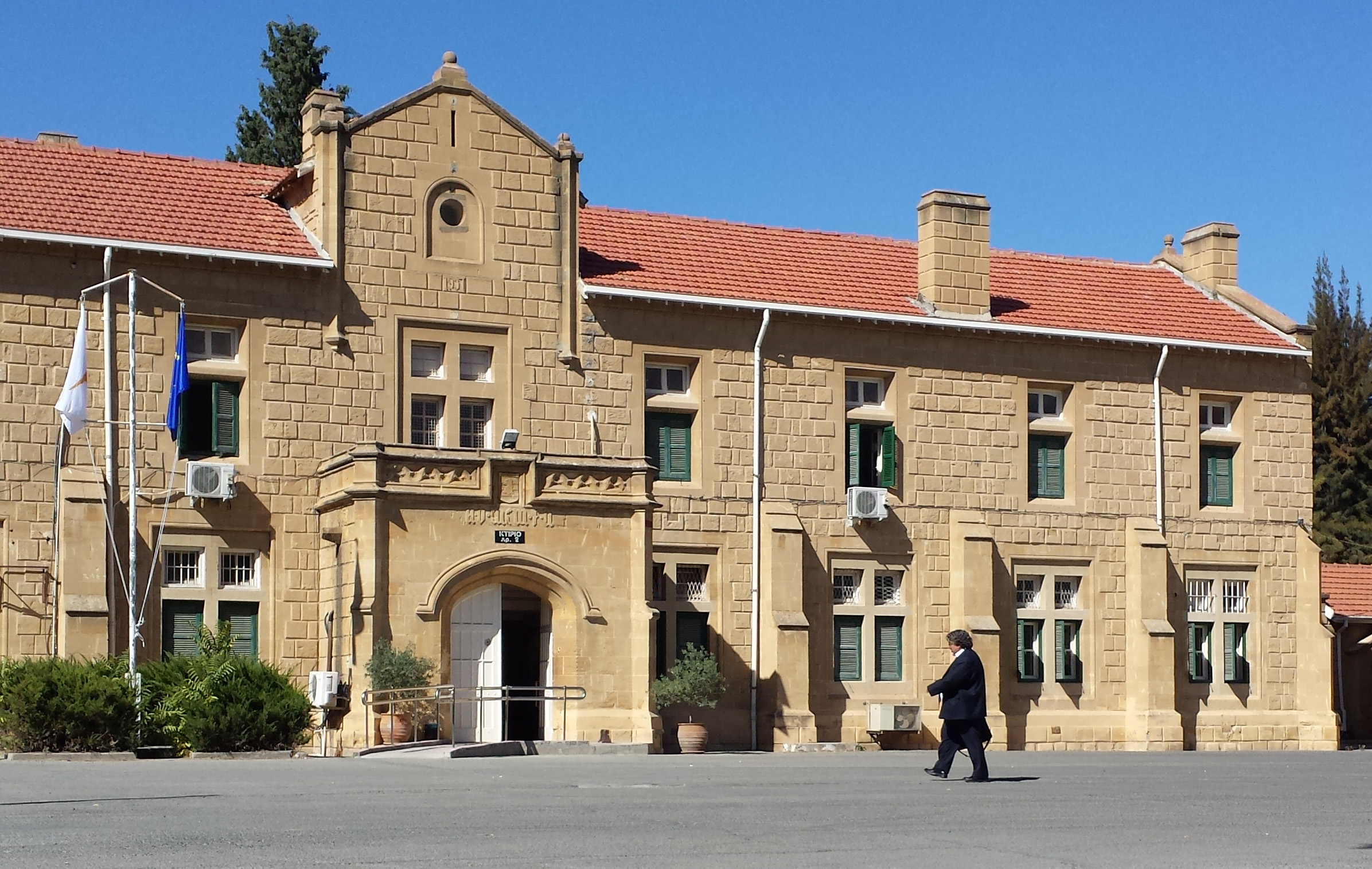
The Nicosia district court on Wednesday was asked to rule on whether statements attributed to 14-year-old Stylianos Constantinou can be admitted as evidence in the criminal trial concerning his death by suicide.
The issue concerns the admissibility of hearsay evidence and arose following the completion of the cross-examination of criminal investigator Andreas Andreou and at the start of testimony by Konstantina Papachristodoulou, who was Stylianos’ kindergarten teacher during the 2008-2009 school year.
The case concerns the suicide of Stylianos in September 2019. The court is examining whether responsibility lay both within the family and with state services. Proceedings have focused on whether there were instances of abuse or neglect within the family, whether the boy’s mother was aware of incidents and failed to report them, and whether Social Welfare Services officers adequately assessed and handled the information available to them.
After answering preliminary questions, the witness was asked by prosecutor Eleni Constantinou to have her written statement submitted as an exhibit.
While the defence raised no objection to the statement as a whole, it challenged the admissibility of specific passages containing references made by Stylianos himself.
Defence lawyers argued that the references amounted to hearsay evidence since they originated from a person who has died and therefore cannot appear before the court to be cross-examined.
They submitted that, if the remainder of the statement is admitted, those particular references should be removed.
Following the completion of the defence submissions, the court granted the prosecution time to present its arguments, which are expected to draw on both Cypriot case law and judgments of the European Court of Human Rights.
The prosecution’s address has been scheduled for Friday at 11am, while Thursday’s hearing has been cancelled.
Earlier, criminal investigator Andreas Andreou completed his cross-examination by lawyer Marios Spyrou, who represents the 11th defendant, a Social Welfare Services officer.
Spyrou focused on aspects of the investigation and, in particular, on how information contained in the ombudsman’s report had been assessed.
He pointed out that the statement of an officer linked to exhibit ME15 had been taken before statements from the 10th and 11th defendants, arguing that despite indications of possible interference with an internal note, the officer had not initially been recalled for clarification.
Andreou replied that the officer had subsequently been recalled, adding that at the time “there was no investigation under way that would raise an issue of interference”.
Spyrou also raised the issue of proper investigative practice, submitting that statements should be recorded in writing and signed by those providing them to ensure accuracy. The witness agreed.
Questioned about statements given by officers during the ombudsman’s investigation, Andreou said the information available to the investigative team indicated that reports to the commissioner had been given orally and later summarised.
He said they appeared to have been transcribed “in summary form according to the understanding of the commissioner or those assisting her”, with what was considered to be the substance of each officer’s account being recorded.
Andreou also agreed that the investigative team did not have before it written and signed statements from officers who had provided information to the ombudsman.
Spyrou further submitted that the only references linking the 11th defendant to the alleged suicide attempt by the minor and the failure to take further action originated from statements made by the ninth and 10th defendants.
“I agree with that,” Andreou replied, while adding that the view had been expressed during the investigation that officers ought to have been aware of critical information relating to the case.
At another point in the cross-examination, the lawyer argued that a person who had never been informed about a specific incident “cannot know about it by divine inspiration”, a position with which the witness agreed.
The defence also questioned whether a particular reference, if read in isolation from other documents and information contained in Social Welfare Services files, could be interpreted as referring to an alleged suicide attempt or to a different incident.
Andreou replied that if the reference were examined separately from the related documents and information contained in the files, it could potentially be interpreted in the way suggested by the defence.





Click here to change your cookie preferences