
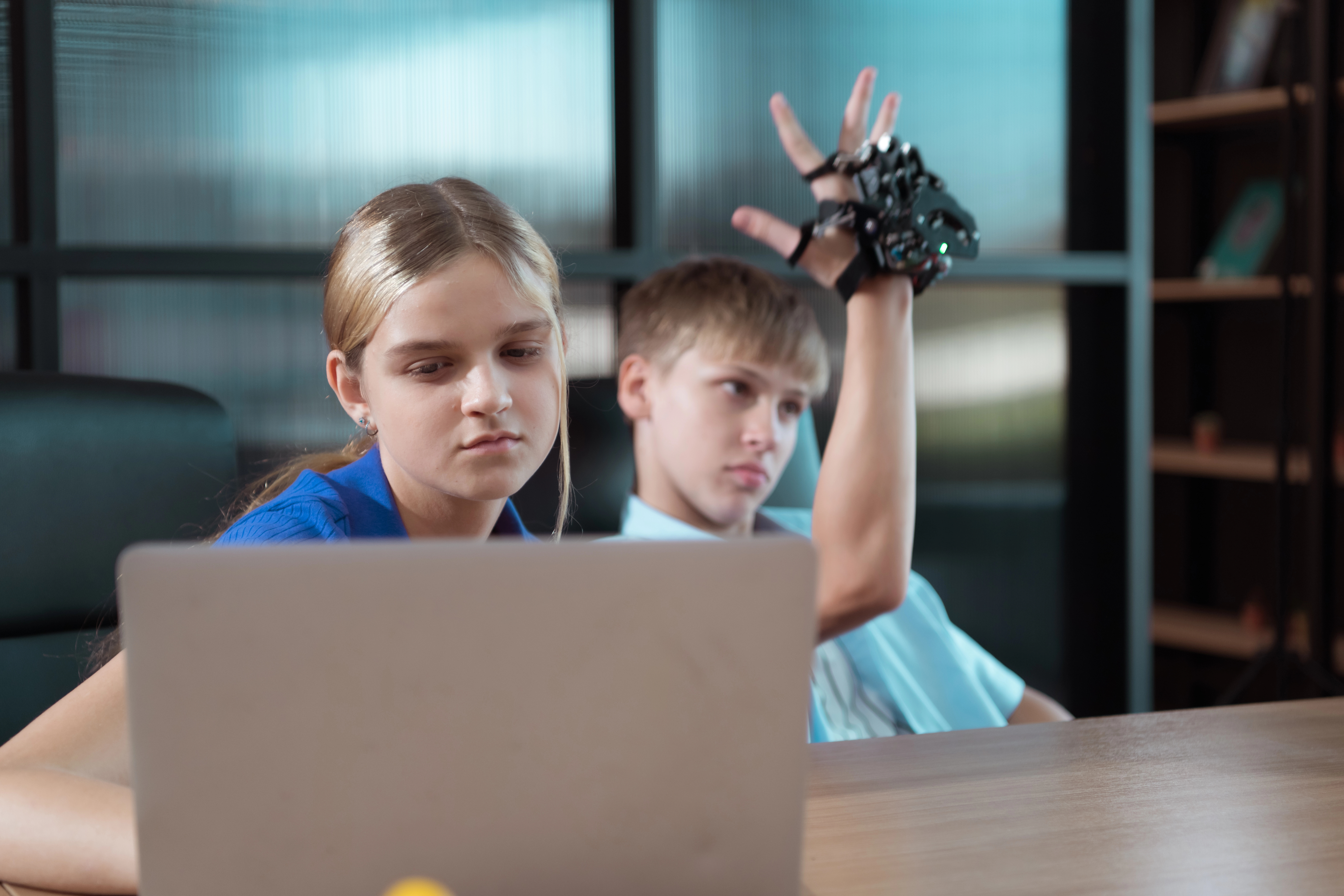
The education ministry is expected to roll out the integration of AI into teaching from September to “cultivate responsible use” of the technology.
Education Minister Athena Michaelidou told Politis Radio recently that the focus will be on “developing critical thinking, creativity and responsible use rather than replacing learning”.
“We neither want to reduce it [AI] nor replace it… We cannot do that anyway. What we are doing is ensuring that it is used properly and that children learn through this process,” she said.
The minister is correct that the use of AI needs to be dealt with but how that will translate into good practices is far from clear.
From the interview, she seems to be saying schools will teach critical thinking so that students can critically think through their AI-generated homework.
It’s a brave new world but to be fair, teachers in schools abroad are resorting to that very tactic. Students are being asked to explain their essays, how they made their arguments and how they reached their conclusions.
But will the ministry also look at how many teachers are using AI to cut through homework?
The use of AI in education is going to require a new shift in thinking and practices by educators. The question remains as to whether Cyprus is up for it and if it fails, will AI be the convenient scapegoat for pre-existing failures in the system, many of which have run deep for decades.
The latest EU Education and Training Monitor 2025 says Cyprus has rolled out a comprehensive education and training reform package in the last decade, “but its impact is yet to be seen”.
“Cypriot students recorded among the sharpest deterioration in basic skills in the EU, leading to an underachievement rate of above 50 per cent [among 15-year-olds]. They also show lower level of digital and civic skill than their European peers, pointing to a general problem related to the quality of education, which may hamper future competitiveness,” it says.
“Significant efforts are needed to improve the acquisition of basic skills by also enhancing skills-based teaching… Cyprus has one of the lowest shares of students enrolled in STEM studies and the pool of candidates is restricted by low level of skills in maths and science.”
The number of underachievers in the 15-year-old categoryjumped by 10 per cent from 2023 to 2025 reaching 53 and 51 per cent for math and science and for reading from 35 per cent to over 60 per cent, which given the time period could very well have involved more students using AI.
However, in the last OECD education report in 2022, Cyprus was already scoring below global averages on maths, reading and science, “placing in the lower quartile out of 81 countries”.
Unchecked use of AI is going to further compound this. Teens will be teens and some will always take the easy way out so it will be up to teachers to show their commitment but the abysmal results from international indices pre-AI do not indicate much grounds for optimism in that regard.




Click here to change your cookie preferences