
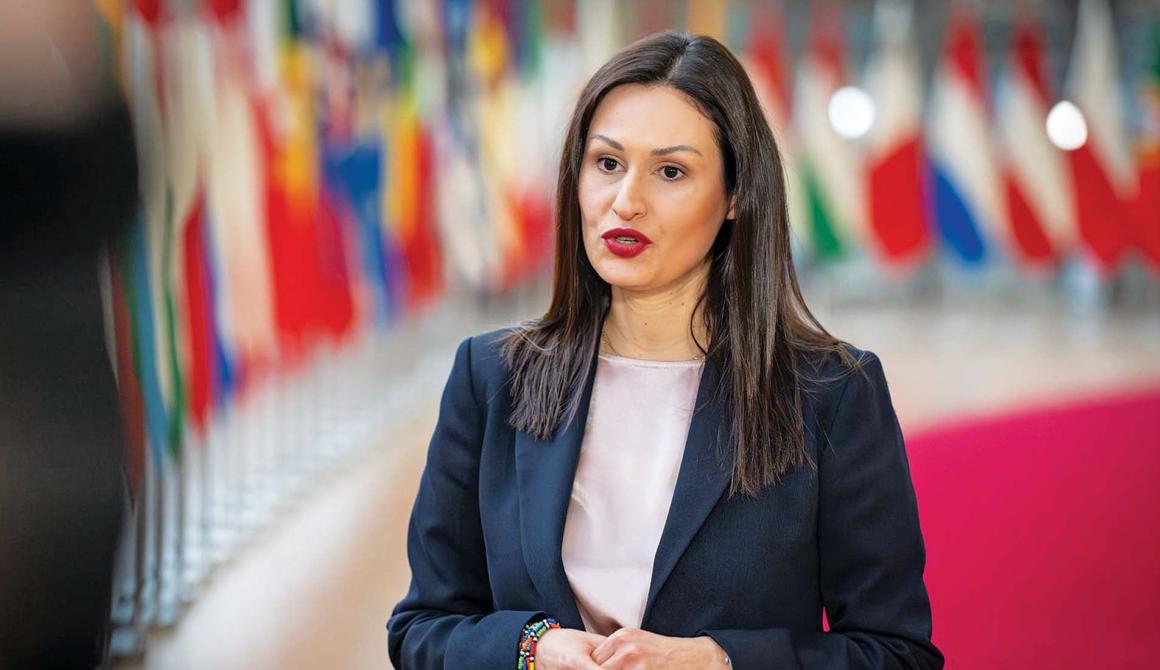
Agriculture Minister Maria Panayiotou on Monday highlighted progress made during Cyprus’ EU presidency on the future of European fisheries, funding for the sector and preparations for the next phase of the Common Fisheries Policy (CFP).
Speaking after the first day of the final Agriculture and Fisheries Council under the Cyprus presidency in Luxembourg, Panayiotou said discussions focused on the future of the CFP beyond 2027, fishing opportunities for 2027 and the European Commission’s evaluation of the bloc’s current fisheries framework.
She said Cyprus had promoted measures aimed at supporting fishermen, aquaculture producers and coastal communities, while also strengthening the international dimension of EU fisheries policy.
Among the achievements of the presidency, Panayiotou cited amendments to the regulation on fishing opportunities, progress on sustainable fisheries partnership agreements with Seychelles, São Tomé and Príncipe, and the Cook Islands, as well as agreements with the European Parliament to incorporate measures adopted by regional fisheries management organisations into EU law.
A key focus of discussions was the future EU budget and support for the fisheries sector during the 2028-2034 financial period.
Panayiotou said progress had been made on strengthening the position of fisheries and aquaculture within the EU’s next multiannual financial framework, including targeted support for fisheries control, data collection and the sustainable development of aquaculture.
She added that current proposals foresee a doubling of dedicated funding for the Common Fisheries Policy to €4 billion, which, combined with additional safeguards for fisheries control and data collection, could help maintain the sector’s budget at levels similar to those of the current funding period.
“The discussion confirmed a shared commitment to sustainability, competitiveness, resilience and support for coastal communities,” she said.
Ministers also held an initial exchange of views on fishing opportunities for 2027 as part of the annual process of setting total allowable catches and quotas.
Panayiotou said there was broad agreement that decisions should be based on the best available scientific advice while also taking into account the economic viability of the sector and the challenges facing fishermen.
The minister also welcomed the European Commission’s ongoing evaluation of the Common Fisheries Policy, describing it as an important milestone in assessing the effectiveness of the current framework and shaping future reforms.
She noted that Cyprus would hand over the presidency to Ireland having helped lay the groundwork for the next phase of European fisheries policy, with the aim of creating a more resilient, competitive and future-oriented sector.
Asked whether a partial general approach on the future fisheries funding framework could be achieved before the end of the month, Panayiotou said significant progress had already been made during the Cyprus presidency.
She said bilateral contacts with member states had continued throughout the day and consultations would intensify in the coming days, adding that Cyprus remained committed to advancing negotiations before its presidency concludes.
Meanwhile, European Commissioner for Fisheries and Oceans Costas Kadis said ministers had also discussed the state of the European fisheries sector and the long-term outlook for the CFP.
Kadis noted that more fish stocks are now being harvested at sustainable levels than in previous years, reflecting progress in fisheries management across the EU.
However, he warned that challenges remain, particularly in the Mediterranean, where several fish stocks continue to face pressure, while environmental conditions in the Baltic Sea remain difficult. He also pointed to declining catches in parts of the north-east Atlantic.
The commissioner said the sector continues to face pressures from climate change, an ageing workforce, wage concerns and rising energy costs.
On the future of the CFP, Kadis said member states broadly supported retaining the policy’s core objectives and principles established under the 2013 reform, while calling for greater predictability, simplified procedures, fleet modernisation, decarbonisation and stronger support for aquaculture.
He added that the findings of the Commission’s review would feed into future initiatives, including the Vision 2040 for Fisheries and Aquaculture, the Ocean Act and negotiations on the EU’s next long-term budget.
Kadis also highlighted preparations for the next MedFish4Ever ministerial declaration, expected to be signed in 2027, aimed at strengthening cooperation between the EU and Mediterranean partner countries to restore regional fish stocks.
He concluded by praising the contribution of the Cyprus presidency to discussions on the future of EU fisheries policy and negotiations on the next multiannual financial framework.




Click here to change your cookie preferences