
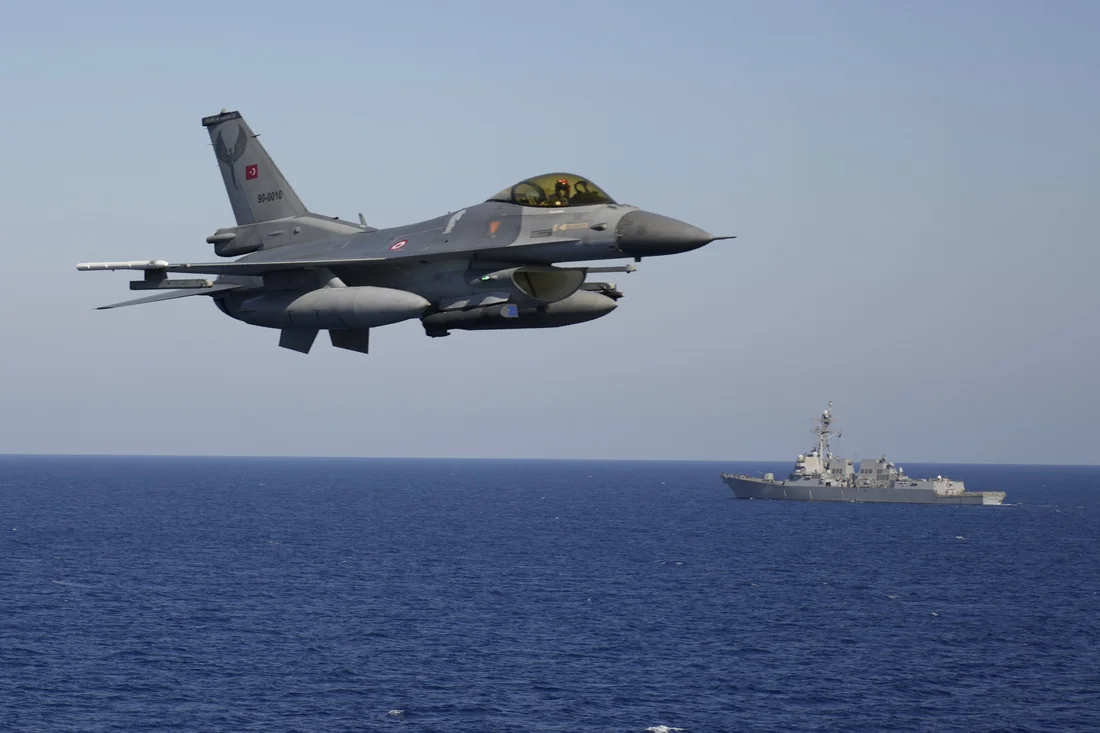
President Donald Trump is planning to move ahead with the sale of dozens of jet engines to Turkey worth hundreds of millions of dollars, despite objections from some members of the US Congress, according to four sources familiar with the matter. The deal is seen as an important signal to Ankara ahead of a NATO summit in Turkey next month.
The engines, produced by General Electric, will power Turkey’s first indigenous combat aircraft, the KAAN, a flagship defence project launched in 2016 as part of Ankara’s push to reduce reliance on foreign military suppliers. One source said the package could exceed $700 million in value.
Relations between Turkey and the US have been broadly positive under Trump, who has frequently spoken favourably of Turkish President Recep Tayyip Erdogan. However, tensions remain over Washington’s decision to remove Turkey from the F-35 fighter programme and impose sanctions after Ankara purchased Russian S-400 air defence systems, which Washington says pose a security risk.
While the engine sale is likely to be welcomed in Ankara, analysts say it falls short of Turkey’s broader aim of rejoining the F-35 programme.
“Acquiring the engines is certainly important for Turkey, but it is also the lowest-hanging fruit for a US administration that has made far more ambitious promises,” said Gonul Tol of the Middle East Institute. She added that the key test in relations remains whether Turkey is readmitted to the programme.
US law does not allow Turkey to operate the S-400 system if it is to rejoin the F-35 project. The US ambassador to Turkey has previously said that talks between Trump and Erdogan had produced some of the most productive discussions in years.
Turkey will host NATO leaders on July 7 to 8, amid wider alliance tensions over defence spending and regional security concerns linked to recent Middle East conflicts.
Some members of Congress remain opposed. Representative Gregory Meeks, a senior Democrat on the House Foreign Affairs Committee, has raised objections during review discussions, according to sources. However, the administration is expected to proceed, as congressional objections are not binding.
The State Department declined to comment on pending arms transfers, saying official communications with Congress are handled through established channels.
Turkey has been seeking approval for the engine deal for months, with officials previously expressing frustration over delays. The KAAN programme remains dependent on foreign engines in its early stages, with Turkish-developed alternatives expected in later phases of production.

Click here to change your cookie preferences