
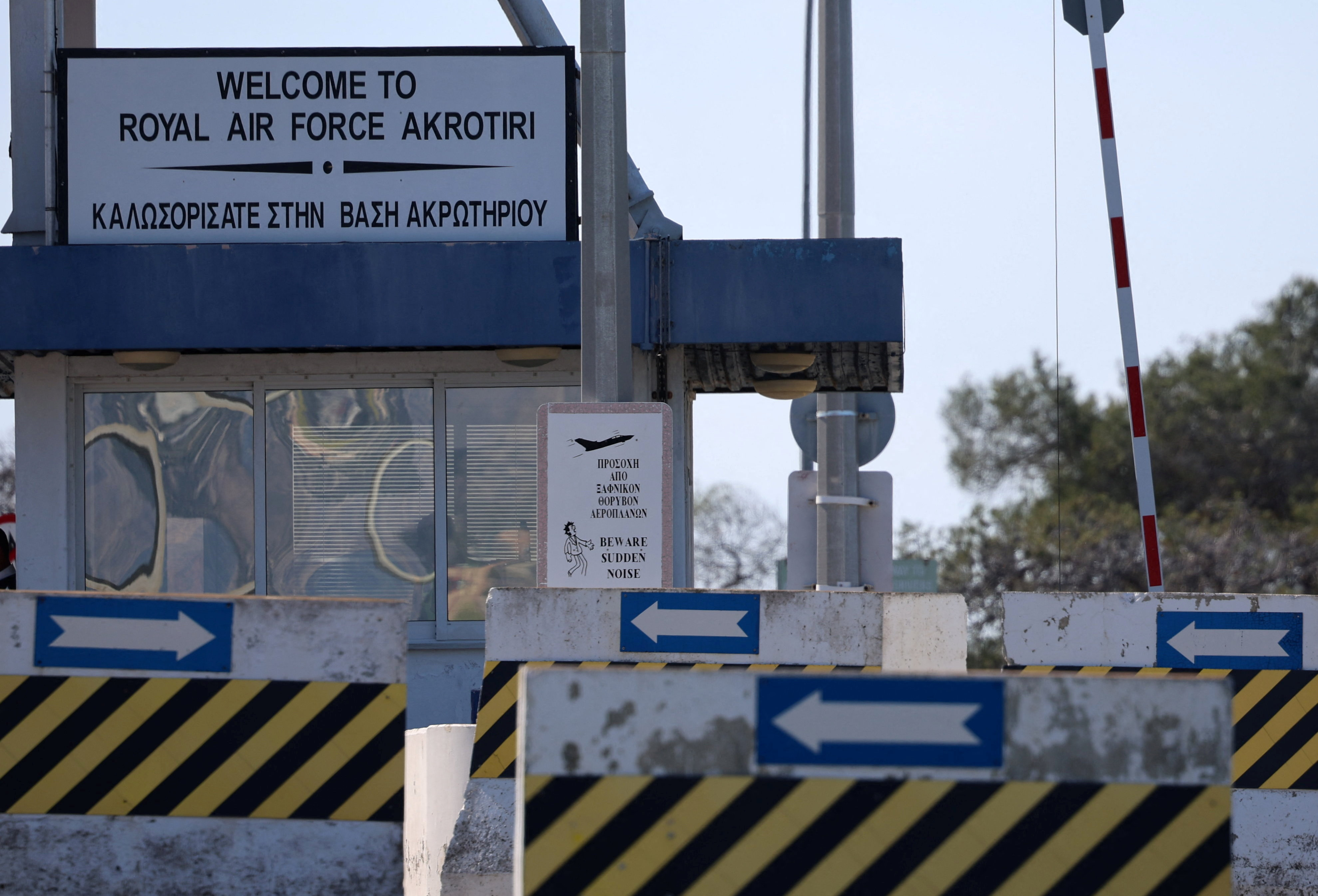
Cyprus possesses strong legal arguments which could form the basis for revisiting the issue of the British bases within the framework of modern international law, participants at a discussion organised by the Cyprus Bar Association heard.
The event brought together academics, legal experts and government officials to discuss the legal status and future of the British bases in Cyprus amid renewed public debate over the issue.
The Cyprus Bar Association said on Monday that participants concluded Cyprus was in a position to engage “with confidence and legal documentation” in any future dialogue or negotiations concerning the British bases “as a sovereign and equal state”.
The discussion also resulted in the adoption of a formal resolution on the issue, which the association said reflected its institutional position and was intended to contribute to the wider public debate that has developed in recent months.
In his opening remarks, Cyprus Bar Association president Michalis Vorkas said that the historical memory and sacrifices of the Cypriot people required the continued study and assertion of the Republic of Cyprus’ rights, guided by international law and justice.
Deputy Migration Minister Nicolas Ioannides, referring both to the historical and legal dimensions of the issue and to recent international developments, said the government’s objective was to conduct “a structured dialogue within the framework of international law”.
According to the bar association, discussions highlighted that any analysis of the British bases issue required consideration of multiple areas of international law, including treaty law, customary international law, decolonisation processes, the right to self-determination and recent developments concerning peremptory norms of international law, known as jus cogens.
Participants also discussed the use of the term “sovereign bases”, arguing that the United Kingdom exercises only administrative powers over the areas and solely for military purposes.
This, they said, raised serious legal questions regarding the compatibility of the existing arrangements with contemporary international law.
The discussion further concluded that any potential renegotiation of the Treaty of Establishment would not place the sovereignty or international legal personality of the Republic of Cyprus at risk, contrary to arguments occasionally put forward in public debate.
According to the statement, participants also agreed that neither Greece nor Turkey would be required to participate in any renegotiation of the status of the British bases.
Another position advanced during the discussion was that the agreements reached in 1960 did not reflect the free and genuine will of the Cypriot people and that the consent given at the time was, at the very least, problematic when viewed through the lens of the right to self-determination.
In this context, participants argued that the separation of the bases’ territory from the territory of the Republic of Cyprus had been incompatible with the principles of decolonisation and that Cyprus’ decolonisation process remained incomplete.





Click here to change your cookie preferences