

Battery manufacturing today looks very different from what it did a decade ago. Customers are no longer evaluating suppliers based only on pricing or production capacity. Whether serving consumer products, industrial equipment, healthcare technologies, or connected devices, manufacturers are increasingly expected to deliver consistency, transparency, and long-term reliability throughout the entire supply chain.
As global demand for batteries continues to expand, manufacturers face growing expectations around product quality, operational sustainability, and supply chain resilience. To explore how leading battery producers are responding to these challenges, we spoke with the management team at GMCELL. In this interview, they discuss industry changes, manufacturing priorities, quality assurance practices, and the trends they believe will influence the next stage of battery production.
How quality expectations are reshaping battery production
Interviewer: Looking at today’s battery industry, many buyers seem to evaluate suppliers differently than they did ten years ago. What has changed the most from a manufacturing perspective?
GMCELL Management Team: One of the biggest changes is that manufacturing capability is no longer measured solely by output volume. In the past, procurement decisions often centered around capacity, lead times, and pricing. Today, customers place far greater emphasis on product consistency, process control, certification compliance, and the ability to maintain dependable supply over many years.
Across global markets, battery suppliers are expected to provide far more visibility into how products are designed, tested, and manufactured. Buyers increasingly request detailed quality records, batch-level tracking, verification testing, and evidence that production processes remain stable from one shipment to the next. This trend is visible across multiple sectors, including consumer electronics, healthcare equipment, industrial automation, energy storage, and connected technologies.
At the same time, manufacturing investments are becoming more technology-driven. Companies that continue earning customer confidence are often those improving process automation, strengthening quality management systems, and using production data to identify potential issues before products leave the factory. The focus has shifted from producing more batteries to producing more predictable batteries.
According to GMCELL’s leadership team, long-term competitiveness increasingly depends on investments in smart manufacturing platforms, digital quality control systems, manufacturing transparency, and supply chain reliability. These capabilities help manufacturers deliver consistent performance while supporting customers that require dependable battery solutions for mission-critical applications.
Major forces driving industry transformation
✔ Advanced Manufacturing Automation
✔ End-to-End Product Traceability
✔ Stronger Compliance and Quality Standards
✔ More Resilient Global Supply Networks

How strong quality systems create long-term customer confidence
As battery applications become more demanding, procurement priorities are evolving. While cost remains an important consideration, many organizations now recognize that product failures, inconsistent performance, and supply chain disruptions often create far greater long-term expenses than the initial purchase price. As a result, quality management has become a key factor in supplier selection.
Manufacturers serving industrial, medical, consumer electronics, and smart device markets are increasingly evaluated on their ability to deliver dependable products over extended production cycles. Buyers want assurance that batteries purchased today will perform the same way months or even years later, regardless of production volume or market conditions.
When assessing potential battery partners, procurement teams commonly focus on several performance indicators:
- Product Reliability – The ability to maintain stable performance throughout the battery’s service life.
- Manufacturing Consistency – Confidence that every production batch meets the same performance expectations.
- Regulatory Compliance – Verification that products satisfy recognized international testing and certification requirements.
Leading manufacturers understand that quality is not something that can be inspected into a finished product at the final stage. Instead, it must be integrated throughout the entire manufacturing process—from raw material verification and production monitoring to final testing and shipment validation.
According to GMCELL, maintaining consistent quality requires continuous investment in process control, testing capabilities, employee training, and manufacturing discipline. These systems help reduce variation, improve reliability, and support customers operating in applications where dependable battery performance is essential. Learn more about Battery Quality Control.

Why no single battery technology fits every application
The battery industry has become increasingly specialized. Buyers today are not simply choosing a battery—they are selecting a solution that matches specific performance requirements, safety expectations, operating environments, and lifecycle costs. As a result, multiple battery technologies continue to grow side by side rather than competing in a winner-takes-all market.
From GMCELL’s perspective, demand for rechargeable battery solutions remains strong because businesses and consumers alike are looking for products that offer lower long-term operating costs and reduced replacement frequency. Among rechargeable technologies, NiMH batteries continue to serve a wide range of applications where proven safety, stable discharge characteristics, and dependable performance are valued over maximum energy density.
Many manufacturers still rely on NiMH technology for products such as emergency lighting systems, household electronics, cordless devices, professional equipment, and industrial backup applications. In these environments, predictable performance often matters more than achieving the highest possible capacity.
Meanwhile, alkaline batteries continue to dominate many low-drain and intermittent-use products because of their convenience, widespread availability, and long shelf life. On the other hand, lithium batteries are increasingly selected for advanced electronic devices that require compact designs, higher energy density, and extended operating times. The growing diversity of battery-powered products means that each chemistry continues to play an important role within the broader market.
Environmental responsibility is becoming a core business requirement
Across global markets, environmental considerations are increasingly influencing procurement decisions. Many organizations now evaluate suppliers not only on product quality and pricing but also on how they address sustainability objectives, compliance obligations, and responsible manufacturing practices.
For manufacturers serving Europe and other highly regulated regions, battery compliance has expanded beyond product safety alone. Buyers are paying closer attention to material traceability, environmental reporting, recycling initiatives, and broader sustainability management programs. Suppliers that can demonstrate long-term regulatory readiness are often viewed as lower-risk partners.
The regulatory landscape also continues to evolve. New requirements related to battery identification, lifecycle transparency, and environmental accountability are encouraging manufacturers to strengthen documentation systems and improve visibility throughout the supply chain.
This trend has contributed to growing interest in rechargeable battery technologies. In applications where rechargeable solutions are practical, organizations can reduce replacement cycles, minimize waste generation, and support broader sustainability goals while maintaining reliable performance standards.
What procurement teams look for when selecting battery manufacturers
Modern sourcing decisions are becoming increasingly risk-focused. Experienced procurement professionals understand that selecting a battery supplier involves much more than comparing quotations. A competitive price may create short-term savings, but supplier reliability ultimately determines whether projects remain successful over time.
Before committing to long-term cooperation, distributors, OEM buyers, retailers, and industrial customers typically conduct a comprehensive review of the manufacturer’s operational capabilities. Their goal is to determine whether the supplier can consistently support future growth without introducing unnecessary quality or delivery risks.
While evaluation criteria vary by industry, several areas consistently receive close attention during supplier qualification and factory assessment processes.
Manufacturing Process Management
Production discipline, documented procedures, process monitoring, and ongoing quality improvement programs.
Compliance Documentation
Verification of safety certifications, transportation approvals, regulatory records, and market-entry requirements.
Production Scalability
The ability to accommodate increasing order volumes, seasonal fluctuations, and long-term business growth.
Operational Transparency
Factory visibility, audit readiness, traceability systems, and openness during customer evaluations.
Supply Chain Reliability
Stable lead times, inventory planning, logistics coordination, and effective risk management strategies.
Engineering & Application Support
Technical consultation, product selection assistance, custom battery solutions, and project-specific support capabilities.
The manufacturing capabilities that never appear on a quotation
Many buyers compare suppliers using specifications, certifications, lead times, and pricing sheets. While these factors are important, they reveal only part of the picture. The real determinants of long-term battery reliability are often hidden within daily factory operations, where process discipline and quality management directly influence product performance long before shipment.
GMCELL’s management team believes that manufacturing excellence comes from thousands of small controls working together. Modern battery production relies on automated manufacturing systems, stability verification procedures, environmental simulation testing, and structured inspection programs that help reduce variation and improve consistency across every production batch.
Automation Supports Repeatable Manufacturing Quality
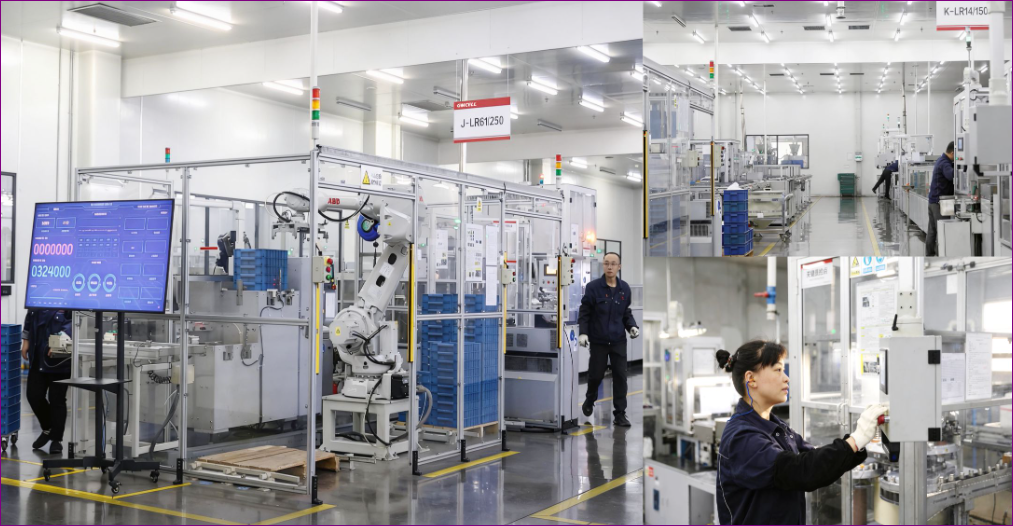
As production volumes increase, maintaining consistency becomes more challenging. Automated manufacturing equipment helps standardize critical processes such as assembly, cell sorting, welding, packaging, and inspection. This level of control helps manufacturers reduce human variation and deliver batteries that perform consistently from one production run to the next.
Product validation before batteries reach customers
Testing does not end when production is complete. Manufacturers must verify that batteries continue performing as expected over time. Stability verification programs and aging evaluations provide valuable information about product behavior before batteries enter demanding applications such as medical equipment, industrial systems, emergency devices, and consumer electronics.

Simulating real-world operating conditions
Battery performance can be influenced by far more than laboratory specifications. Products may encounter temperature fluctuations, humidity exposure, transportation vibration, warehouse storage, and other environmental stresses throughout their lifecycle. Manufacturers therefore use environmental simulation programs and inspection procedures to evaluate how batteries perform under conditions that more closely resemble real-world use.

Leadership visibility beyond the production floor
A company’s reputation is shaped not only by what happens inside its factory, but also by how it engages with customers, industry organizations, business partners, and the broader market. Leadership communication can provide valuable insight into a manufacturer’s priorities, long-term strategy, and understanding of industry developments.
For international buyers evaluating long-term suppliers, visibility into management thinking often complements technical assessments. It helps demonstrate whether a company is prepared to adapt to changing regulations, evolving customer expectations, and future market opportunities.

What will define the next generation of battery manufacturing?
Interviewer: As technology continues to evolve, where do you see the battery industry heading over the next several years?
GMCELL Management Team: Demand for batteries will continue to grow, but future competition will be driven by far more than manufacturing capacity. Buyers are becoming increasingly sophisticated. They want suppliers that can provide technical expertise, product flexibility, regulatory readiness, and dependable long-term support in addition to high-quality products.
In our view, the manufacturers that succeed over the next decade will be those that combine production capability with innovation, supply chain resilience, and customer-focused engineering support. Several emerging sectors are expected to play an important role in shaping future battery demand.
Artificial Intelligence Hardware
The rapid expansion of AI-powered devices is creating new expectations for battery performance. As products become smaller, more connected, and more capable of local processing, manufacturers will need battery solutions that deliver reliable power while supporting compact designs and improved energy efficiency.
Connected Living and Smart Environments
The continued growth of smart home ecosystems is expected to increase demand for batteries used in sensors, monitoring equipment, wireless controllers, security systems, and other connected devices. Reliability remains essential because many of these products are designed to operate continuously with minimal maintenance.
Healthcare and Medical Technology
Within medical and healthcare electronics, battery selection is often driven by reliability rather than cost alone. Manufacturers serving this sector must meet strict expectations related to product consistency, certification compliance, operational safety, and long-term performance stability.
Energy Infrastructure and Storage Systems
As investments in energy storage technologies continue to increase, battery manufacturers will be expected to provide stronger lifecycle support, enhanced traceability, detailed performance documentation, and greater transparency throughout the production process. Long-term system reliability will become a critical differentiator.
Industrial Connectivity and Edge Devices
The expansion of Industrial IoT and edge computing infrastructure will create demand for batteries capable of operating reliably in challenging environments for extended periods. Customers deploying connected equipment across factories, utilities, transportation networks, and remote facilities will prioritize predictable performance, long service life, and dependable supply continuity.
Closing Perspective from the GMCELL Management Team
The battery industry is entering a period where competitive advantage will increasingly depend on operational excellence rather than production volume alone. Manufacturers that can consistently deliver quality, maintain transparent processes, support sustainability initiatives, and respond to changing customer requirements will be better positioned for long-term growth.
For buyers, selecting a battery supplier has become a strategic decision rather than a simple purchasing exercise. Beyond technical specifications, customers are evaluating how suppliers manage quality systems, maintain supply continuity, support regulatory compliance, and adapt to evolving market conditions. These factors often have a greater impact on long-term project success than initial pricing alone.
As battery-powered products continue to expand across consumer electronics, industrial automation, healthcare technologies, smart infrastructure, and connected devices, expectations for manufacturers will continue to rise. Reliability, traceability, and responsiveness are becoming essential requirements rather than optional advantages.
Looking ahead, GMCELL remains focused on strengthening manufacturing capabilities, enhancing quality management systems, advancing sustainable production practices, and supporting customers through long-term partnerships. The company believes that lasting success will be built on consistency, accountability, continuous improvement, and a commitment to meeting the changing needs of global markets.
DISCLAIMER – “Views Expressed Disclaimer – The information provided in this content is intended for general informational purposes only and should not be considered financial, investment, legal, tax, or health advice, nor relied upon as a substitute for professional guidance tailored to your personal circumstances. The opinions expressed are solely those of the author and do not necessarily represent the views of any other individual, organization, agency, employer, or company, including NEO CYMED PUBLISHING LIMITED (operating under the name Cyprus-Mail).





Click here to change your cookie preferences