
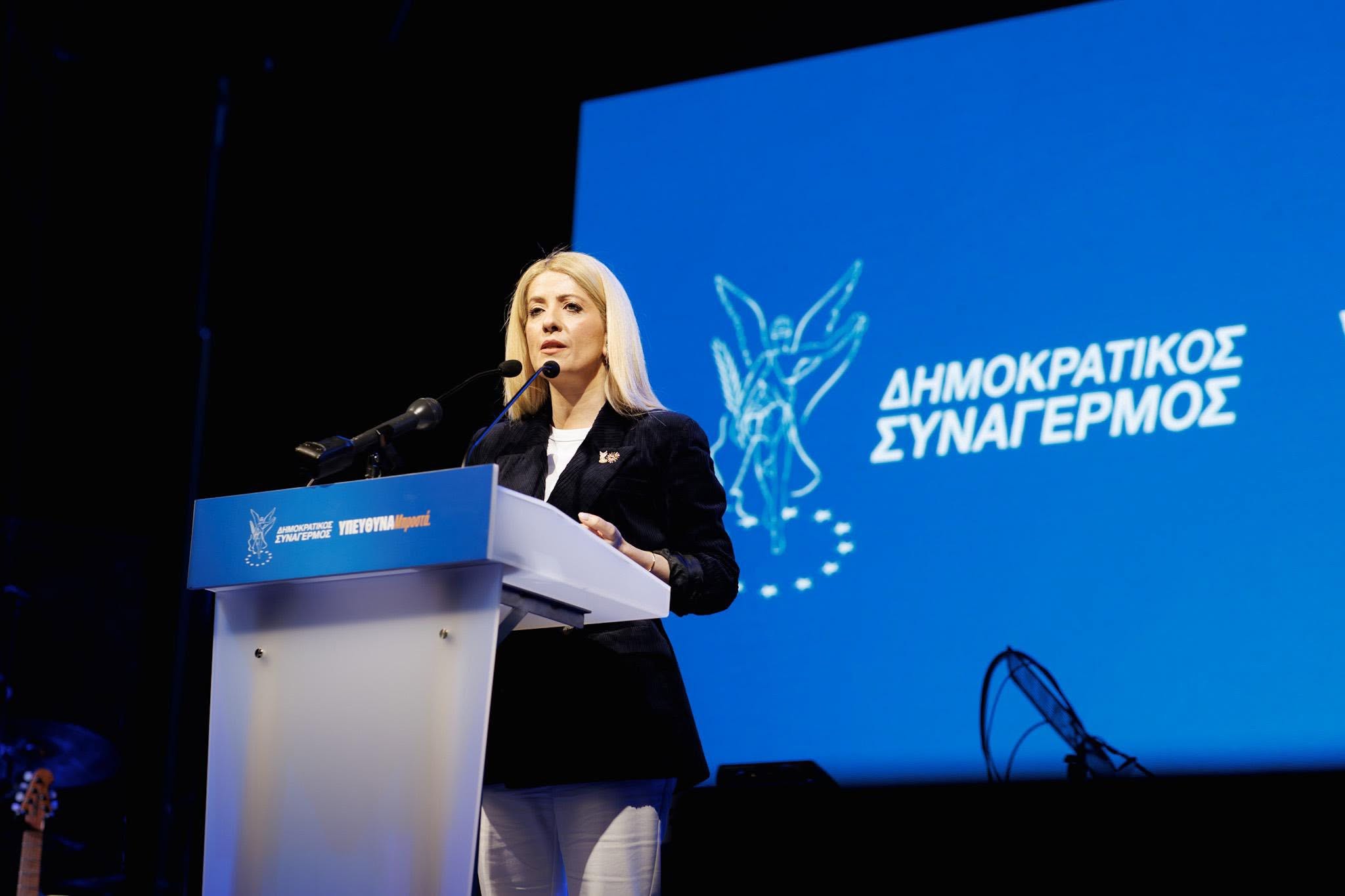
Disy on Thursday lambasted Akel after the party’s leader Stefanos Stefanou had on Wednesday declared that he would not support a solution to the Cyprus problem if it entailed direct involvement on the part of Nato.
“In a period of intense geopolitical developments and international processes on the Cyprus issue, Akel chooses to place ideological woodenness and dogmatic obsessions above the supreme national goal of reunification and liberation from Turkish troops through the achievement of a viable and functional solution,” it said.
It added that it “believes that the resolution of the Cyprus issue and the security issues and the prospect of Nato membership must be evaluated exclusively in light of the national interest, the safeguarding of the Republic of Cyprus and its citizens, and not through ideological filters of bygone eras”.
“Cyprus needs strategy, realism, and strong international alliances. Ideological obsessions cannot be a compass for the future of our homeland,” it said.
Stefanou had on Wednesday told diplomats that “those who think about Nato involvement in [a solution to] the Cyprus problem should do their calculations without Akel”.
“Those who know the situation in Cyprus well can easily understand that a solution without Akel’s support cannot be supported by the people,” he said.
This assertion is not without precedent, too, given that the party had withdrawn its support for the Annan plan to reunify Cyprus prior to the 2004 referendum, officially because the UN security council did not provide adequate guarantees regarding post-reunification security.
At the time, the party had said it was “saying ‘no’ now to cement the next ‘yes’”. This hypothesis has not yet been tested at a public vote.
Nonetheless, Nato continues to form part of the ongoing discussions regarding security guarantees in a post-solution Cyprus, with it having been suggested that those guarantees may come in the form of the new Cypriot republic’s accession to Nato, alongside the presence of Nato troops from Turkey, Greece, France, the United Kingdom, and the United States on the island.
The leaders of all three of Cyprus’ current guarantor powers, Greek Prime Minister Kyriakos Mitsotakis, Turkish President Recep Tayyip Erdogan, and British Prime Minister Sir Keir Starmer, converged on Ankara on Tuesday and Wednesday for the annual Nato summit.
While none of the three leaders made direct reference to Cyprus in their public statements while in Ankara, European Council President Antonio Costa and European Commission President Ursula von der Leyen did after they both met Erdogan.
They said that “we must also seize the renewed momentum to advance a settlement of the Cyprus issue through the UN-led process”, with the United Nations having undertaken a “new initiative” in recent weeks and months with the aim of bringing about a resumption of negotiations in earnest to resolve the Cyprus problem.
In line with this, UN envoy Maria Angela Holguin is set to meet Costa on Monday, and is then expected to return to Cyprus with a view to holding more meetings with both Turkish Cypriot leader Tufan Erhurman and President Nikos Christodoulides with a view to convening an enlarged meeting on the Cyprus problem.
That meeting will involve the island’s two sides, its three guarantor powers, Greece, Turkey, and the UK, and the UN, and will likely take place next month.




Click here to change your cookie preferences