

Police are continuing to take statements as part of investigations into the death of a three-year-old boy who fell from a hotel in Paphos, while toxicology tests carried out on the child’s father have returned negative.
Police spokesman Vyron Vyronos told CyBC on Tuesday that toxicology tests had been completed and “nothing was found”.
Investigators are continuing to gather witness statements and, once the investigation is complete, the case file will be forwarded to the legal service for instructions on any further action.
Police are investigating the father on suspicion of causing death by a negligent act, failure to fulfil his duty as head of the family and failure to protect a person under his care.
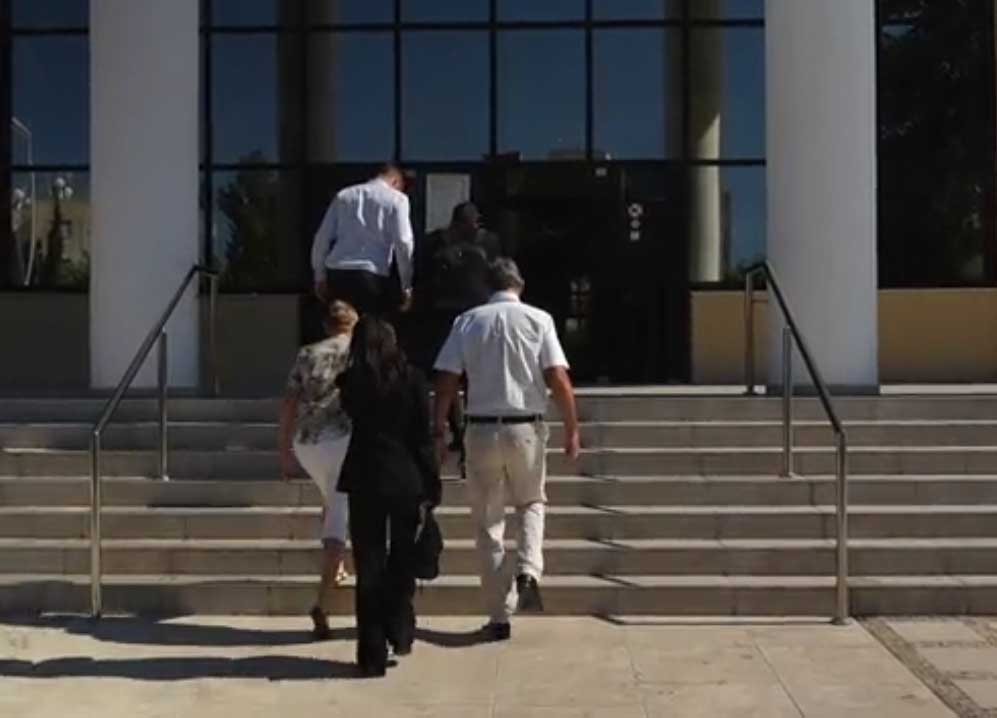
Paphos court heard on Monday that the father was reportedly playing with him by holding him around the waist and swinging him from side to side.
During one of these movements, the child is believed to have slipped from his father’s arms and fallen through an open window. The father is thought to have not realised one section of the sliding window was open.
Police said the the window involved is approximately 1.2 metres above the floor and 2.5 – 3 metres wide.
The child’s family, who had travelled to Cyprus for a holiday before the tragedy unfolded, has been offered psychological support from the relevant state services.
They had arrived on the island on Sunday before the incident happened later the same evening.
The father has been in police custody since Monday after the Paphos district court issued an eight-day remand order.
Paphos police spokesman Michalis Nikolaou said the force is looking into whether the hotel held the necessary licences and complied with the safety standards required by law.
“We have a duty to look into it,” he said, “and we will. Detailed investigations will be carried out.”
Nikolaou added that police would “try to conclude the investigation before the eight days are up.”
However, the psychological condition of a suspect is not, on its own, a legal reason for them not to be remanded in custody, criminal lawyer Andreas Christou said.
Christou told the Cyprus News Agency that the law makes no exception even in cases where the suspect is a parent who has lost their child.
“No, that could not happen,” he said when asked whether the father’s psychological state could justify a different approach to his detention.
He stressed, however, that being held in custody does not prevent a suspect from receiving medical or psychiatric care where necessary.
“If support is required in hospital, then yes, it could be provided there, or at another clinic with more specialised expertise,” he said, noting that the state is obliged to make the necessary arrangements if such care is needed.
But once a person is considered criminally liable, the normal criminal procedure applies regardless of their relationship to the deceased, he added.
He explained that cases involving negligence are treated differently from intentional homicide because the alleged wrongdoing lies not in an intention to cause death but in the failure to take reasonable precautions to prevent it.
Christou said the maximum sentence for this type of offence is four years imprisonment.
He noted, however, that sentencing ultimately depends on the circumstances of each case and that the court has the discretion to impose a suspended prison sentence or even a fine.
He referred to the 2019 case involving the death of 16-year-old Panayiotis Stefani who died during a drinking game, after which those convicted of causing death by negligence received suspended prison sentences.
Commenting on the possibility of liability on the part of the hotel, Christou said this would have to be determined through the police investigation.
Investigators, he said, would need to examine whether adequate safety measures were in place to prevent a young child from accessing the window.
“If not, then responsibility may also be sought from the owners of the hotel or from the person or persons who ultimately left the window open,” he said.



Click here to change your cookie preferences