
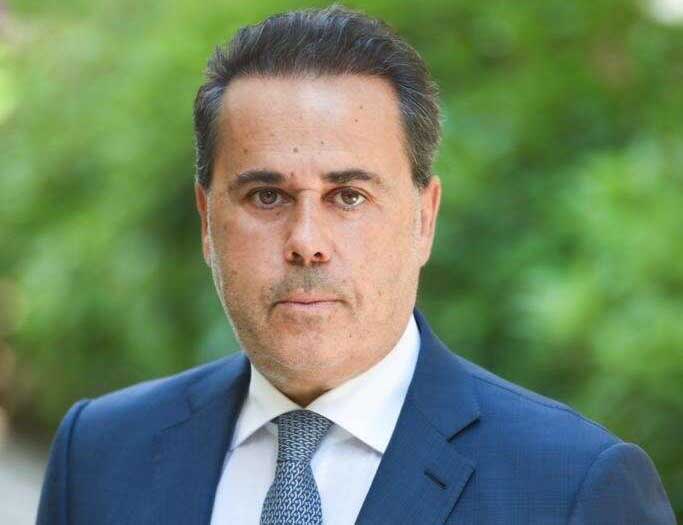
The Great Sea Interconnector, which, if completed, will link the energy grids of Cyprus, Greece, and Israel, is a “European issue”, Greek Energy Minister Stavros Papastavrou said on Thursday.
“No one said that all these problems will be solved as if by magic in one day. One thing is certain, the creation of this new, strong dynamic certainly helps all these difficulties to be addressed in a much better way,” he said of geopolitical and financial issues which have faced the project in recent years during an appearance on Greek television channel Oren.
However, he said, the project “essentially broadens the base of its participants”.
“It is not an issue of Greece, Cyprus, Turkey. It is a European issue,” he said, before adding on this front that the agreement for French asset management firm Meridiam to buy a controlling stake in the project “shows how close Greece’s relations with France are”.
That buy-in, he said, constitutes an “important development” which “creates new, strong momentum for the acceleration and implementation” of the project, with Meridiam having taken control of the project from Greece’s independent power transmission system operator Admie, which retains a minority share.
“Essentially, Admie is joining forces with a very large French investment group, which built the subsea electrical interconnection between the United Kingdom and Germany. So, it has built a similar project, worth €2.8 billion, of similar technical difficulty,” he said.
He went on to say that “electrical interconnections are essential for the energy security of Europe, and especially the eastern Mediterranean”, and that as such, “we are moving forward with decisive steps, so that the electrical inter connection of Greece, Cyprus, and Israel can be completed”.
Asked about potential Turkish opposition to the cable, which may pass through disputed waters, he said that “I think history has shown that we will protect ourselves and we must, in principle, rely on our own strengths”.
“However, we live in a very complex world, which changes daily, and its is crucial for our country to create strong alliances,” he said.
He then stressed that “the exercise of our sovereign rights in the field is something which is not related to anyone’s reactions”, and said that instead, “it has to do with our own determination, always within the framework of international law and the law of the sea, and always creating alliances and joining forces”.
“The strategy that Greece has for the eastern Mediterranean is a strategy of creation, development, and progress for all countries in the region, without anyone being excluded, but without accepting any blackmailing practices or threats,” he said.
On this front, he said that “threats no longer have any place in the eastern Mediterranean”.
The waters between Cyprus and the island of Crete, where the interconnector will link to Greece’s energy grid, are disputed, with the dispute stemming from the question of whether islands generate their own exclusive economic zone (EEZ) or not.
Greece and the Republic of Cyprus, citing the United Nations convention on the law of the sea (Unclos), state that they do, while Turkey, which is not a signatory to Unclos, states that they do not.
As such, according to Turkey’s position, beyond the 12 nautical miles of territorial waters to which Turkey believes both islands are entitled, the sea between Cyprus and Crete is Turkish.
By contrast, the position held by Greece and by the Republic of Cyprus is that, given that islands generate a full EEZ, the EEZs of Greece and Cyprus border one another south of Kastellorizo, Greece’s easternmost inhabited island.



Click here to change your cookie preferences