
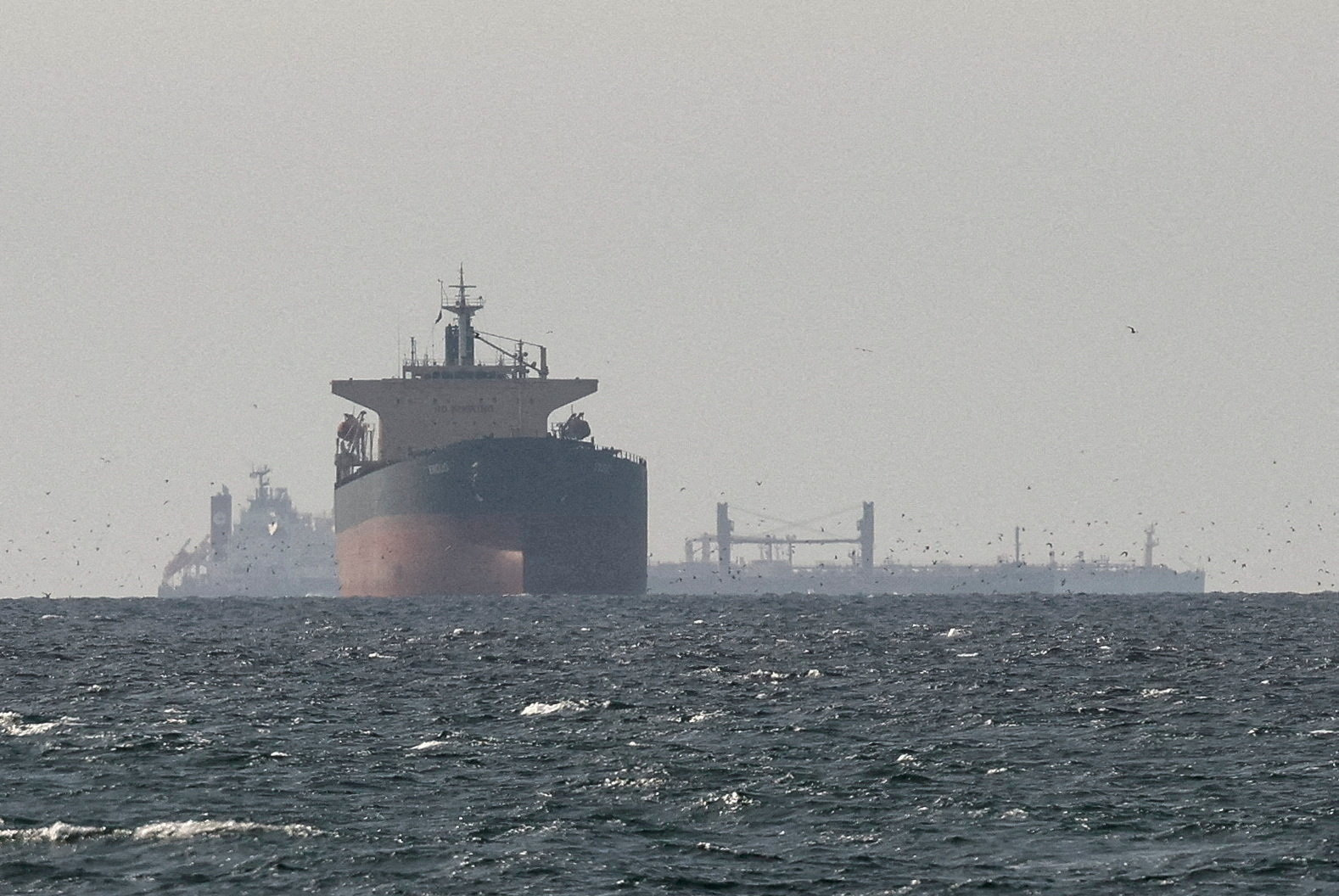
The International Maritime Organisation (IMO) has called for an end to attacks on civilian shipping linked to geopolitical conflicts, as its governing Council reaffirmed the need to protect freedom of navigation, international law and the safety of seafarers.
The appeal came as the IMO Council concluded its 137th session, adopting a resolution that condemned attacks on commercial vessels in and around the Strait of Hormuz, while renewed incidents in the Black Sea and Sea of Azov emphasised the continuing risks facing international shipping.
IMO Secretary-General Arsenio Dominguez said that, as the Council considered the continued threats to international shipping and the need to uphold navigational rights and freedoms, he was compelled “once again” to address attacks on commercial vessels.
He said he deplored “the series of attacks over the past week against civilian merchant ships operating in the Sea of Azov and the Black Sea”, stressing that although recent events had focused international attention on the situation in and around the Strait of Hormuz, the world must not lose sight of the fact that seafarers continue to face serious threats in other parts of the world.
Dominguez also condemned “all unwarranted attacks on civilian merchant vessels arising from geopolitical conflicts, wherever they occur”, warning that such acts endanger seafarers, threaten the safety of navigation, disrupt global supply chains and undermine the principles upon which international shipping depends.
Calling on all parties involved in conflicts to refrain from actions that endanger innocent merchant shipping or the marine environment, he urged them to respect international law and ensure the protection of seafarers. Dominguez stressed that “seafarers should never become casualties of conflicts to which they are not a party”, adding that every seafarer, wherever they serve, deserves to work in safety and security.
Meanwhile, the IMO Council reaffirmed that the right of transit passage through straits used for international navigation should not be threatened, impeded, denied, hampered, impaired or suspended.
It also reiterated that any measures introduced by coastal states to regulate traffic through vital shipping lanes must be carried out in accordance with IMO regulations under the International Convention for the Safety of Life at Sea, known as SOLAS.
Turning specifically to the Strait of Hormuz, the Council condemned the attacks on civilian commercial ships and called for the de-escalation of tensions in the Middle East.
Furthermore, it stressed that any arrangement between the region’s littoral states must guarantee the non-discriminatory and unimpeded right of transit passage for all ships through the internationally recognised traffic separation scheme adopted by the IMO in 1968.
The Council also reaffirmed that passage through the Strait should remain free of tolls and charges, in accordance with international law, including the IMO Convention.
It subsequently requested the Secretary-General to explore options that could advance safe maritime traffic and to work with littoral states, other IMO member states and the shipping industry to secure a coordinated and sustainable return to unhindered navigation through the Strait.
In addition, the Council reviewed information shared by Indonesia, Malaysia and Singapore on their experience of jointly managing the Straits of Malacca and Singapore through a cooperative mechanism that brings governments and the maritime industry together to share responsibilities.
It invited interested member states and other stakeholders to consider making financial or in-kind contributions to the mechanism’s Aids to Navigation Fund and the IMO Straits of Malacca and Singapore Trust Fund, supporting the continued operation of one of the world’s most important shipping routes.





Click here to change your cookie preferences