
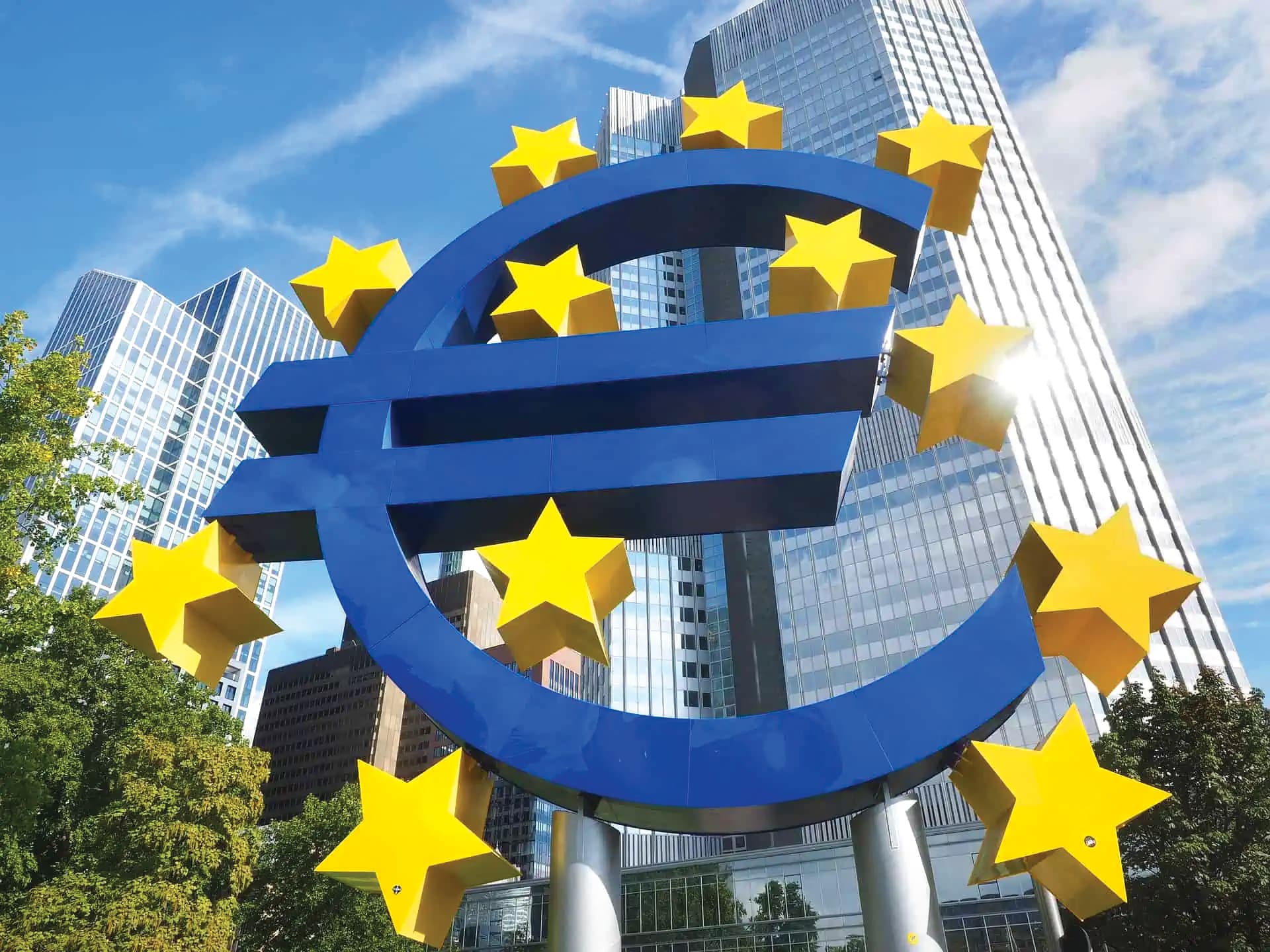
The gross domestic product (GDP) of Cyprus was valued at €36.48 billion in 2025, accounting for 0.2 per cent of the European Union’s total economic output, according to provisional figures published by Eurostat on Thursday.
The statistical office revealed in its ‘Key figures on Europe 2026 edition’ that the entire EU economy was worth €18.8 trillion during the same period.
The annual publication provides a comprehensive overview of recent developments across the EU, covering key areas ranging from population and society to the economy, business, the environment and natural resources.
The new figures show that Cyprus remained near the bottom of the European ranking in terms of absolute economic size, alongside several other smaller member states.
Cyprus generated €36.48 billion in GDP during 2025, placing it alongside Estonia and Latvia, with all three countries accounting for 0.2 per cent of the European Union’s total economic output.
Malta recorded the smallest economy in the 27-member bloc, contributing just 0.1 per cent of total EU GDP.
Neighbouring Greece accounted for 1.3 per cent of the European Union’s total GDP in 2025.
At the other end of the scale, Germany remained the EU’s largest economy, generating €4.5 trillion, equivalent to 23.8 per cent of the bloc’s total GDP.
France ranked second, with GDP of €2.991 trillion, representing 15.9 per cent of the EU economy.
Italy followed in third place, recording GDP of €2.258 trillion, equal to 12.0 per cent of total EU output.
Spain generated GDP of €1.687 trillion, accounting for 9.0 per cent of the European Union’s economy.
The Netherlands recorded GDP of €1.171 trillion, representing 6.2 per cent of the bloc’s total.
Poland accounted for 4.9 per cent of EU GDP with economic output of €922.9 billion.
Belgium contributed 3.4 per cent, with GDP amounting to €642.0 billion.
Meanwhile, Ireland and Sweden each represented 3.2 per cent of the European Union’s economy, with GDP valued at €602.4 billion and €601.2 billion respectively.
Eurostat added that more detailed information on economic performance across individual sectors is available through its broader series of official statistical publications.





Click here to change your cookie preferences