
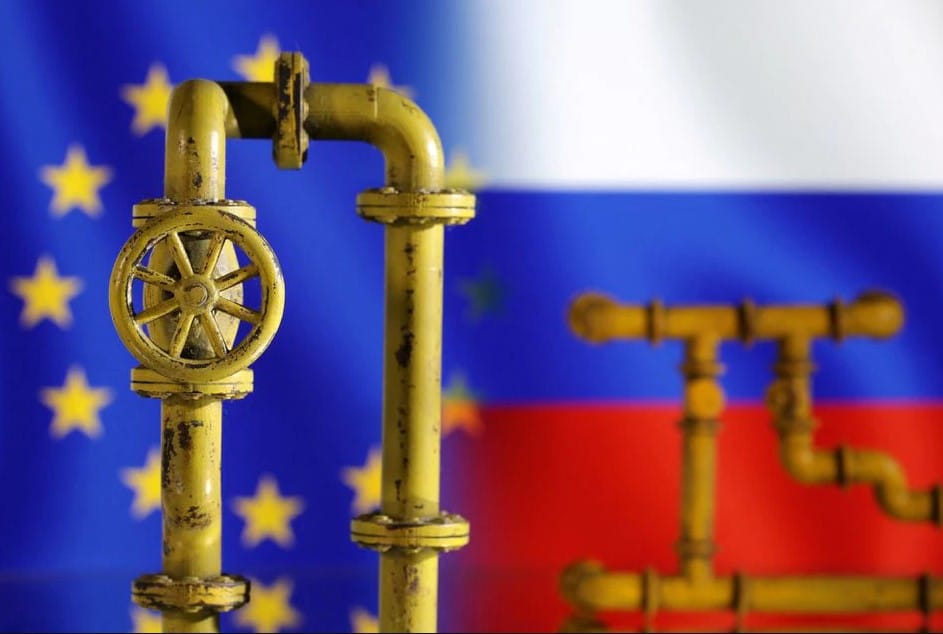
The European Union’s attempt to tighten restrictions on Russian LNG shipping has run into resistance from Greece, opening a new dispute over whether sanctions are weakening Moscow or simply driving valuable vessels and maritime business beyond European control.
Athens is withholding its support for the bloc’s 21st sanctions package against Russia, with the Financial Times reporting that Greece raised concerns over the effect of the proposed restrictions on Dynagas, the LNG shipping company controlled by Greek shipowner George Prokopiou.
According to the report, Greece’s permanent representative told other EU ambassadors that a planned restriction on transporting Russian liquefied natural gas to countries outside the bloc would “ruin” the company. Other officials familiar with the negotiations said Dynagas was presented as the principal reason Athens could not support the package.
The Greek objection has not been publicly confirmed by either the government or Dynagas. However, a separate Reuters report confirmed that EU ambassadors failed to reach an agreement on Wednesday, leaving proposed measures against Russian banks, cryptocurrency networks, drone production, oil traders and refiners unresolved.
At the heart of the disagreement are several vessels that are far from ordinary LNG carriers.
Dynagas operates five Arc7 icebreaking LNG ships serving Russia’s Yamal project, representing roughly one-third of the specialised fleet used on the route. Research group Urgewald identified five Dynagas-operated vessels among the Arc7 ships serving Yamal and said only vessels of this class can operate independently in the Gulf of Ob during the most difficult winter conditions.
The ships were built specifically to serve Yamal. Their reinforced hulls and specialised propulsion systems allow them to travel through Arctic ice, but those same characteristics make them among the most complex LNG carriers in operation and difficult to redeploy commercially.
This helps explain why Athens reportedly views the proposed restriction as more than the loss of several individual contracts. According to the Financial Times, Greece argued that Dynagas could eventually be forced to sell the vessels to non-Western buyers, moving them beyond European ownership without necessarily preventing them from continuing to carry Russian gas.
A separate window into Prokopiou’s exposure to the Yamal trade comes from Dynagas LNG Partners, the New York-listed company chaired by Prokopiou and whose fleet is managed by his privately owned Dynagas Ltd.
In its latest SEC filing, the partnership said two of its vessels, the Yenisei River and Lena River, were employed by Yamal under long-term charters extending to 2033 and 2034, respectively. These are separate from the five Arc7 vessels at the centre of the reported Greek objection.
The two contracts generated 35 per cent of the listed partnership’s revenue in 2025. The company warned that losing income under either charter would have a material adverse effect on its business, finances and ability to make distributions to investors.
The filing also showed that the charterer holds extension options that could keep the two vessels under contract until 2049, although the company said EU restrictions taking effect in 2027 would prevent them from continuing to transport Russian LNG in the same way.
However, the dispute is unfolding against an uncomfortable background for Brussels. While the EU is seeking to dismantle Russia’s LNG supply chain, European purchases from Yamal have continued to rise.
EU countries imported a record 9.97 million tonnes of Yamal LNG during the first half of 2026, representing 136 cargoes and an increase of 16 per cent compared with the same period last year, according to data reported by Reuters.
More than 97 per cent of Yamal’s deliveries during the period went to EU ports, with France, Belgium and Spain the three largest destinations. Urgewald estimated the value of those purchases at €5.96 billion.
Reuters said the wider rise in Russian gas deliveries partly reflected companies bringing forward supplies before the restrictions take full effect. The EU’s earlier ban on transhipping Russian LNG to countries outside the bloc has also resulted in more of the gas remaining in Europe.
The latest disagreement is therefore not the beginning of Europe’s withdrawal from Russian LNG, but another step in a sanctions regime that has become progressively more restrictive.
The EU’s 19th sanctions package banned Russian LNG imports under short-term contracts from April 2026, while allowing deliveries under existing long-term contracts to continue until January 1, 2027.
The 20th package then prohibited the provision of maintenance and other services to Russian LNG tankers and icebreakers. From January 2027, EU operators will also be prohibited from providing LNG terminal services to Russian companies and entities controlled by Russian nationals or operators.
The proposed 21st package seeks to tighten the maritime restrictions further. In its public proposal, the European Commission said it wanted to restrict LNG tanker sales to Russia and sanction vessels providing bunkering and other assistance to the Russian shadow fleet.
However, the precise wording of the measure opposed by Greece has not been made public because negotiations between member states remain confidential. The claim that it would prohibit Dynagas from transporting Russian LNG to third countries comes from officials cited by the Financial Times.
Athens’ reported argument nevertheless follows a position previously expressed by other major EU shipping states.
In December, Cyprus and Malta warned that tougher measures against Russia should not come at the expense of legitimate European maritime businesses, as the EU and G7 considered replacing the Russian oil price cap with a blanket ban on maritime services.
The Maltese government specifically cautioned that pushing shipping services into non-EU jurisdictions would leave Brussels with less oversight and fewer means of enforcing European standards.
Cyprus Foreign Minister Constantinos Kombos, meanwhile, told Reuters that a “holistic approach” was needed. He said further pressure on Russia should be accompanied by a stronger focus on sanctions evasion, which involved numerous actors and was undermining the collective effort.
The failure to agree on the 21st package has also created a separate problem over Russian oil. EU ambassadors agreed to keep the existing $44.10-per-barrel price cap until July 23, preventing the automatic mechanism from recalculating the limit while negotiations continue.
The dynamic mechanism normally sets the ceiling 15 per cent below the average market price for Russian Urals crude during the previous 22-week reference period. Keeping the limit unchanged became more urgent after the conflict in the Middle East pushed global oil prices higher.





Click here to change your cookie preferences