
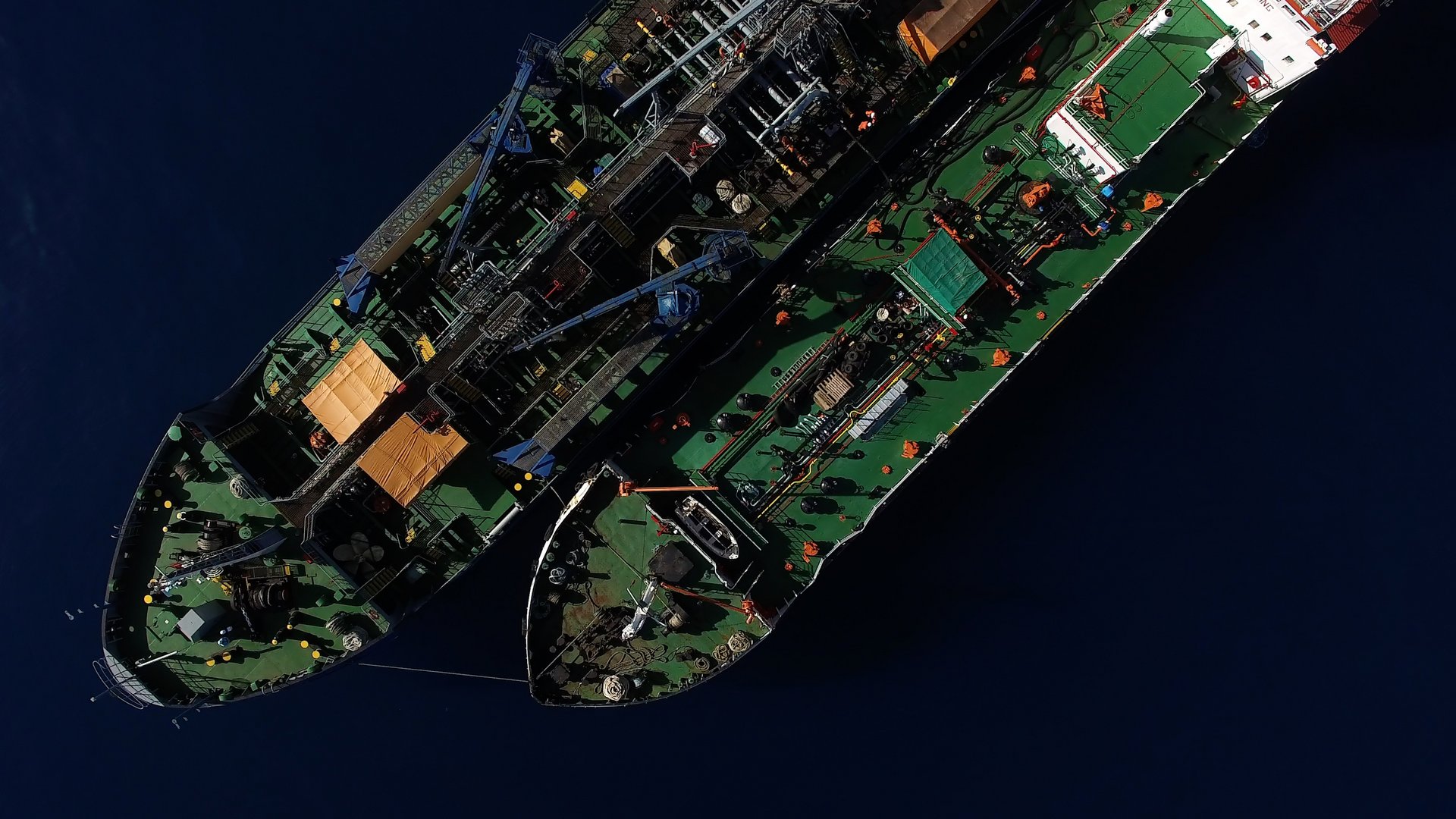
Petronav Ship Management renews commitment to maritime education
Petronav Ship Management Ltd, the Limassol-headquartered vessel management arm of Island Oil Holdings, has supported the Cyprus Shipping Chamber’s (CSC) Adopt a Ship programme over the years, connecting its vessels with classrooms and giving young students an opportunity to learn about life at sea and the wider maritime industry.
As the programme celebrates 20 years, the company congratulated the CSC on an initiative that has continued to grow, evolve and extend its reach beyond Cyprus, inspiring thousands of young people to discover the maritime industry.
For Petronav, investing in maritime education is an investment in the future of shipping. However, its involvement in the programme is also part of a much broader story of how Island Oil Holdings, the group to which it belongs, has expanded its activities while placing education, community support and sustainability more firmly within its business strategy.
That development is set out in the group’s latest sustainability report, which traces its growth from a Cyprus marine fuel trader into a wider maritime services organisation operating across fuel supply, ship management, maritime software, vessel equipment, seafarer training and renewable energy.
The privately owned group now has offices in eight countries, physical supply operations at 11 ports and a fleet of 10 owned oil tankers with a combined deadweight of 48,228.10 tonnes. Three of its vessels are contracted by the European Maritime Safety Agency for pollution-prevention services, while its workforce reached 288 people at the end of 2024.
The group’s history dates back to 1992, when Island Oil Limited was founded and became active in the international trading of bunkers and lubricants. The following year, it acquired the M/T VERONICA and began physical bunkering operations and ship agency services in Cyprus.
Its operations broadened in 1998 with the establishment of Island Petroleum to handle the group’s physical activities and the formation of Petronav Ship Management to provide full management services for its vessels.
A major restructuring followed in 2005, when Island Oil Holdings was formed and the group’s companies were placed under its umbrella, with the aim of improving its tax planning and operational structure as the business expanded.
In 2008, the group acquired its first newly built oil tanker, the 6,380-deadweight-tonne M/T ALEXANDRIA, while NavTech Supplies was formed to sell marine spare parts and equipment to shipowners and ship managers worldwide.
Physical bunkering operations were extended to Constanta, Romania, in 2009 through Island Petroleum S.R.L. A year later, Petronav secured its first EMSA pollution-prevention contract, covering the eastern Mediterranean, while the group acquired shares in E.J. Papadakis, a Cypriot company involved in the local supply and trading of industrial fuels.
International expansion continued in 2014, when Island Oil Trading PTE Ltd was established in Singapore and Petronav was awarded its first four-year EMSA pollution-prevention contract covering the Black Sea.
In 2015, Island Petroleum established a branch in Israel and began physical supply operations at Haifa Port. During the same year, Petronav secured the EMSA pollution-prevention contract for the eastern Mediterranean for a second time, again for four years.
By 2017, Island Oil Holdings had delivered close to 1.09 million tonnes of marine petroleum products worldwide. The group also renewed its fleet, replacing two older tankers with three vessels of younger tonnage.
Further expansion came in 2019, when Island Petroleum began supplying marine fuels in Ashkelon and Ashdod OPL. Petronav also secured its first EMSA pollution-prevention contract covering the central Mediterranean.
In 2020, Island Petroleum commenced physical supply operations at Ashdod Port, while Island Oil incorporated a subsidiary and began operating in London.
The group strengthened its management system in 2022, adding certification under the ISO 14001 environmental management and ISO 45001 occupational health and safety standards to its existing ISO 9001 quality certification.
Three further developments followed in 2023. Island Oil incorporated a subsidiary in Hong Kong, where operations began during the second quarter, acquired the M/T ASTRAIA for physical operations in Cyprus and secured ISCC certification for Island Oil Limited and Island Petroleum Limited to trade biofuels.
In 2024, Island Oil incorporated a subsidiary in Korea, Island Bio-Energy was added to the group’s operations and Island Petroleum’s Israeli business moved to new office premises in Haifa.
Today, the group’s primary activities include the physical supply of marine fuel oils in the eastern Mediterranean and Black Sea, the international trading of marine fuel oils and lubricants and the domestic provision of LPG, light fuel oil and gasoil to hotels and other light industrial customers.
However, its business has expanded well beyond fuel supply. Island Oil Holdings also provides ship management, maritime software, ships’ spare parts and specialist support, as well as specialised seafarer training and research and development services focused on the decarbonisation of shipping.
Its international fuel and lubricant trading business operates through offices in Cyprus, Greece, Singapore, the United Kingdom, Korea and Hong Kong, while its physical marine fuel supply and ship agency operations have offices in Cyprus, Israel and Romania.
Within the wider group, NavTech Supplies provides ships’ spare parts and specialist support services, while Petronav Ship Management is responsible for vessel management. Petronav Maritime carries out research and development focused on shipping decarbonisation and provides seafarer training recognised by the Cyprus Shipping Deputy Ministry.
Meanwhile, E.J. Papadakis supplies LPG, light fuel oil, gasoil and lubricants to Cyprus’ agriculture, leisure, light industrial and building sectors, while Danaos Systems Cyprus provides maritime software solutions.
Island Bio-Energy operates the group’s waste-to-energy facility, where anaerobic digestion is used to transform organic waste into sustainable biogas. Renewable electricity and heat are subsequently produced through grid-connected, onsite combined heat and power units. Island Shipholding, meanwhile, owns the group’s vessels.
This range of activities has allowed Island Oil Holdings to develop into what the report describes as a comprehensive maritime solutions provider, combining marine fuels with fleet services, technology, professional training and renewable energy.
The fleet is managed internally, with the group’s ship management arm overseeing technical maintenance, daily operations and health, safety and environmental performance. Island Oil described the vessels as modern and fuel-efficient tankers used to transport marine fuel oils.
Alongside its commercial presence, Island Oil is a member of 13 maritime, business, educational, environmental and cultural organisations, including the Cyprus Shipping Chamber (CSC), the Cyprus Marine Environment Protection Association, the Cyprus Maritime Academy, the International Bunker Industry Association, the Limassol Chamber of Commerce and Industry (Evel) and the Cyprus Employers and Industrialists Federation (Oev).
The report identifies the CSC and Cymepa as particularly important relationships in which the group holds governing-body positions, participates in committees, provides support beyond routine membership fees and considers their development a strategic priority.
Introducing the group’s sustainability report, chairman and chief executive Chrysostomos S. Papavassiliou said Island Oil remained “steadfast in its commitment to leading Cyprus’s transition toward a sustainable future”.
“In 2024, we took significant steps to further align our operations with sustainable principles, embedding Environmental, Social, and Governance considerations across all key areas of our decision-making, governance, strategy, and risk management frameworks,” he said.
Papavassiliou acknowledged that the transition was taking place during a period of climate pressure and wider social challenges, saying “in an era defined by climate change and complex global social challenges, we recognise the importance of transparency in communicating both the actions we are undertaking and the progress we are achieving on our sustainability journey”.
“Through comprehensive assessments, strategic planning, and continuous engagement with our stakeholders, we are proactively working to reduce our environmental impact, enhance health and safety standards, and create lasting value for the communities in which we operate,” he added.
The report covers Island Oil, Island Petroleum, NavTech Supplies, Petronav Ship Management, Petronav Maritime, Danaos Systems Cyprus, E.J. Papadakis, Island Shipholding and Island Bio-Energy.
A key development was the company’s first double materiality assessment under the EU’s Corporate Sustainability Reporting Directive, examining both the financial implications of sustainability issues and the effect of the group’s activities on people and the environment.
Island Oil also expanded the use of Danaos software across its vessels to improve emissions data. Papavassiliou said these measures “significantly improved the accuracy and consistency of emissions data, enabling more robust reporting and better alignment with industry best practices”.
The report included Scope 3 emissions for the first time, covering indirect emissions from purchased products, logistics, business travel, employee commuting and shipping-related activities.
Papavassiliou described the move as “a further step toward transparency and accountability”, saying that “By expanding our emissions reporting beyond Scope 1 and 2, we aim to provide a more complete picture of our environmental impact and align with evolving stakeholder expectations and regulatory frameworks.”
He added that it reflected the group’s “broader ESG commitment to responsible growth, data-driven decision-making, and continuous improvement in sustainability performance”.
Total Scope 1, 2 and 3 emissions reached 634,170.44 tonnes of carbon dioxide equivalent in 2024, up from 588,920.62 tonnes in 2023, but below the 688,973.70 tonnes reported for 2022.
Scope 1 emissions increased to 22,813.18 tonnes, largely because of higher vessel fuel consumption and the inclusion of Island Bio-Energy. Scope 3 emissions rose to 611,234.27 tonnes, with purchased goods and services accounting for the vast majority.
Overall energy consumption also increased to 220.38 million megajoules, from 207.25 million in 2023. At the same time, Island Bio-Energy generated and sold 3.34 million megajoules of renewable electricity produced from biogas.
Papavassiliou said “as part of our commitment to sustainable development and circular economy principles, we made a strategic investment in a waste management facility that converts organic waste into biogas”.
“This biogas is then used to generate electricity, which is fed into the national grid, contributing to renewable energy production and reducing the environmental footprint,” he said.
The group also established EU Allowance trading desks following the extension of the EU Emissions Trading System to shipping, which Papavassiliou said were designed “to support clients in managing carbon compliance obligations”.
Meanwhile, Island Oil Limited and Island Petroleum Limited are certified to trade biofuels under the ISCC-EU scheme, while the group revised energy-efficiency plans across its fleet and began installing LED lighting, starting with the M/T ASTRAIA.
It also participated in a project to develop a floating power plant using compressed biomethane to supply electricity to ships in port or at anchorage. Initial tests were carried out with the M/T ASTRAIA in November 2024.
Waste management was another area of focus. The group worked with licensed contractors to collect and recycle office and vessel waste, installed onboard filtration systems and began phasing out single-use plastic water bottles.
Papavassiliou said these arrangements ensured “the proper disposal and recycling of a wide range of waste streams, including both office-based and vessel-generated waste”.
Island Oil also agreed to collect used cooking oil from its vessels through Tiganokinisi and convert it into biodiesel, with proceeds supporting environmental education at Linopetra Lyceum.
The group reported no oil spills between 2022 and 2024 and no operational discharges into local water bodies.
“The Group continues to prioritise the protection of air quality and the sustainable management of marine and freshwater resources,” Papavassiliou said, describing the absence of oil spills as “a testament to our strict adherence to coastal and international maritime regulations”.
“This reflects our ongoing commitment to safe navigation, the preservation of marine biodiversity, and the minimisation of our environmental impact,” he added.
Turning to the workforce, Papavassiliou said “the well-being of our people remains a fundamental priority for the Group”.
“We are committed to fostering a supportive and engaging work environment by investing in continuous professional development, structured performance evaluations, opportunities for internal advancement, and competitive compensation and benefits,” he said.
Training more than doubled to 5,216.1 hours in 2024, while 97 per cent of employees received performance and career development reviews.
The group also recruited nine female seafarers and introduced a campaign addressing violence, bullying and sexual harassment onboard.
Papavassiliou said health and safety were “deeply embedded in our corporate culture and operational practices”.
“In a constantly evolving industry landscape, we actively promote a culture of awareness, responsibility, and care, ensuring that all personnel operate in an environment that prioritizes their security, supports their growth, and upholds their dignity,” he said.
Two non-fatal work-related injuries were recorded among seafarers during 2024, although there were no fatalities, high-consequence injuries or cases of work-related ill health.
Island Oil also allocated around $200,000 to community investment, supporting maritime students and cadets, firefighters in training, health organisations, disability charities, cancer patients and The Mission to Seafarers.
Papavassiliou said the group maintained “an ongoing commitment to Corporate Social Responsibility, engaging in a range of environmental, social, and cultural initiatives throughout the year”.
“Our initiatives aim to promote environmental stewardship, enhance social well-being, and support the preservation of cultural heritage, reflecting the Group’s broader commitment to sustainable and inclusive development,” he added.
On governance, Island Oil operates board committees covering audit, risk and sustainability, remuneration and governance, while it also introduced confidential whistleblowing channels.
“The Group is committed to enhancing its organisational resilience and advancing its ESG agenda through the implementation of a comprehensive strategy underpinned by sound corporate governance practices,” Papavassiliou said.
He added that Island Oil would continue “to strengthen and evolve our governance frameworks, ensuring they remain effective, transparent, and aligned with best practices”, while promoting inclusivity and diversity as part of its “dedication to ethical leadership and sustainable value creation”.
The group reported no confirmed corruption cases, critical concerns or significant regulatory breaches between 2022 and 2024.
“As we look ahead, we do so with a clear understanding of the complexities and challenges that may emerge,” Papavassiliou said.
Nevertheless, he added that the group’s “commitment to steering the Group towards a sustainable and resilient future continues to be resolute”.
“We are devoted to upholding the highest standards of integrity and excellence as we strive to realize the full potential of Island Oil Holdings,” Papavassiliou concluded.





Click here to change your cookie preferences