
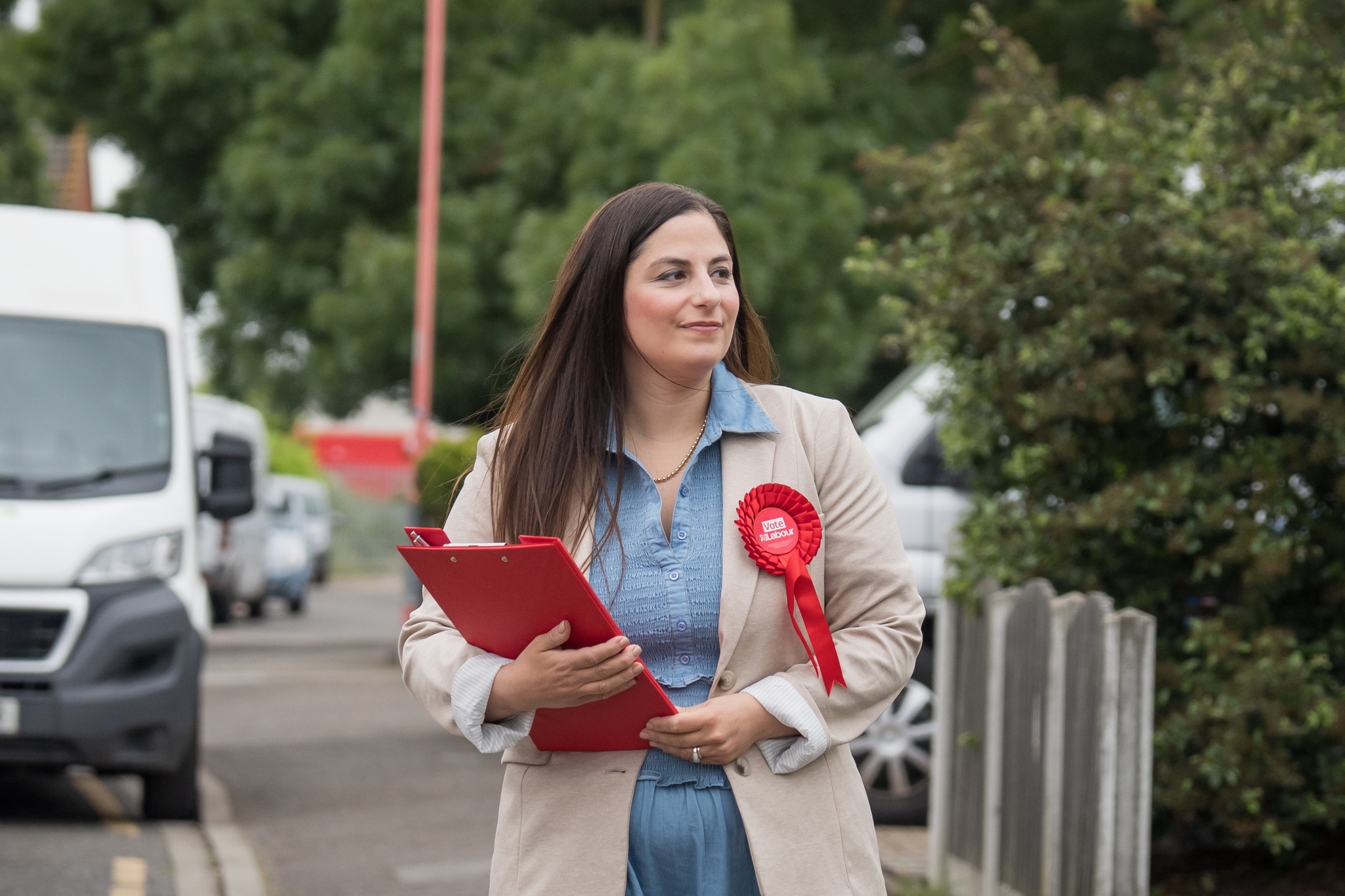
British Cypriot member of parliament Nesil Caliskan has been moved to Prime Minister Andy Burnham’s new “No 10 North” as part of his new initiatives to move government offices from London to Manchester.
Caliskan has since may been the United Kingdom’s parliamentary undersecretary of state for devolution, local growth, and communities, with that role having previously been a part of the country’s housing ministry.
However, British Lord Privy Seal Angela Smith announced on Tuesday that Caliskan’s office would be transferred from the housing ministry to the new “No 10 north” structure.
“To ensure places are at the very heart of government strategy, the prime minister is establishing No 10 North as the engine room of devolution and good growth in every postcode, across government and the wider economy,” she said.
She added that the move will ensure “that local economic growth policy and regional empowerment are no longer isolated from one another”, thereby “establishing No 10 North as the dominant driver of the UK’s economy”.
The name “No 10 North” is a reference to the UK prime minister’s official residence, 10 Downing Street in London, with Burnham having said that the plan to relocate government offices and functions to Manchester will constitute “the biggest rebalancing of power our country has ever seen”.
He added that No 10 North will be the “nerve centre of a rewired Britain”, though on this front, he has faced criticism from opposition figures, with Conservative Party leader Kemi Badenoch saying that Burnham “doesn’t know what to do so he wants to pass the problem to someone else”.
Likewise, Liberal Democrat leader Sir Ed Davey said that “people have heard this sort of talk before only to be badly let down because nothing changes”, and warned Burnham not to “repeat that mistake”.
“If he’s serious about firing up growth and cutting the cost of living, Burnham must ditch Labour’s old red lines on Europe and take Britain into the single market,” he said.
Caliskan represents the London constituency of Barking, and was appointed to the undersecretary role by Burnham’s predecessor, Sir Keir Starmer, in May.
Burnham became prime minister on Monday, and said that “in doing so, I am acutely conscious that I am the sixth person in the last ten years to walk up this street, the seventh Prime Minister since 2016”.
“I know people at home are fed up with politics. I hear you. And I want to be honest with you. We have not been good enough, and we need to be better. We will be. We will make this moment a circuit breaker for Britain, bringing forward the biggest changes in the last 40 years,” he said.
He went on to say that “in the 1980s, Britain took some wrong turns”, and added that “political power was centralised, economic power privatised, large parts of the country de-industrialised, and they still haven’t recovered”.
“That’s why we will change politics, to make it more collaborative, more about problem solving than point scoring. We will take power out of here and carry it into every postcode in the land so that they can do more,” he said.




Click here to change your cookie preferences