
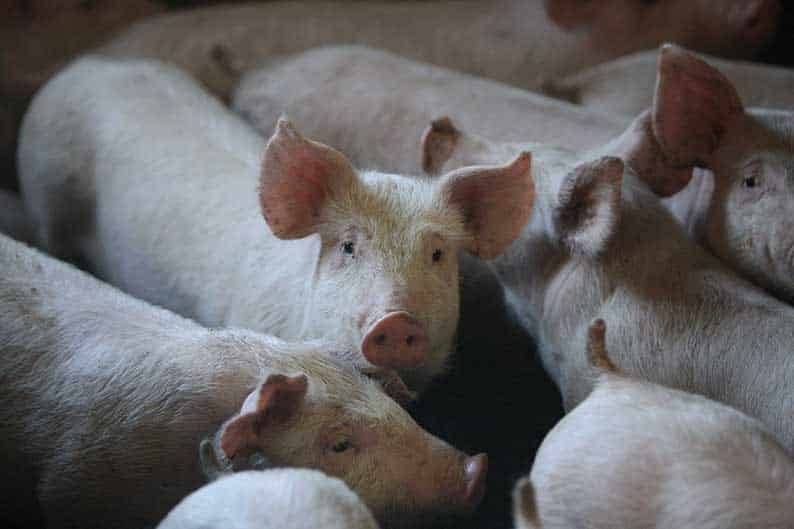
The government on Wednesday approved the allocation of €1.65 million worth of funding for pig farmers whose animals were culled in response to an outbreak of foot and mouth disease earlier this year.
Agriculture Minister Maria Panayiotou said that supporting livestock farmers “has been a priority for the government” since the initial outbreak.
Farmers will be entitled to €50 per culled pig up to a maximum of €250,000 per farm, with Panayiotou saying that this amount was decided upon “in collaboration with the pig farmers’ association”.
Unlike in previous allocations of compensation awarded to farmers whose livestock was affected by foot and mouth disease, the government has not offered pig farmers amounts which exceed the European Union’s maximum values on which it will agree to co-finance compensation for culled animals.
The government had in May announced that it would pay farmers between €43 and €178 per regular sheep and goat and between €47 and €420 per sheep and goat which is deemed to be of “high genetic value” as compensation if they are culled as a result of the disease.
Additionally, it was due to pay farmers between €150 and €1,500 per regular cow culled, with this figure rising to up to €2,500 for exceptional cattle.
The EU’s maximum values sit at €1,000 per cow and €140 per sheep, with the bloc financing 30 per cent of compensation payments up to that amount.
For pigs, the EU’s maximum value sits at €125 per animal, meaning that the government would therefore be entitled to receive a maximum of €37.50 from the EU per pig culled.
Panayiotou had said last month that she expected the rates of compensation to rise further, but this has not yet come to pass.
She had said that it is “tragic to lose in an instant the livestock which constitutes the work of a lifetime” and therefore promised that the government would offer “substantial support for livestock farmers”.
Wednesday’s announcement may prove to be one of Panayiotou’s last acts in government, after deputy government spokesman Yiannis Antoniou said last week that he can say “for certain” that “at this moment, the fact we have before us is that the agriculture minister must be replaced”.
Panayiotou, a philology teacher, was included on the educational service commission’s list of appointees to teaching roles in February for the coming September – a move which would require her to step down from her ministerial role.
However, her party, Edek, later said that it had not been informed of any such plans, with party spokesman Giorgos Georgiou telling the Cyprus Mail that “we have no such information”.
“Our objective since this government came to power, since 2023, is to have ministers from our party in the government, so as to implement the government’s programme,” he said.





Click here to change your cookie preferences