
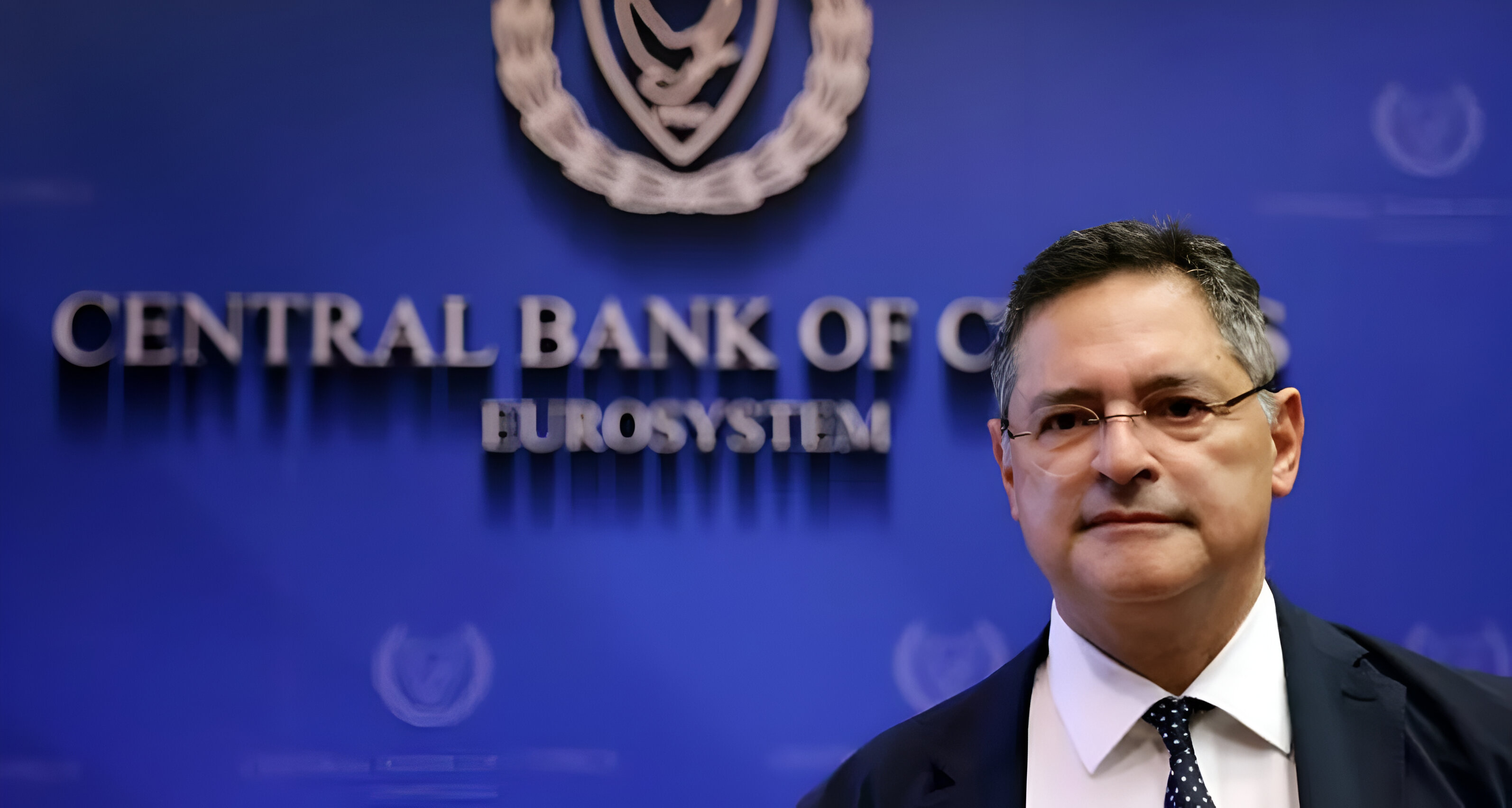
Patsalides warns inflation risks are rising over energy
Central Bank of Cyprus (CBC) governor Christodoulos Patsalides has stated that inflation risks are gradually increasing because of persistently high energy prices, while insisting there is still no evidence to justify an immediate interest rate increase.
In an interview with specialist financial news wire Econostream, Patsalides said the European Central Bank’s (ECB) decision last week to leave rates unchanged was appropriate because inflation remains broadly in line with expectations and second-round effects have yet to emerge.
“There was no evidence that would have supported a rate hike,” Patsalides said.
“Second-round effects are not evident, expectations are anchored and inflation is more or less in line with its expected path,” he added, while warning that risks remain tilted upwards because of developments in energy markets.
Patsalides said the longer geopolitical tensions persist, the greater the possibility that higher oil prices will spread through the economy, eventually feeding into broader inflation.
“As more time passes without a resolution of the situation, and prices remain elevated, being pre-emptive gains in importance,” he said, explaining that policymakers must balance incoming evidence with the need to act before inflation becomes entrenched.
At the same time, he stressed that monetary policy decisions should continue to be based on a comprehensive assessment rather than a single indicator.
“One has to look at the whole set of data before assessing and deciding,” Patsalides said.
The governor said he is paying particular attention to whether higher oil prices are filtering into production costs, consumer prices, inflation expectations and wages, adding that there is no evidence of broad cost-push inflation outside energy and that wage demands remain contained.
He also warned that higher government deficits and increased defence spending across Europe could eventually create inflationary pressures despite limited fiscal space.
Patsalides firmly defended the ECB’s decision to abandon forward guidance, arguing that the current level of uncertainty makes it inappropriate to signal future policy moves.
“Honesty, flexibility and credibility” are what would be lost if the ECB resumed giving guidance, he said.
“One should not guide anyone toward a place that may not materialise, given the elevated uncertainty,” Patsalides added.
Asked about the current policy stance, he described interest rates as “neutral to restrictive”, saying they are “at the right level” for now, while cautioning that the outlook could change as risks evolve.
On the ECB’s operational framework, Patsalides said discussions on minimum reserve requirements should take place as part of the broader review due to begin in the autumn.
He added that now would not be an appropriate time to announce changes because heightened market volatility could create confusion.





Click here to change your cookie preferences