
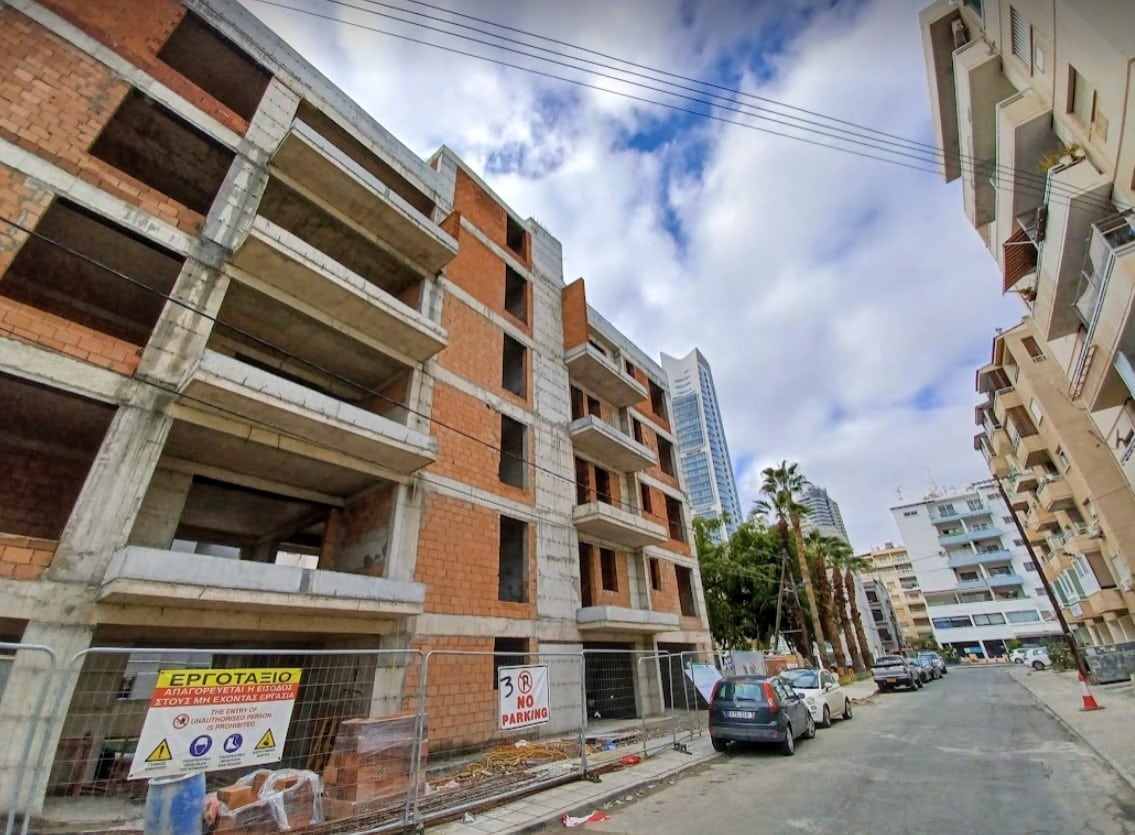
Construction activity across the European Union weakened sharply in June, according to Eurostat data released Thursday, although Cyprus is entering the period from a comparatively strong position, backed by a substantial pipeline of projects and rising housing demand.
Seasonally adjusted production in construction fell by 1.3 per cent in the euro area and 1.0 per cent across the EU in June compared with May, according to Eurostat’s first estimate.
The figures marked a reversal from May, when construction production had increased by 0.2 per cent in the euro area and 0.1 per cent in the EU.
On an annual basis, production was 0.7 per cent lower in the euro area in June than a year earlier, while the EU recorded a marginal 0.2 per cent increase.
The monthly decline was broad-based, with euro area production falling by 0.9 per cent in building construction, 1.4 per cent in civil engineering and 1.8 per cent in specialised construction activities.
Across the EU, building construction and civil engineering both fell by 0.7 per cent, while specialised construction activities declined by 1.7 per cent.
Among member states with available data, the sharpest monthly contractions were recorded in Slovakia, where production fell by 4.6 per cent, followed by Hungary at 3.9 per cent and France at 2.9 per cent.
Romania recorded the strongest monthly increase at 4.9 per cent, followed by Sweden at 2.0 per cent and the Netherlands at 1.0 per cent.
The annual picture was similarly uneven.
Euro area building construction fell by 6.5 per cent compared with June 2025, although civil engineering increased by 0.3 per cent and specialised construction activities by 0.2 per cent.
In the EU, building construction declined by 4.9 per cent, while civil engineering rose by 1.4 per cent and specialised construction activities by 0.5 per cent.
Spain recorded the largest annual fall at 8.5 per cent, followed by Hungary at 5.0 per cent and France at 4.5 per cent.
Slovenia posted the strongest annual increase at 22.9 per cent, followed by Romania at 18.4 per cent and Finland at 12.0 per cent.
Against that backdrop, Cyprus has continued to show strong underlying construction and property demand, with building permits and project values pointing to a substantial development pipeline.
The latest Cypriot data showed that 2,915 building permits were issued during the first four months of 2026, up 35.1 per cent from 2,157 during the corresponding period of 2025.
The total value of those permits increased by 46.1 per cent to €1.67 billion, while authorised floor area rose by 45.5 per cent to 1.35 million square metres.
The number of planned residential units climbed by 65 per cent to 7,131, with apartment developments accounting for much of the increase.
Permits for apartment blocks provided for 5,184 homes during the four-month period, an 85.9 per cent increase from a year earlier.
The strength of the pipeline has been accompanied by evidence that projects are translating into economic activity, with construction gross value added rising by 4.9 per cent year-on-year in the first quarter of 2026.
Construction output also increased by 0.7 per cent during the quarter, while construction prices were 4.7 per cent higher year-on-year.
Property demand has remained strong alongside construction activity, with sales contracts reaching 10,007 during the first half of 2026, an increase of 15 per cent from the same period of 2025.
Foreign demand was particularly strong, with purchases by foreign buyers rising by 23 per cent, compared with a 10 per cent increase among Cypriot residents.
The outlook has also been supported by mortgage lending, which increased by 19.5 per cent year-on-year during the first five months of 2026.
Eurobank Research has described the sector as entering the second half of the year from a position of considerable strength.
“Cyprus’ construction sector enters the second half of 2026 from a position of considerable strength, supported by a robust project pipeline, expanding activity and continued growth in construction value added,” Eurobank Research said.
“While labour shortages and heightened regional uncertainty have become more prominent challenges, current indicators suggest that the sector remains well placed to sustain its expansion,” the research team added.
Industry representatives have similarly pointed to strong demand, while warning that supply-side constraints could limit how quickly the sector responds.
“The construction sector has always been one of the engines of the economy,” Oev director general Michalis Antoniou said, describing construction as a pillar supporting Cyprus’ return to growth following periods of crisis or recession.
Antoniou said the rise in permits showed that the property market remained attractive to both Cypriot and foreign investors, while increased construction was expanding housing supply and offering “at least a partial easing of the housing problem”.
“If we satisfy this demand, we will also contribute to alleviating the country’s housing issue,” he said.
However, labour shortages remain one of the sector’s most pressing constraints, with construction companies reporting difficulty finding enough workers to meet demand.
Eurobank Research found that 38 per cent of construction firms identified labour availability as their main limiting factor, compared with 11 per cent in 2022.
Keve secretary general Philokypros Roussounides also described the latest permit figures as encouraging, saying the Cypriot economy had “demonstrated once again its resilience” despite successive crises and geopolitical tensions.
The figures reflected “to a large extent” a genuine strengthening of economic activity, although Roussounides said they should be examined further to determine whether individual large investments had influenced particular periods.
“What remains and what we hold is the positive sign regarding the development perspective of our country,” Roussounides said.
He called for a building permit system that was “more flexible, faster and more attractive”, arguing that bureaucracy and the pace of digital transition remained obstacles to construction and the wider economy.
Housing affordability remains another concern, with Roussounides acknowledging that buying a home was “certainly not as easy as it was in previous decades”.
Higher energy, raw material and construction costs, along with geopolitical developments, have continued to feed into final property prices.
At the same time, Antoniou said demand remained high, partly reflecting population growth and Cyprus’ success in attracting investments involving a physical presence on the island.
He also played down concerns about a property bubble, describing lending by financial institutions as prudent and cautious and putting the risk of such conditions emerging at minimal to non-existent levels.
The latest Eurostat figures therefore provide a mixed European backdrop for Cyprus, with construction activity contracting across much of the EU in June while the Cypriot sector continues to benefit from a strong project pipeline and resilient demand.
The key question for Cyprus will be whether labour shortages, higher costs and regional uncertainty can be managed sufficiently to allow the substantial pipeline of approved projects to translate into continued construction activity.





Click here to change your cookie preferences