
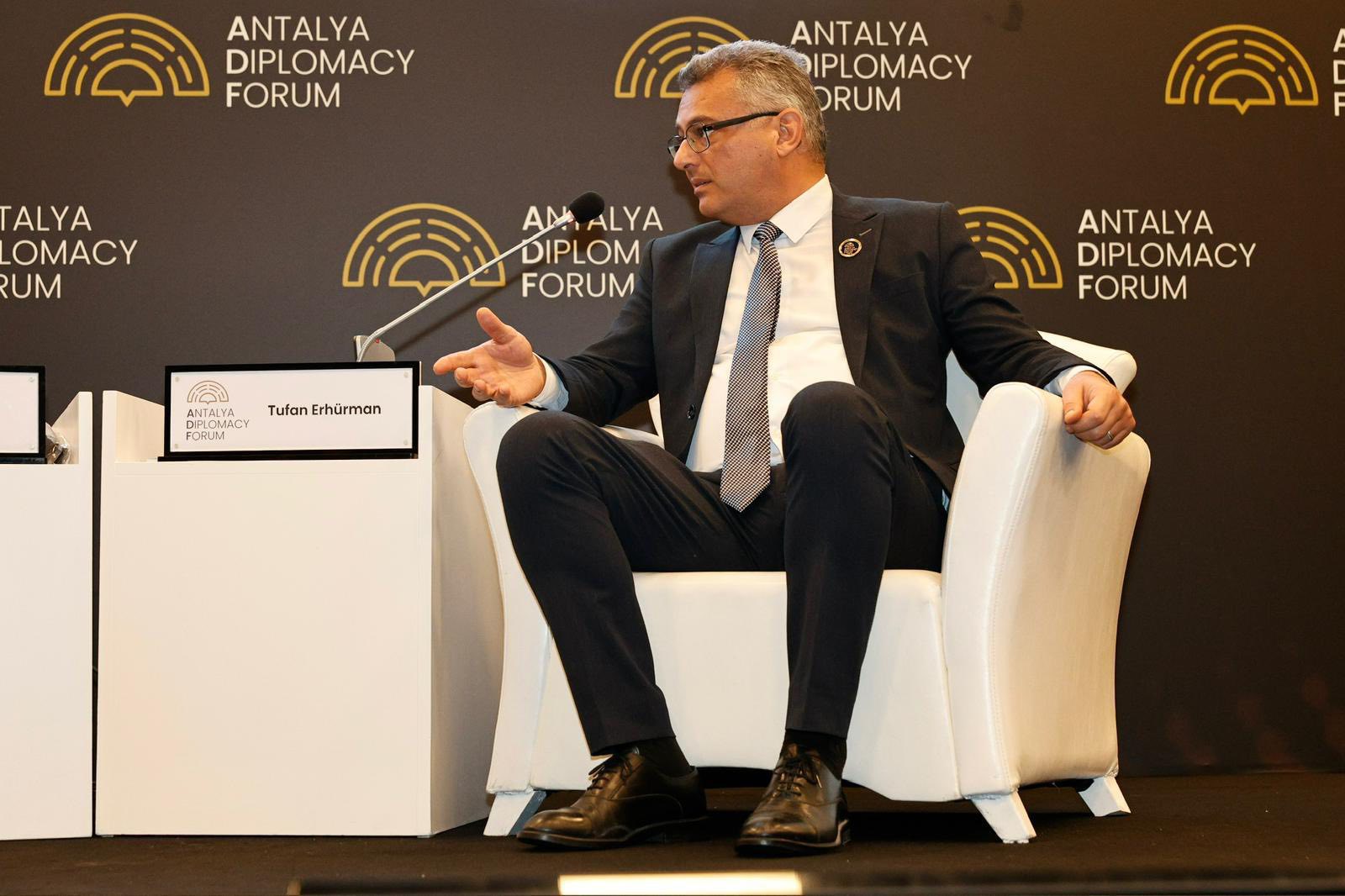
Turkish Cypriot leader Tufan Erhurman on Thursday moved to defend the Immovable Property Commission (IPC), with plans having been mulled in the Republic of Cyprus’ parliament in recent months for an alternative fund to be created for Greek Cypriot displaced persons.
He also pointed out that the Republic of Cyprus has thus far not created an equivalent mechanism through which Turkish Cypriot displaced persons can be compensated for property they fled during and after Cyprus’ intercommunal conflicts.
“In the south, press commentaries are mentioning efforts by the Greek Cypriot leadership to obstruct or hinder Greek Cypriots’ applications to the Immovable Property Commission. As we have always said, a complete solution to the property issue in Cyprus is only possible with a comprehensive solution to the Cyprus problem,” he said.
He added that “by establishing the Immovable Property Commission, we have created a mechanism through which Greek Cypriots can apply regarding their property rights claims during the period leading up to a solution”.
“Furthermore, this mechanism, the Immovable Property Commission, has been recognised by the European Court of Human Rights as an effective domestic legal remedy in accordance with international law,” he said.
He added that “maintaining such a mechanism unilaterally under such conditions is certainly not easy”, but stressed that “while not directly affecting the core issue, we have addressed any shortcomings which have emerged”.
On this front, he also promised to “rapidly strengthen the Immovable Property Commission even more”.
“Moreover, there is no similar mechanism in the south for evaluating Turkish Cypriots’ claims regarding their immovable properties remaining in the south. Those who try to use other mechanisms are generally told to wait until ‘after the solution’ to gain access to their rights,” he said.
Given this to be the case, he asked “why are applications to the Immovable Property Commission, which has been approved by the European Court of Human Rights, being obstructed?”.
“Furthermore, why are attempts being made to resolve the property issue on the island through criminal law instruments, resorting to methods which would lead to consequences restricting individuals’ liberty?” he asked.
He then asked whether “such initiatives lead to the establishment of trust between Turkish Cypriots and Greek Cypriots, or to tensions”.
“Under these circumstances, does law become an instrument of protecting individuals’ rights, or of politics? We are explaining this tirelessly, relentlessly, to all our counterparts in the international community, and we will continue to do so, much more, and much more effectively,” he said.
His reference to “criminal law instruments” comes with the Republic of Cyprus having made a series of arrests of individuals it accuses of having participated in the development and sale of real estate in the north which belonged to Greek Cypriots prior to 1974.
A number of individuals, including Israeli national Simon Aykut, have now been convicted in these cases, while a German national has been held in custody for over two years after having been arrested at Larnaca airport in 2024. Her case caused the German embassy in Nicosia to issue a “strong protest” and demand her release.
Established in 2005, the IPC handles claims for compensation, restitution of Greek Cypriot-owned property in the north and land exchanges filed by Greek Cypriot displaced persons and their descendants.
According to its latest figures, released on August 14, a total of 8,755 applications have been lodged with the IPC, of which 3,592 have been concluded.
The IPC has awarded exactly £662,933,062 (€773,480,465) in compensation and has also ruled for exchange and compensation in two cases, for restitution in seven cases, and for restitution and compensation in eight cases.
Additionally, it has delivered a decision for restitution after the Cyprus problem in one case, and in another ruled for partial restitution.
In September last year, the Republic of Cyprus’ House refugees committee mulled the creation of a new national fund to reimburse Greek Cypriots who lost access to their immovable property in 1974.
The plans had been brought to parliament by Disy. It was then discussed again in February, though no formal proposal has yet been put to a vote on the House floor.





Click here to change your cookie preferences