
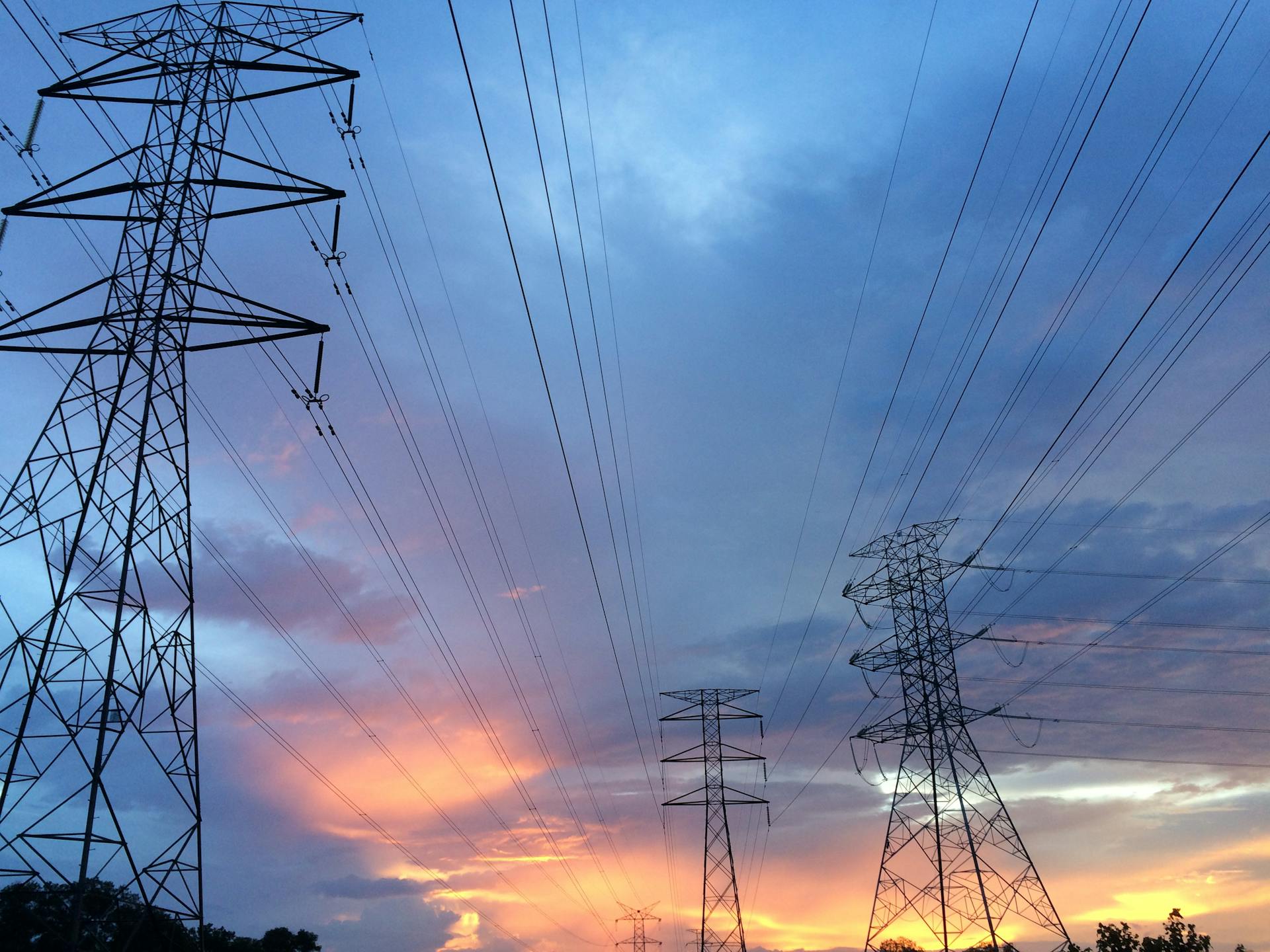
Power cuts in “various areas” of Cyprus experienced on Saturday morning was caused by a fault in the north, the transmission system operator said.
It said the fault had occurred at 5.51am, resulting in some consumers being cut off from the grid. Power was then restored across the island by 6.09am.
This was confirmed by Turkish Cypriot electricity workers’ trade union El-Sen leader Ahmet Tugcu, who wrote in a post on social media that “the world has switched to silicone insulators, but we are still papering over the cracks”.
Insulators block the flow of electric current and prevent it from going where it is not wanted, keeping power moving safely inside wires. Faulty insulators can cause power cuts by either creating a short circuit or a ground fault, which force protective relays to trip circuit breakers.
Tugcu told the Cyprus Mail that at present, the north uses glass insulators, which he said “are both expensive and require a lot of labour to replace”, while also being “made of heavy material”.
By contrast, he said, “silicone insulators are easy to clean, inexpensive and are quicker to replace”.
“Today’s malfunction is due to the seasonal maintenance of the power grid,” he added.
Saturday’s power cuts come a day after a “lack of communication” between solar farms and the electricity distribution coordination centre caused solar farms to be cut out of the automatic supply system as the readings they were sending to the coordination centre were incorrect.
This caused power cuts across the island, with the electricity authority initially buying 30 megawatts of electricity from the Turkish Cypriot authorities, before the issue then spread to the north.
Tugcu had told the Cyprus Mail on Friday that the issue which had arisen in the north had come about as the north does not have a “base load power plant”, which is a large station which runs non-stop to always supply the minimum amount of electricity an electrical grid needs.
Given that the increased demand was therefore placed on the two existing power stations, the Teknecik plant near Kyrenia, run by the Turkish Cypriot electricity authority, Kib-Tek, and the Kalecik plant near Trikomo, run by Turkish energy company Aksa, he said that it “tripped the 25-year-old machinery”.




Click here to change your cookie preferences