
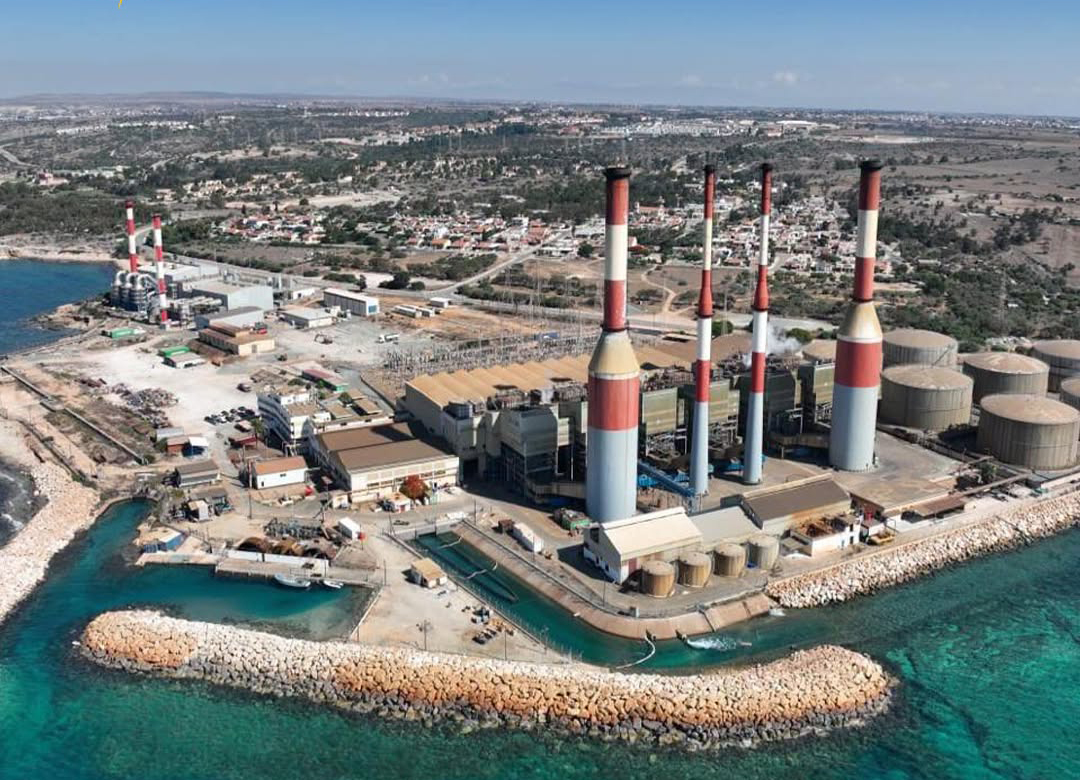
The electricity authority plans to build new electricity storage capacity both at the Dhekelia power station and at the Moni power station, with the aim of limiting the extent to which energy generated by renewable sources is lost during peak production hours, EAC spokeswoman Christina Papadopoulou said on Wednesday.
She told the Cyprus Mail that at Dhekelia, the storage system will have a power capacity of 80 megawatts and a storage capacity of 160 megawatt hours, and that after the contract for its construction was signed with the Cyprus telecommunications authority (Cyta) in February, the system is expected to enter operation in September next year.
The contract cost the taxpayer €33,733,640.
The storage system in Moni, she said, will be somewhat larger, stretching to a power capacity of 100 megawatts and a storage capacity of 200 megawatt hours.
She said that the Cyprus energy regulatory authority (Cera) has issued a construction permit, and that the EAC has submitted to the transmission system authority an application for the issuance of terms of connection.
At the same time, she said, the environment department is expected to publish an impact assessment report about the storage plans, while the Limassol district government has yet to complete its evaluation of the planning application.
With the project still in its infancy, an exact costing of the project has not yet been made, but Papadopoulou said the EAC estimates that it will cost around €50 million and will take a year to complete from the start date of the project.
That start date, she said, is expected to be around the beginning of next year.
Her comments come with the Cyprus chamber of commerce and industry (Keve) having on Wednesday morning called for “specific reforms and interventions which can substantially contribute to the gradual de-escalation of electricity costs”, with its suggestions including greater storage capacity.
It called for the “faster development of electricity storage infrastructure to maximise the utilisation of renewable energy sources”, as well as the “reduction of restrictions and cuts in energy production from solar systems”.
Away from the matter of electricity storage, it also called for the “acceleration of the arrival and utilisation of natural gas for electricity generation”, as well as the “upgrading and modernisation of electricity transmission and distribution neworks”.
In addition, it called for the “boosting [of] investments in energy efficiency projects for businesses and households” and the “simplification of licensing procedures for energy and renewable energy projects”.
“The discussion on energy costs should focus primarily on policies and reforms which can produce lasting results for the benefit of the economy and society. The country needs decisions which will enhance energy security, create the conditions for healthy competition, and allow for the gradual reduction of electricity costs for businesses and consumers,” it said.
Earlier, the government had stressed that consumer energy bills are already falling, with spokesman Konstantinos Letymbiotis citing a study carried out by the European Union’s statistics agency, Eurostat, which found that electricity prices are now 15 per cent lower than they were in 2024.
He pointed out that the government has reduced the value added tax levy on electricity from 19 per cent to nine per cent until March next year, while also subsidising bills for more than 429,000 households and 106,000 businesses.
On the matter of infrastructure, he said that the government has “provided grants for solar panels, thermal insulation, and energy upgrading of homes by expanding the penetration of renewable energy sources”.
“The goal is clear: to continue reducing the price of electricity and to make this reduction felt in the bill of every household and every business,” he said.





Click here to change your cookie preferences