
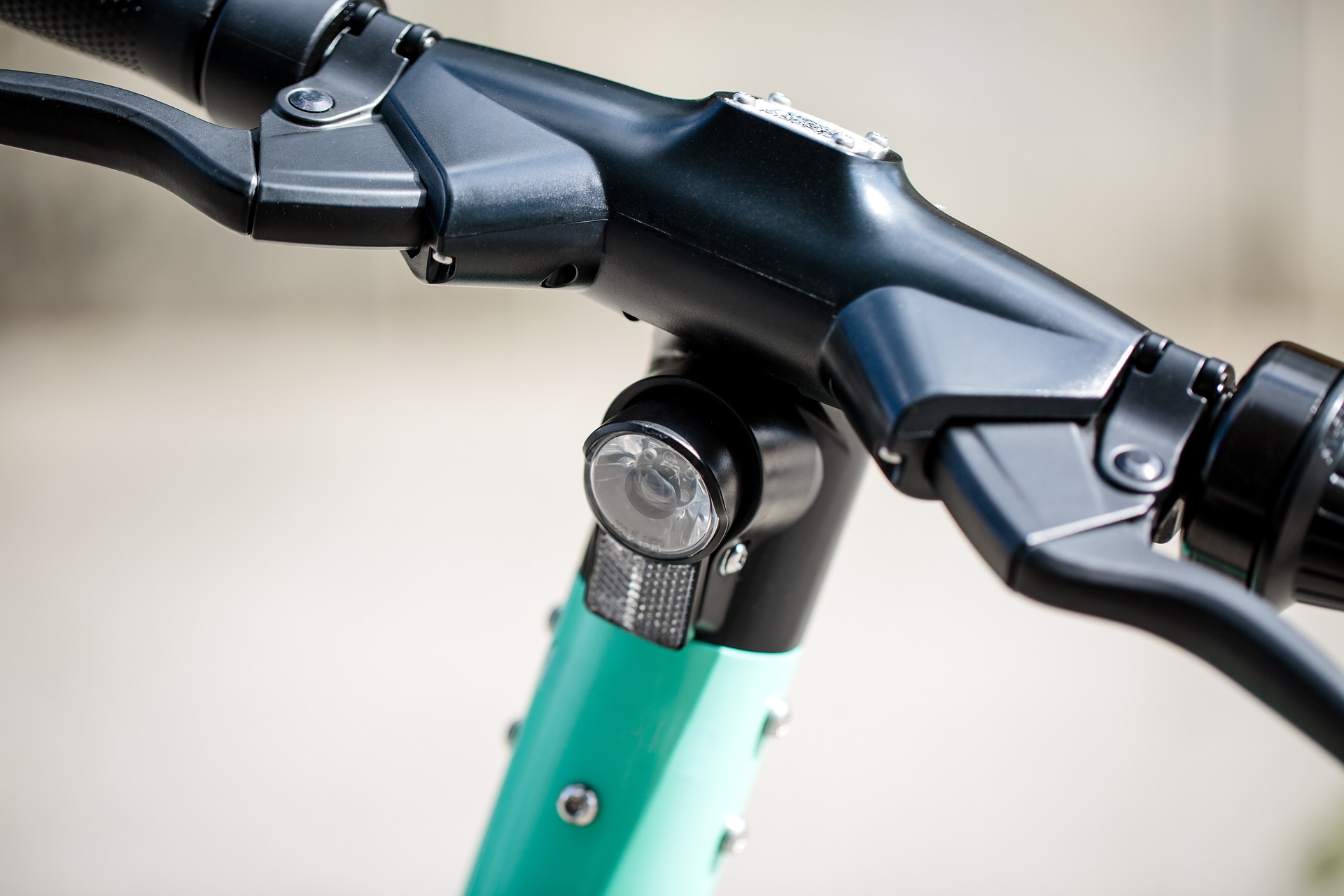
E-scooters could be impounded for up to 90 days for offences including speeding, underage use and riding in prohibited areas under a new draft decree announced by the public works department on Thursday.
Speaking to the Cyprus News Agency (CNA), public works department executive engineer Haris Christodoulou said offences involving the use of e-scooters in prohibited areas, riding by people under the age of 17 or scooters capable of exceeding 25km/h could result in the vehicles being impounded for between 30 and 90 days.
According to Christodoulou, owners would be able to pay an out-of-court fine and collect their scooter once the impoundment period had expired. In the event of non-payment, the scooter would remain impounded until court proceedings begin.
Christodoulou also warned of several “road safety shortcomings” associated with e-scooters which needed to be taken into account.
He said riders were required to maintain their balance while travelling at speed, while the scooters’ small size and the positioning of their lights made them difficult for other road users to see.
“So, at night it is even harder to spot them,” he said.
He also pointed out that their small tyres increased the risks posed by poor road surfaces, as they were less able to absorb irregularities such as potholes.
At the same time, Christodoulou stressed that e-scooters were only permitted on roads with speed limits of up to 30km/h and on cycle paths, significantly restricting where they could legally be used in cities.
“The speed limit on the vast majority of roads in urban centres is 50 kilometres per hour,” he said.
Christodoulou said the public works department was developing cycling infrastructure across the island, but stressed that local authorities also needed to create more 30km/h zones.
He said the transport ministry had approved a grant scheme for such zones, adding that their creation was “clearly easier” than constructing new cycling infrastructure.
Nicosia mayor Charalambos Prountzos, meanwhile, said the municipality was planning measures to make e-scooter use safer and more organised.
He said the municipality planned to expand 30km/h zones and create more than 100 designated scooter parking spaces to prevent scooters from being left scattered across public areas and obstructing pedestrians. Construction of the parking spaces is expected to begin “very soon”.
“Scooters must certainly be used safely, not only for the riders themselves but also for other road users and pedestrians,” he said.
Regarding rental scooters, Prountzos said they were licensed by the municipality and could only be used on authorised routes.
Although rental scooters are equipped with an automatic shut-off system designed to activate when they leave designated routes, he said the municipality had identified cases in which their GPS systems had been deactivated.
Prountzos said new licences would provide for the automatic revocation of a rental company’s licence if one of its scooters was found travelling on an unauthorised route after its GPS system had been disabled.
The mayor also expressed his support for bans on imports of scooters capable of exceeding the maximum allowed legal speed and suggested that further safety regulations such as helmets and other protective measures could be introduced.
Despite calling for stricter regulation, Prountzos stressed the importance of micromobility in reducing car use in urban areas, saying it could play a particularly important role in Nicosia, which has around 50,000 students.
“Micro-mobility is essential in cities,” he said.
He noted that the municipality is proceeding with the expansion of 30km/h zones, particularly in residential neighbourhoods, allowing conventional vehicles and micromobility devices to share the road more safely.
Prountzos said a study had mapped schools, parks and other points of interest to help the municipality prioritise routes for inclusion in the expanded 30km/h network.
The mayor emphasised that implementing the new framework requires cooperation between the transport ministry, local authorities and the police, adding that the municipality needed to be equipped with the legal tools to be able to remove scooters from public spaces and limit the “image of disorder” that currently prevailed.
“We believe that the use of these modes of transport, when done correctly, is a very important element of sustainable mobility in cities,” he said.




Click here to change your cookie preferences