
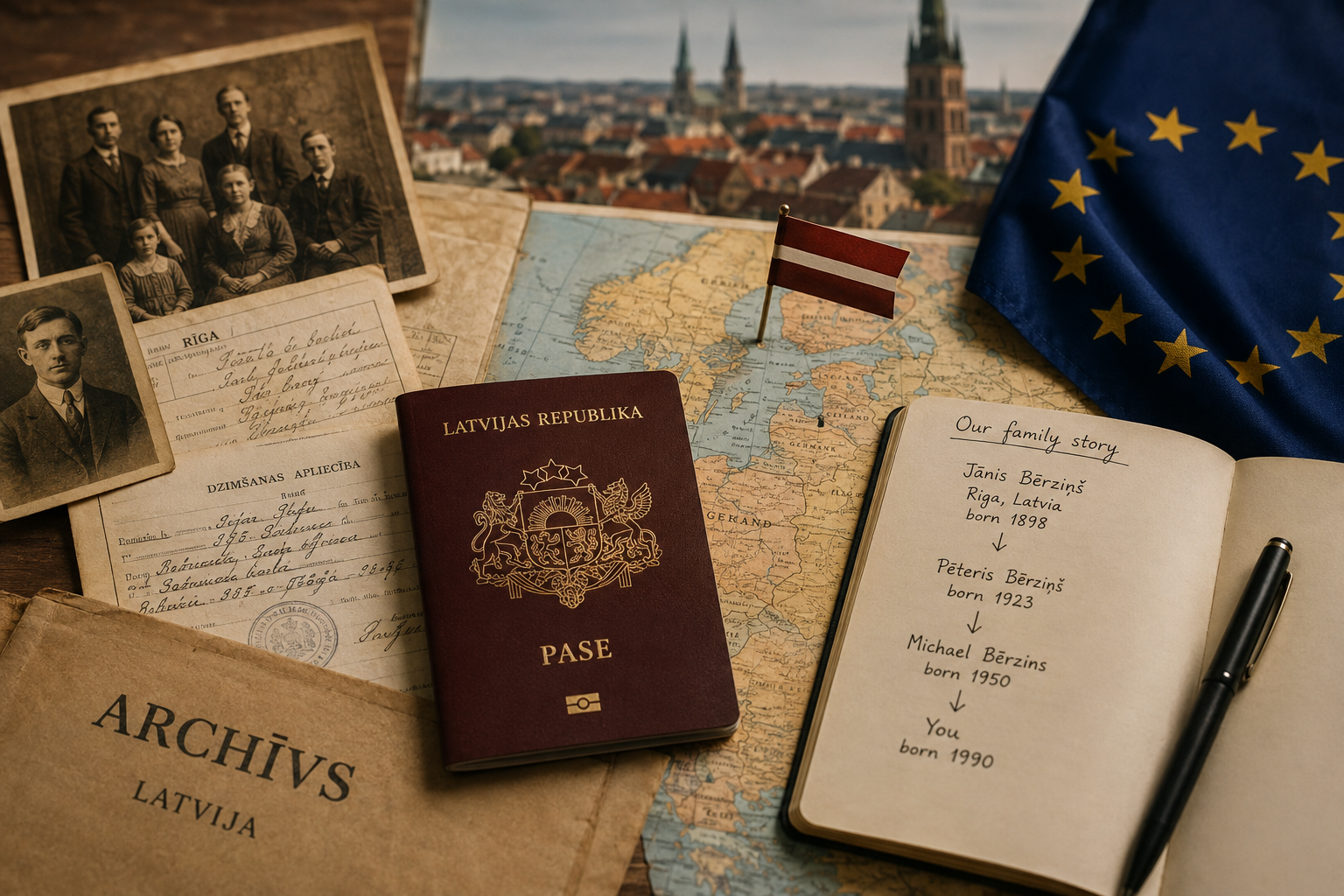
For millions of people around the world, European citizenship is not necessarily something that begins with immigration or years of residence. In some cases, the connection already exists through parents, grandparents or earlier generations who left Europe decades ago.
Citizenship by descent has therefore become increasingly relevant to families across the European diaspora. Countries including Latvia, Ireland, Italy, Poland and others provide legal routes through which certain descendants of former or current citizens may be able to obtain or confirm citizenship.
The subject is particularly relevant in an increasingly mobile Europe. Citizenship of an EU member state can affect where a person is able to live, work and study, while also creating a more tangible connection with a family’s history.
More than a second passport
It is easy to view citizenship by descent primarily as a way to obtain another passport. In reality, the issue is considerably broader.
For descendants of Europeans who emigrated during the political and economic upheavals of the 20th century, citizenship can represent the restoration of a legal connection that was interrupted by war, occupation, displacement or migration.
Latvia provides a particularly interesting example because of its complex 20th-century history. Many Latvian families left the country before, during and after the Second World War, establishing new lives in countries such as the United States, Canada, Australia and the United Kingdom.
Today, some of their descendants may qualify for Latvian citizenship depending on their family circumstances and the historical status of their ancestors.
For successful applicants, obtaining a Latvian passport can consequently represent both a practical benefit and recognition of a family connection that may stretch back several generations.
Why documentation matters
Having a Latvian surname or knowing that a grandparent was born in Latvia does not by itself establish eligibility for citizenship.
Citizenship applications are legal procedures, and documentary evidence is usually central to them. Applicants may need birth certificates, marriage records, passports, naturalisation documents and historical records demonstrating both the ancestor’s status and the direct family relationship between generations.
This can become complicated when families left Europe many decades ago.
Names may have been translated or changed after immigration. Borders and place names may have changed. Original passports may have disappeared, while records relevant to an application could be stored in national or regional archives.
As a result, researching citizenship by descent frequently becomes a genealogical exercise as much as an administrative one.
Latvian cases can involve records documenting an ancestor’s citizenship or residence before the Soviet occupation, together with civil documents connecting that person to the present-day applicant. The exact requirements depend on the legal category under which citizenship is sought.
Specialist resources such as https://latviancitizenship.eu/ provide information about eligibility and the documentation that can be relevant when investigating Latvian citizenship through ancestry.
A European question, not just a national one
The significance of obtaining citizenship in an EU country extends beyond the borders of the country issuing the passport.
EU citizenship provides extensive freedom of movement rights. Citizens can generally live, work and study across member states subject to applicable EU rules and registration requirements.
This makes ancestry-based citizenship particularly interesting for internationally mobile families.
Someone whose ancestors left Latvia generations ago, for example, may currently live in Canada, Britain or Australia but later decide to work in Germany, study in the Netherlands or retire in another part of the European Union.
Cyprus is part of the same broader European mobility landscape. EU citizens moving to Cyprus can benefit from freedom-of-movement rights, although administrative requirements apply when residence extends beyond the initial period.
Citizenship by descent can therefore have consequences that go far beyond reconnecting with a person’s ancestral country.
Growing interest among younger generations
The renewed interest in ancestry-based citizenship also reflects changing attitudes toward nationality and mobility.
Previous generations often emigrated with the intention of permanently establishing themselves in a new country. Their children and grandchildren increasingly live internationally, study abroad and work for companies operating across multiple jurisdictions.
At the same time, digital archives and genealogical databases have made researching family history easier than it was several decades ago.
A family story that once consisted of little more than an old photograph, surname and the name of a European village can sometimes be reconstructed through birth records, immigration files, census documents and national archives.
That research may eventually reveal that a descendant has a legal connection to a European country that the family had largely forgotten.
Understanding eligibility before applying
However, ancestry should not be confused with automatic citizenship.
Every European country has its own nationality legislation, and even within a single country there may be several different routes depending on when an ancestor lived there, when they emigrated and whether citizenship was retained or lost.
Two people with Latvian grandparents, for example, could have very different legal positions depending on their family histories and available documentation.
The sensible first step is therefore establishing the historical facts rather than immediately beginning an application.
Applicants should identify the relevant ancestor, determine where and when that person lived, establish their citizenship status where possible, and build a documented family line connecting the ancestor to the present generation.
Only then is it possible to properly assess whether citizenship by descent is realistic.
For some families, the result will simply be a deeper understanding of their history. For others, the documents preserved across generations may provide something more: an opportunity to formally restore a connection with Europe that began long before they were born.
DISCLAIMER – “Views Expressed Disclaimer – The information provided in this content is intended for general informational purposes only and should not be considered financial, investment, legal, tax, or health advice, nor relied upon as a substitute for professional guidance tailored to your personal circumstances. The opinions expressed are solely those of the author and do not necessarily represent the views of any other individual, organization, agency, employer, or company, including NEO CYMED PUBLISHING LIMITED (operating under the name Cyprus-Mail).





Click here to change your cookie preferences