
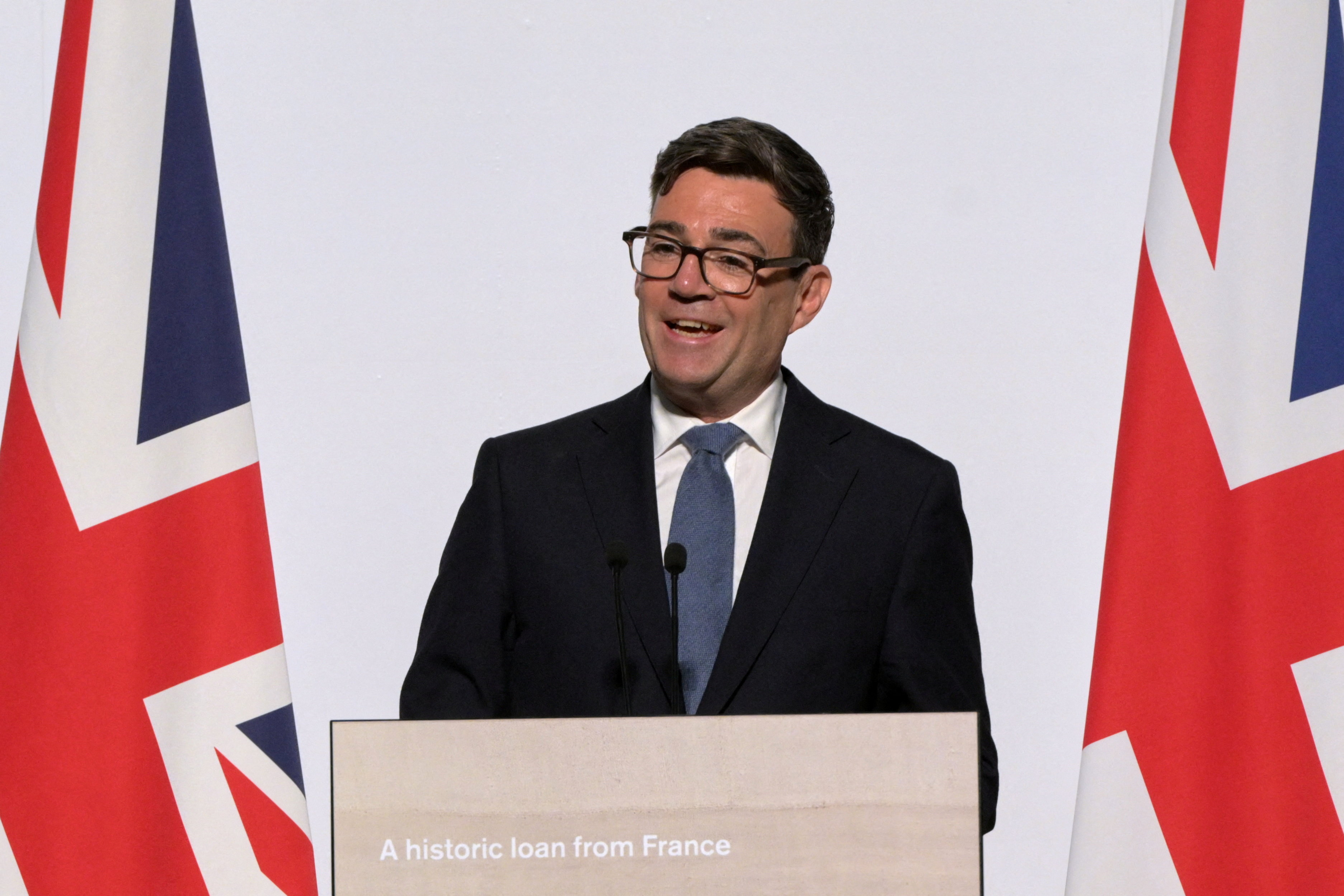
British Prime Minister Andy Burnham on Monday told Cypriot President Nikos Christodoulides that his country intends to “get closer” to the European Union, six and a half years after leaving the bloc.
Burnham’s office said that during a telephone call, he “began by welcoming the strong historic ties between the United Kingdom and Cyprus, including through the two countries’ close cooperation on the Sovereign Base Areas in Cyprus”.
“He thanked Cyprus for its support in advancing relations between the UK and the EU during its presidency and set out the UK’s intention to continue to get closer to the EU,” he said, in reference to Cyprus’ six-month term as the holder of the Council of the EU’s rotating presidency during the first half of the year.
Additionally, Burnham’s office said that “turning to the Middle East, the prime minister noted the need to continue working with partners towards de-escalation in the region and reaffirmed the UK’s support for efforts to reopen the Strait of Hormuz”, and that both he and Christodoulides “look forward to meeting in person as soon as possible”.

It remains unclear how Burnham intends to move the UK closer to the EU, given that a spokesman was quoted by British newspaper the Independent last month as having said that “we remain committed to the red lines set out in the manifesto”.
Those “red lines” entail that the UK neither join the European single market nor enter a customs union.
“We are not rejoining the European Union, and there will be no return to the customs union, the single market, or freedom of movement,” the spokesperson added.
Those red lines were drawn up by Theresa May, who served as British prime minister between 2016 and 2019, having taken over the helm after David Cameron resigned in the aftermath of the referendum held on the UK’s membership of the European Union.
All five of Theresa May’s predecessors have adhered to her red lines
Since then, all of her now five predecessors – Boris Johnson, Liz Truss, Rishi Sunak, Sir Keir Starmer, and now Andy Burnham – have adhered to those red lines, though only two – Johnson and Sunak – publicly supported the campaign to leave the EU at the time of the referendum a decade ago.
Burnham had said prior to becoming prime minister that “I am going to say I want to rejoin”, while talking to British newspaper the Guardian during his Labour Party’s conference last year, and added that “I hope, in my lifetime, I see this country rejoining the European Union”.
Now prime minister, Burnham may face pressure to return to the position he held before entering office, with the UK’s trade union’s congress expected to debate a motion next week calling on him to negotiate “the deepest possible partnership with the EU, prioritising the needs of working people”, according to newspaper The I.
Scientists’ and engineers’ trade union Prospect, which put the motion forward, said that “this partnership should be guided by the national interest, not by arbitrary red lines, and no options should be off the table”.
The I quoted “union sources” as saying that the motion is “very likely to be passed” by trade unions, given that only railway workers’ trade union the RMT is likely to oppose it.
Two British territories are already in the EU Customs Union
Since the UK left the EU in 2020, the bloc has been reduced to 27 members, though multiple options of reintegration with Europe will be on the table for Burnham should he forego Theresa May’s “red lines”.
The European single market, for example, comprises the bloc’s 27 member states, as well as four other countries: Liechtenstein, Norway, Switzerland, and Iceland, which, like the UK, has held a referendum on EU membership which saw the plurality of voters decide against it.
Likewise, the European Union Customs Union comprises the bloc’s 27 member states, as well as Andorra, Monaco, San Marino, and Turkey, as well two British territories, Akrotiri and Dhekelia, and Gibraltar.
Public polling in the UK puts the country’s electorate well in favour of rejoining the EU, with opinion polls regularly giving “rejoin” a 20-per-cent polling lead over “stay out”, and this figure much larger among younger voters.




Click here to change your cookie preferences