
Cyprus still has plenty going for it in investors’ eyes, but expensive energy, slow paperwork and limited international connections are taking some of the shine off the island’s business appeal.
The EY Attractiveness Survey found that 83 per cent of investors consider Cyprus an attractive destination for foreign direct investment, while 62 per cent plan to expand their operations on the island over the next year.
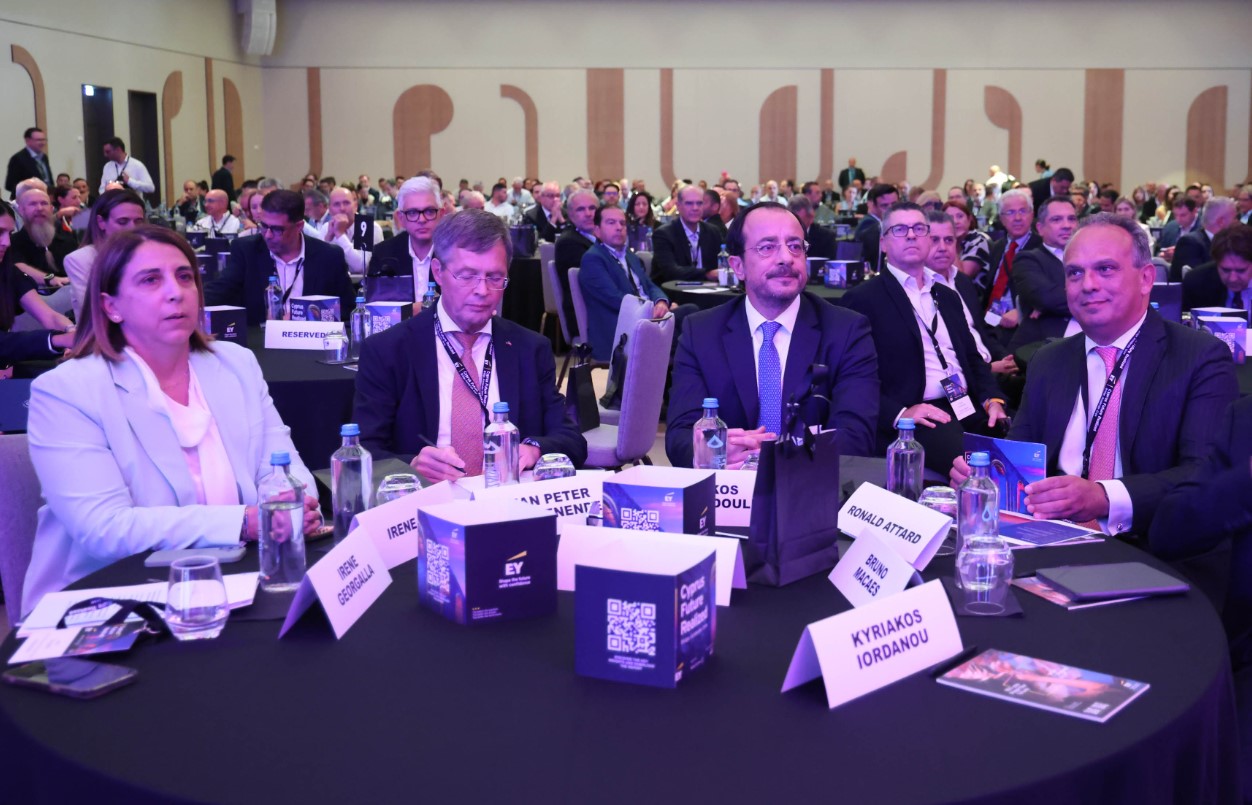
The findings were presented this week at EY’s Cyprus Future Realised forum, where attention turned not only to what Cyprus is getting right, but also to the familiar problems it has yet to solve.
They came on the same day President Nikos Christodoulides announced that substantive foreign investment in Cyprus rose by around 10 per cent in 2025.
Presenting the survey, EY Cyprus representative Andreas Anastasiou said the tax system remained Cyprus’ strongest card, receiving a positive assessment from 90 per cent of respondents.
Quality of life and political and social stability also worked strongly in the island’s favour. Investors were equally positive about Cyprus’ EU membership, professional services sector and legal system.
More importantly, the favourable view is being followed by investment plans. Alongside those preparing to expand, another 29 per cent expect to keep their Cyprus operations at their present level.
Even among investors with no current presence on the island, half said they intended to establish one. Meanwhile, 60 per cent believe Cyprus will become a more attractive investment destination during the next three years.
That confidence, however, comes with a fairly substantial list of complaints.
For the first time, energy costs ranked so highly among the country’s weaknesses, with 50 per cent of respondents placing them near the top of their concerns. Access to finance and bureaucracy followed, both of which have appeared repeatedly in previous surveys.
Looking ahead, geopolitical tensions were considered the greatest threat to Cyprus’ investment appeal, cited by 74 per cent of those questioned.
Limited air and international connectivity, reputational concerns, growing regulation, shortages in the labour market and unstable energy prices also featured prominently.
According to Anastasiou, investors see Cyprus’ location as both a risk and an opportunity. The island’s proximity to an unsettled region leaves it exposed to events beyond its control, yet the same location makes it the closest EU base to several important markets.
Investors continue to place much of their faith in sectors that are already well established in Cyprus. Real estate and construction came first, followed by tourism and leisure, information and communication technology, and financial services.
However, they also made clear that further growth will require better foundations. Some 62 per cent called for stronger technology and artificial intelligence infrastructure, 59 per cent wanted greater government support and 56 per cent pointed to the need for more specialised skills.
Finding enough workers is another problem, with 53 per cent describing labour availability as a serious constraint.
Sustainability has not disappeared from investors’ plans either. ESG considerations continue to influence the strategies of 68 per cent of respondents, with greater use of renewable energy, easier financing for sustainable projects and a supportive regulatory framework among their main priorities.
The banking system received its share of criticism too. Onboarding and know-your-customer procedures were identified as the biggest headache, followed by the time needed to process transactions, the availability of finance and the quality of customer service.
Head of the Office of the Deputy Minister to the President Irene Georgalla said that “foreign policy had become increasingly important to Cyprus’ investment prospects.”
Investors now weigh geopolitical risk much more carefully, she explained, but are still choosing Cyprus because it combines the security of EU membership with strong links across the Eastern Mediterranean.
Energy cooperation is one example of how the island can turn its geographical position into an advantage, while closer relationships with the US and India are opening further economic possibilities.
Georgalla pointed out that Cyprus’ relationship with the US had developed into a strategic partnership covering security, energy, investment, technology and innovation.
With India, the aim is to turn stronger political relations into practical business partnerships, including through the India–Middle East–Europe Economic Corridor, financial services, technology and innovation.
Invest Cyprus chief executive Marios Tannousis said “the EY findings were broadly in line with the organisation’s own research.”
Foreign companies, once established on the island, tend to encounter many of the same frustrations as Cypriot businesses. The crucial difference, he explained, is that an overseas investor does not know the local system and therefore needs clearer instructions and considerably more guidance.
What businesses are asking for is not particularly complicated, clear rules, firm timetables and regular communication with the authorities handling their applications.
Tannousis said “investors needed to know from the beginning what was required, how long a licensing procedure would take and whom they should contact when something went wrong.”
He also stressed that foreign businesses bring considerably more than money. They take commercial risks, create highly specialised jobs, introduce new knowledge and skills, pay taxes and help Cyprus build a stronger international presence.
Interest from the US appears to be continuing. Tannousis revealed that, only a day earlier, he had spoken to a large American company considering moving the headquarters of an affiliated business to Cyprus.
That same day, he had also held discussions with a Silicon Valley company interested in using the island as its European base.
Former Portuguese undersecretary for European affairs Bruno Macaes placed the discussion within a world that, in his view, can no longer be described simply as multipolar.
Instead, he called it “metamorphic”, an international order that is constantly changing shape as its rules, institutions, technology and balance of power are rewritten.
Macaes pointed to the rise of China and India, as well as a changing relationship between China and the US. Recent trade disputes, he argued, have shown that China’s rise can no longer be viewed as something dependent on American approval.
Technology is shifting that balance further. Artificial intelligence is already changing how economies, businesses and societies operate, while the speed and scale of investment in the sector far exceeds that seen during earlier technology booms.
The lesson for governments and companies, Macaes said, is that they are no longer making decisions in a settled world. The ground beneath them is being rebuilt as they stand on it, and Cyprus will have to move rather faster if it wants investors to keep choosing the island.





Click here to change your cookie preferences