
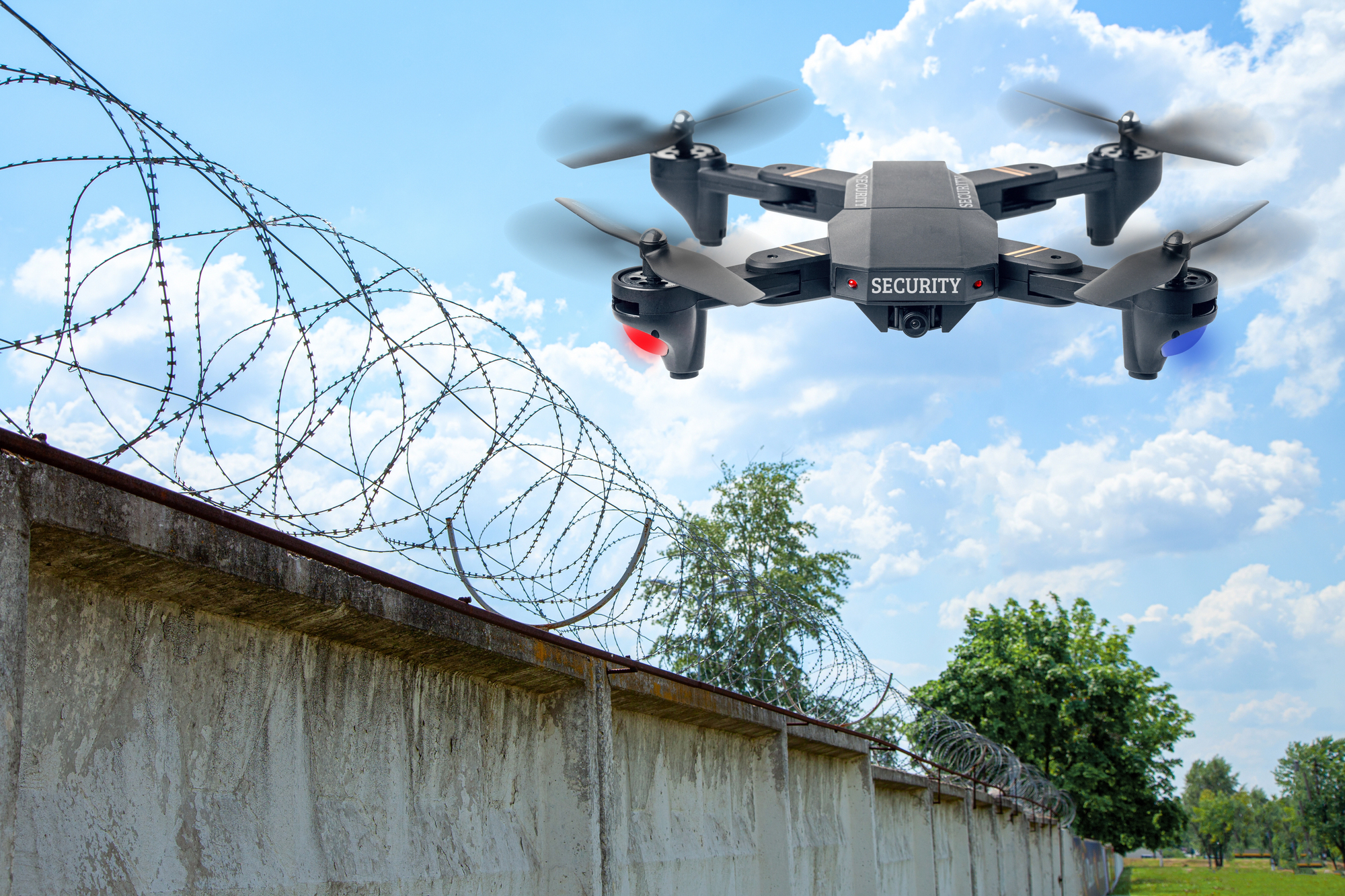
When a drone appears near a correctional facility, security teams can see where the aircraft is flying, but that does not necessarily reveal where it is being operated from. The drone and its remote control may be in different locations.
This creates an additional challenge for correctional facilities dealing with unauthorized drone activity. Beyond detecting an aircraft, security teams may need information about the drone itself, its movement and the location associated with its operation.
For facilities exploring counter-drone solutions for prisons, the type of information available depends on the Counter-UAS technology being used.
How can a drone’s remote control be located?
Different Counter-UAS technologies collect different types of information. Cyber-over-RF technology works by analyzing the communication protocols used by supported drones and extracting relevant data from those communications.
Sentrycs’ Cyber-over-RF technology can provide both the drone’s coordinates and the remote control’s last known location. This gives security teams information about where the supported aircraft is flying as well as a location associated with its operation.
The remote control may be some distance from the drone itself. Having both locations available can therefore provide a more complete view of an unauthorized drone event around a correctional facility.
What else can be learned about the drone?
Location is not the only information Cyber-over-RF technology can provide about supported drones. The communication between the drone and its remote control can also provide identification and operational data.
Identification data can include a unique serial number, vendor, make and model. Operational information can include altitude, speed, heading and camera orientation.
For example, altitude and heading can show how a supported drone is moving around the facility, while its serial number and model provide information about the aircraft involved. When comparing counter-drone solutions for prisons, these capabilities provide another consideration alongside the ability to detect an aircraft.
Why is this information relevant to correctional facilities?
Unauthorized drones can approach a correctional facility from outside its physical perimeter. Knowing only the aircraft’s current position provides information about what is happening in the air, while additional drone data can provide more context about the activity.
A remote control’s last known location adds a separate location associated with the supported drone’s operation. At the same time, identification and movement data provide information about the aircraft and its behavior during the event.
Together, these data points can give security teams more information to work with while the facility follows its own procedures for handling unauthorized drone activity.
What happens if the drone needs to be mitigated?
Gathering information about a drone is one part of managing an unauthorized drone event. In situations where mitigation is authorized, Cyber-over-RF technology can also enable controlled mitigation of supported unauthorized drones.
The technology can disconnect a supported unauthorized drone from its remote control, bring the aircraft to a safe altitude and land it in a designated area. Use of mitigation functions depends on applicable laws, regulations and operating authority, as well as any required approvals, licenses, permits or authorizations.
For correctional facilities assessing counter-drone solutions for prisons, this means that information about a supported drone and action against an unauthorized aircraft can form different parts of the same Counter-UAS approach.
Beyond the drone’s location
Finding an unauthorized drone near a correctional facility does not necessarily reveal where it is being operated from. Cyber-over-RF technology can provide additional information about supported drones, including the remote control’s last known location, identification details and movement data.
As unauthorized drone activity around correctional facilities develops, access to this information can give security teams a clearer picture of the aircraft involved and its operation.
DISCLAIMER – “Views Expressed Disclaimer – The information provided in this content is intended for general informational purposes only and should not be considered financial, investment, legal, tax, or health advice, nor relied upon as a substitute for professional guidance tailored to your personal circumstances. The opinions expressed are solely those of the author and do not necessarily represent the views of any other individual, organization, agency, employer, or company, including NEO CYMED PUBLISHING LIMITED (operating under the name Cyprus-Mail).





Click here to change your cookie preferences