
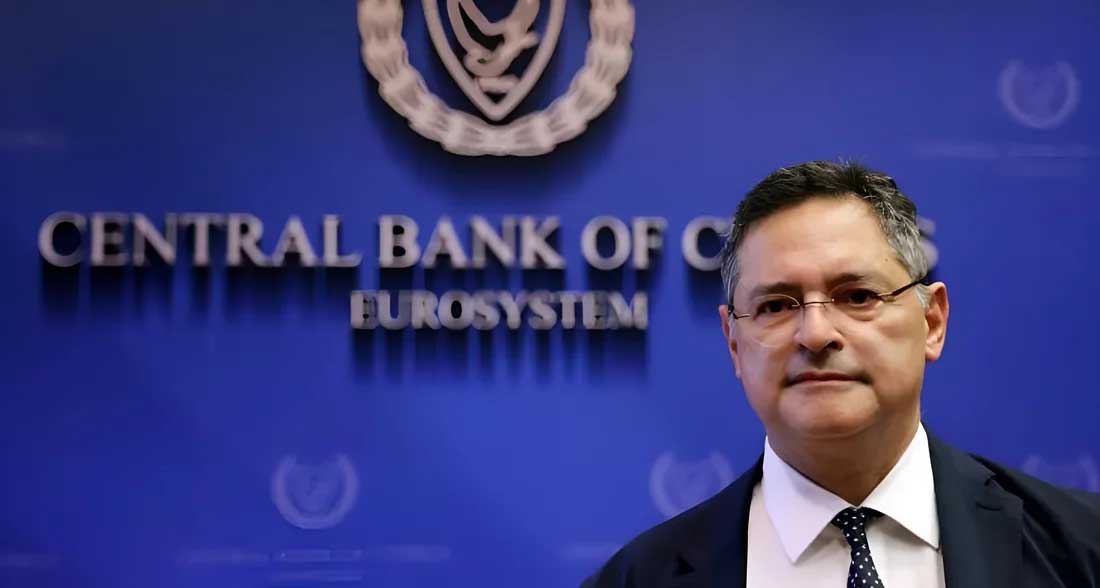
Central Bank of Cyprus (CBC) governor Christodoulos Patsalides said the European Central Bank’s (ECB) latest 0.25 percentage point increase in key interest rates had become necessary as the prolonged conflict in the Middle East continued to fuel inflationary pressures.
In a written statement following Thursday’s meeting of the ECB Governing Council, Patsalides said the latest data had confirmed earlier concerns over the inflationary impact of a prolonged conflict.
As he explained, the ECB’s initial scenario analysis at the start of the Middle East conflict had shown that a prolonged confrontation would intensify price pressures and push inflation forecasts higher.
“Six months after the start of the conflict, this assessment is now being confirmed by the latest data,” he said.
Patsalides said the inflation outlook continued to be shaped largely by the energy shock, while stronger economic growth forecasts were also adding to price pressures.
“The updated September baseline scenario shows a prolonged period of elevated inflation,” he said, despite tighter financial conditions following the increase in key interest rates in June and higher long-term bond yields.
After assessing the latest data alongside a series of scenarios ranging from mild to adverse and extreme outcomes, Patsalides said the Governing Council concluded that a further 0.25 percentage point increase was necessary.
At the same time, he said there were no signs of significant second-round inflation effects, pointing in particular to the latest wage indicators.
Inflation expectations in international financial markets and relevant surveys also remained under control, he added.
Patsalides said the ECB therefore remained able to manage the current uncertainty and was determined to ensure inflation returned to its 2 per cent medium-term target.
Turning to Cyprus, he said the economy continued to show resilience despite heightened geopolitical uncertainty, supported mainly by the strength of the services sector, robust private consumption, a strong labour market and healthy public finances.
However, inflationary pressures have intensified in recent months, with inflation rising to 5.2 per cent in August 2026 from 4.4 per cent in July.
Patsalides said the increase was driven mainly by services and energy, with services continuing to make the largest contribution to inflation.
He attributed the rise to strong demand from both the domestic economy and tourism, as well as the impact of higher energy costs on electricity and transport prices.
Looking ahead, Patsalides said inflation was expected to ease gradually after 2026 as external price pressures weakened. However, he warned that the risks surrounding the inflation outlook remained tilted to the upside.




Click here to change your cookie preferences