
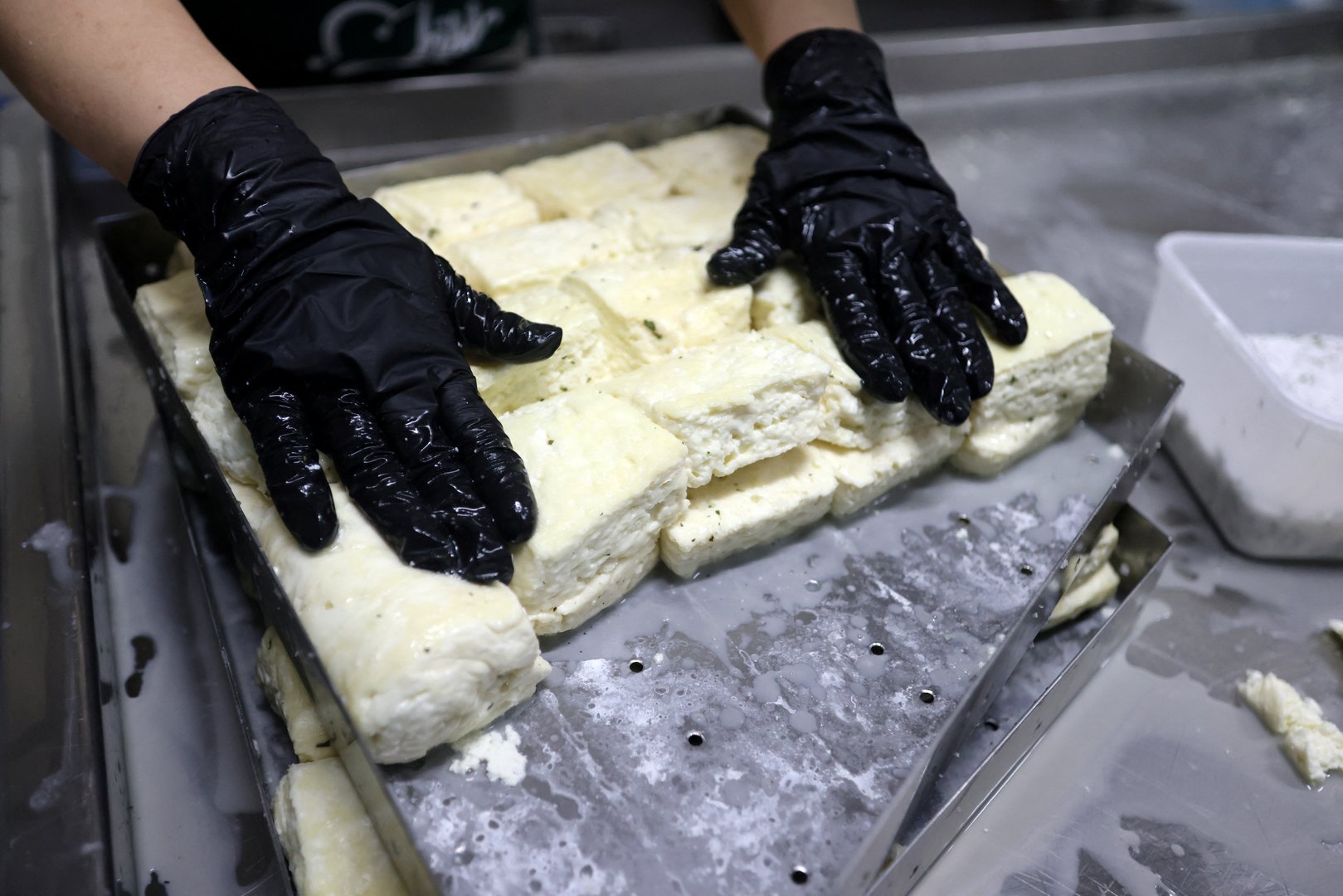
Cyprus’ halloumi production faces a ‘systemic risk’ due to the excessive concentration of milk output in a small number of farms, Professor Stavros Malas cautioned on Saturday, warning that the current model leaves the sector exposed.
Speaking on CyBC, Malas, who heads the scientific committee tasked with reconstructing the livestock sector, said the foot and mouth disease crisis had exposed weaknesses in Cypriot livestock farming that had built up over many years.
“In Cypriot livestock farming we did not plan, we improvised,” he said.
Malas said the sector now required a restructuring system paired with proper scientific support and guidance for professionals.
He said the committee’s recommendations aimed to preserve the sector’s export orientation while making it better organised, with stronger biosecurity, improved preparedness for future disease outbreaks or other challenges.
Asked about the risk of the virus re-entering the government-controlled areas from the occupied north, Malas said the danger would recede provided vaccination continued and illegal animal trade was brought to an end.
He stressed, however, that vaccination would remain necessary for many years to come.
His comments follow the government’s presentation on Friday of a 12-year, €610.9 million plan to rebuild the livestock sector, drawn up by the committee under his leadership.
Malas had told those gathered on Friday that the crisis “exposed existing problems” rather than having created them, insisting “this is why we cannot simply return livestock farming to where it was before”.
The reconstruction plan includes €372.225 million for sheep and goat farming, €134 million for cattle farming and €41 million for biosecurity measures, with the committee proposing a minimum distance of 300 metres between independent livestock holdings to reduce the risk of future transmission.





Click here to change your cookie preferences