
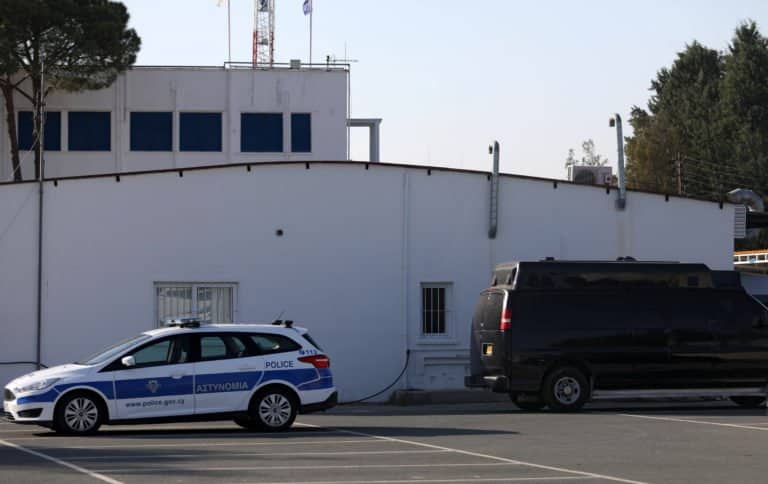
The anti-corruption authority on Monday announced that it had ended its investigation into the “spy van affair”, during which it came to light that a company was offering private surveillance services using state-of-the-art technology which had been installed in the back of a van.
It said that transparency commissioner Harris Poyiadjis had “given approval for the partial disclosure of information” related to the investigation, “due to the great publicity it has received and because it is a matter of public interest”.
However, it added, “due to the classification of the matter as confidential, further details cannot be provided”.
It said that the audit office had initially issued a complaint about the matter in 2023, with that complaint signed by auditor-general of the day and current Alma party leader Odysseas Michaelides.
Pursuant to this, it said, there were “continuous developments on the issue both in Cyprus and in Greece”, as well as “before the European institutions”, with the authority having been “monitoring these developments”.
The latest such development, it said, was “the recent publication of a book on the subject by a journalist in Cyprus”.
It said that in light of those developments, it had decided to extend its investigation into “all incidents related” to the “spy van” investigation, and that following a preliminary examination of its terms of reference, it had addressed Attorney-General George Savvides and informed him of its intentions.
“After the attorney-general was notified of the authority’s intention, an exchange of letters and a long meeting at the offices of the legal service followed. Given that the attorney-general classified the correspondence as confidential, the authority cannot refer to any details,” it said.
The final result of that meeting, it said, is that the legal service had informed it that “everything that the authority wished to investigate had already been investigated by the competent authorities”.
This position, it said, “by virtue of the applicable legislation, allows the authority to conduct the investigation it had decided to conduct”, though it said it has now halted its investigation and will not “take any further position” or offer any further details.
Tal Dilian’s WiSpear received a €76,000 fine in Cyprus
The “spy van affair” centred on Tal Dilian, the former chief commander of the Israeli military’s secret technology unit who is also former chief executive officer of WiSpear, the company which operated the van.
Dilian initially faced criminal proceedings, but Savvides suspended those proceedings in 2021, and WiSpear eventually received a €76,000 fine.
Dilian’s spyware was also used in Greece, and while no van was used there, it was found that his software was used to hack the mobile phones of 87 people, including government ministers, senior military officials, and Nikos Androulakis, who has since become Greece’s leader of the opposition.
Earlier this year, Dilian had told Reuters that the technology offered had “only been sold to governments”, with Androulakis insisting that that this statement indicates involvement from the highest levels of the Greek government – something Greek Prime Minister Kyriakos Mitsotakis has denied.
Greece also refused to reopen its own investigation into Dilian
Androulakis had told Greek television channel Mega that “it all starts from the Maximos Mansion”, the Greek prime minister’s official residence, and lambasted Greece’s prosecutor-general Konstantinos Tzavellas for electing no to reopen the investigation into Dilian in light of his comments to Reuters.
“We know that four chiefs of staff of the armed forces were targeted. Tzavellas says that we do not need to investigate who monitored them and why, or where the material is. This is a matter of national security,” he said.
He added that since then, Dilian has “called Mitsotakis ‘Nixon’”, in reference to former United States president Richard Nixon, who was brought down by the Watergate spying scandal, and “said that his software is only sold to states and state agencies”.
“He photographed the country, the state and the national intelligence service and yet Tzavellas has not called on him to bring any evidence to back up his words,” he said.
In Greece, Dilian was handed a 126-year prison sentence for his part in the country’s surveillance scandal. Eight of those years are to be served behind bars, though Dilian remains out of prison for now, pending an appeal against the ruling, which will be heard in December.




Click here to change your cookie preferences