
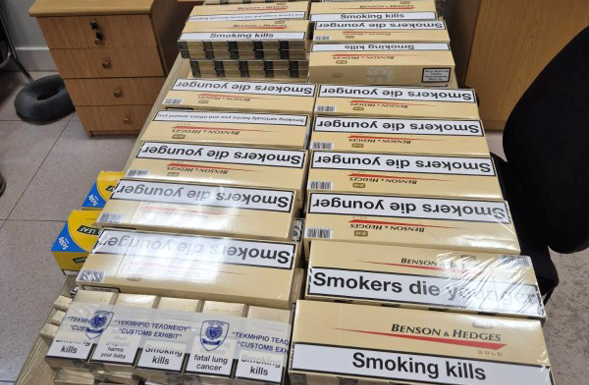
A senior Cyprus customs official is leading an international body tackling the illicit tobacco trade, as the protocol designed to combat the cross-border problem marks eight years in force.
Senior customs officer Eliza Fantidou has chaired the Meeting of the Parties to the Protocol to Eliminate Illicit Trade in Tobacco Products since November 2025, having been elected to the post at its fourth session in Geneva.
The protocol now has 73 parties and provides a framework for international cooperation to prevent, detect, investigate and prosecute illicit trade in tobacco products, the customs department said on Friday, marking its eighth anniversary.
Fantidou said illicit tobacco trade continued to evolve and could not be tackled by individual countries acting alone.
“Illicit trade in tobacco products does not remain static and does not stop at borders. It is like the Hydra: you cut off one head and, at the same time, many more emerge and spread,” she said.
“It fuels criminal networks, undermines public health and deprives governments of vital revenue.”
She said tackling the problem required collective commitment, action across different sectors and strong international cooperation.
“The protocol gives us the tools to act. As parties, we must ensure that we use those tools, that we work as one and that we help more countries join us to turn these commitments into action,” Fantidou said.
She also encouraged countries which have yet to join the protocol to do so and contribute to what she described as a stronger global response to the problem.
The customs department said cooperation between customs and tax authorities, police and other law enforcement agencies remained crucial, as illicit tobacco trade operates across national borders.
The protocol seeks to strengthen mechanisms throughout the enforcement process, from prevention and detection to investigation and prosecution.
This year’s anniversary is being marked under the message “More Parties – Stronger Implementation – Greater International Cooperation”, aimed at encouraging broader participation and closer coordination between countries.




Click here to change your cookie preferences