
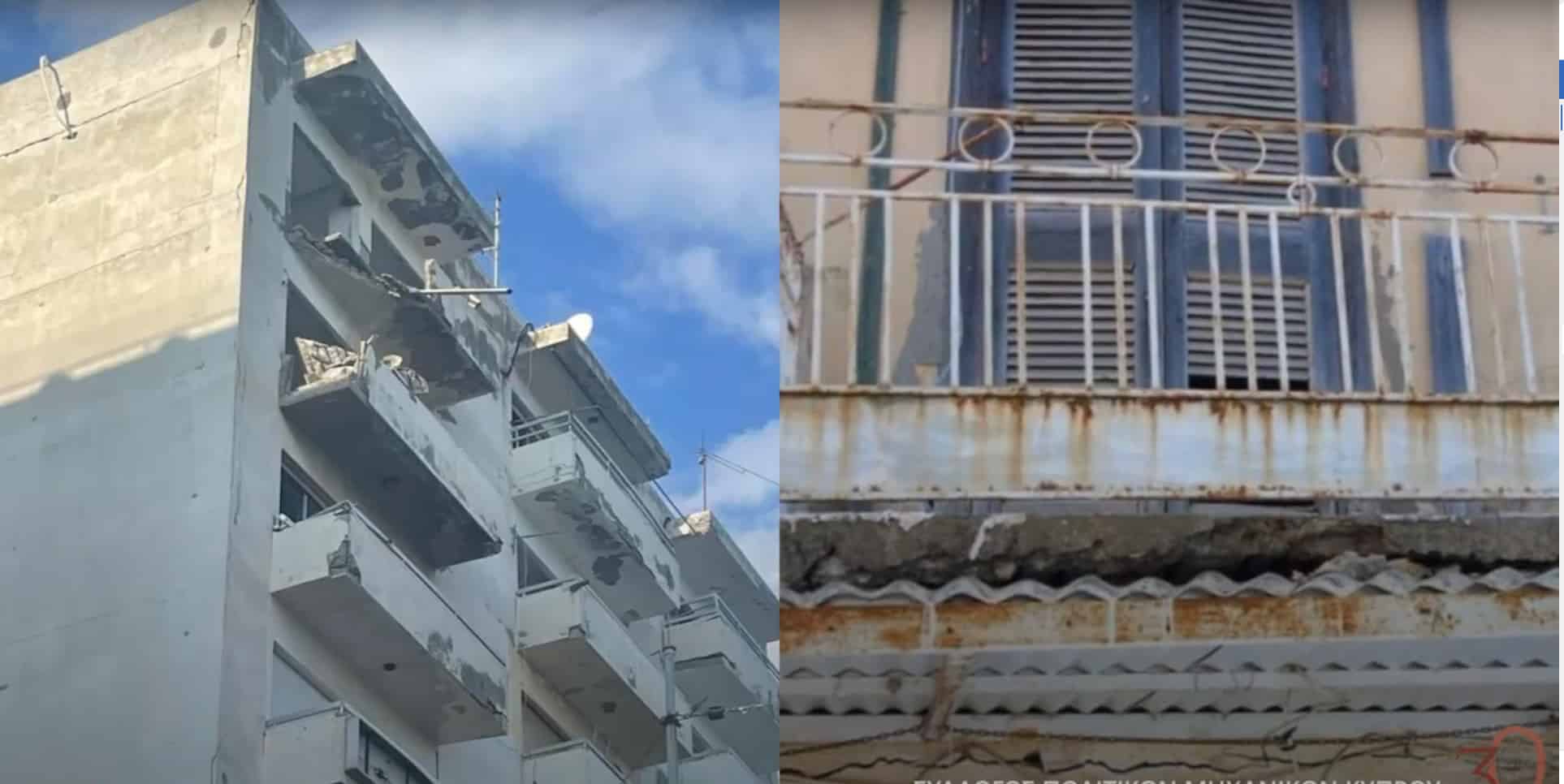
The technical chamber (Etek) expects revised legislation on dangerous buildings by the end of the year, its secretary general, Andreas Theodotou, said on Friday, following the collapse of a balcony onto the flat below in a Limassol building the previous day.
Theodotou said the incident was concerning given that the building had already been declared dangerous, with legal proceedings under way.
Civil Defence evacuated all 56 apartments in the block on Thursday, after the balcony fell from the fifth floor of the building, part of the Rousos Olympic Palace complex on the corner of Georgios Katsounotos and Christodoulos Hadjipavlou streets.
Limassol EOA chairman Yiannis Tsouloftas said a balcony had also collapsed on the same building in 2022, and that the property had already been listed as dangerous, with a solicitor’s office assigned to proceed with evacuation orders.
Tenants were moved to alternative accommodation while the owners of the affected flats arrange for a civil engineer to assess and repair the building.
There are currently some 1,100 buildings listed as dangerous in Limassol.
Theodotou said discussions on amending the roads and buildings regulations law began before the House interior committee in early September, with the aim of giving EOAs greater powers to act quickly.
“What we are trying to change are the time-consuming procedures, meaning that the EOAs, if deemed necessary, can immediately seal a building and even proceed with some work,” he said, remarking that under current law they cannot act without the owner’s consent.
He said funding also needed to be addressed, so organisations could carry out evacuation or repair work upfront and later recover the costs from owners where necessary.
He welcomed Interior Minister Constantinos Iannou’s willingness to allocate a budget to support this.
“There are now so many dangerous buildings that a relatively high budget is required,” he said.
Alongside changes to the law, Theodotou said the introduction of mandatory building inspections remained the only effective preventive measure.
“If we had had this for the last ten years, while we have been discussing the issue, we would have identified dangerous buildings much more quickly,” he said.
He also referred to separate legislation on jointly owned buildings discussed in parliament, intended to address the failure of many apartment blocks to establish management committees and reserve funds for maintenance.
He said amendments were expected to be examined from next month onwards, with the aim of passing the law by the end of the year.
Theodotou said Etek had run seminars for years to train members in identifying structural damage, and stressed that regular inspections kept repair costs low.
“A 20- to 25-year-old apartment building will have very little damage and its repair cost will be very small proportionally, for each owner, than if 40 to 50 years pass without any maintenance,” he said.





Click here to change your cookie preferences