
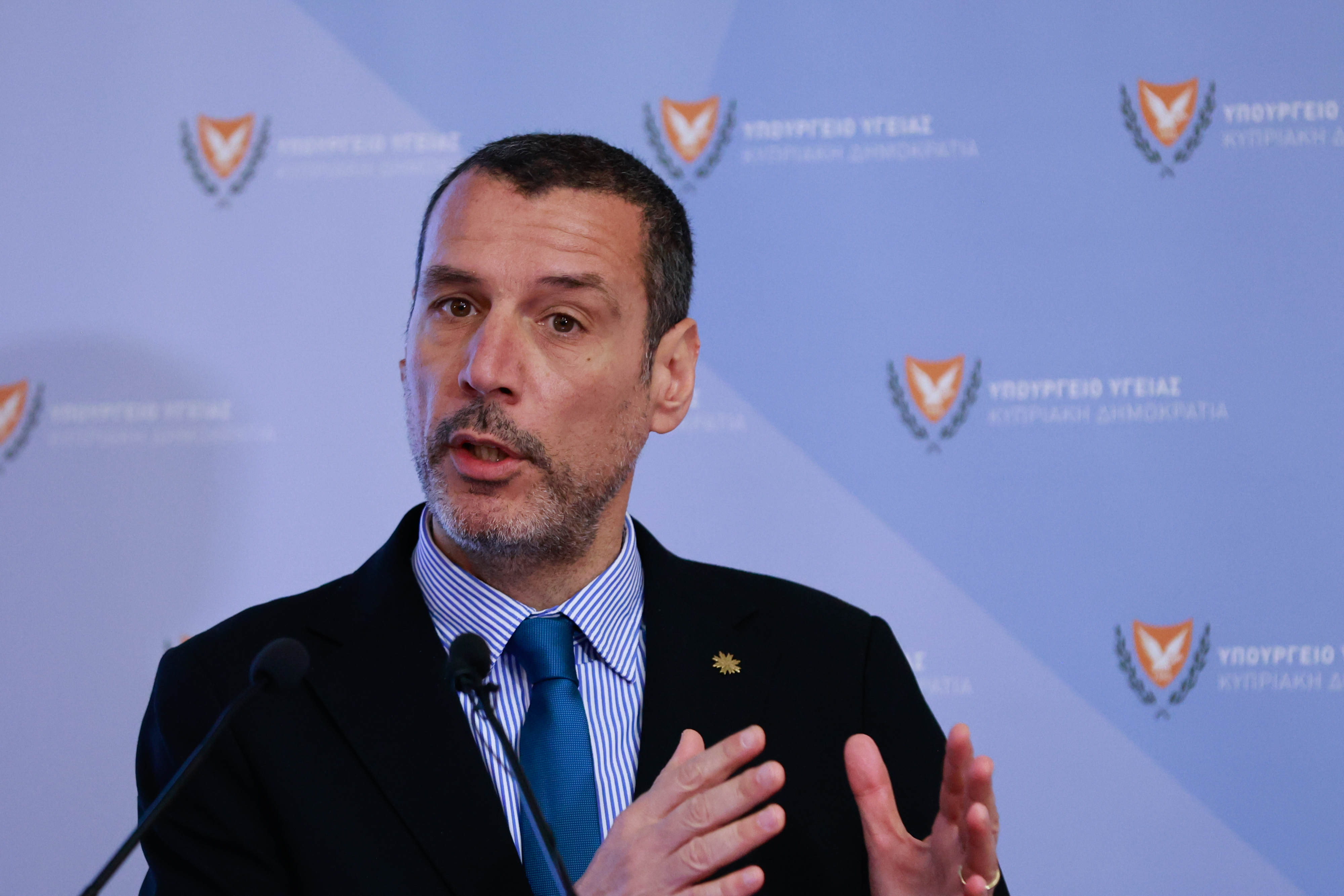
Personal doctors have a key role to play in the early detection of hepatitis B and C, Health Minister Neophytos Charalambides said on Saturday.
Addressing the educational seminar “Hepatitis: From Diagnosis to Treatment”, Charalambides highlighted advances in science that allow for more effective diagnosis and management of the diseases.
The seminar was jointly organised by the health ministry’s medical and public health services, the Cyprus Medical Association, the Cyprus Society of Gastroenterology, the Cyprus Society of General Medicine and the Cyprus Society of Personal and Family Doctors.
Charalambides said the critical issue was shortening the path through which new medical methods and treatments reach patients.
“Personal doctors have a particularly important role in this process,” he said.
“Today, we have at our disposal a safe and effective vaccine for the prevention of hepatitis B, as well as treatments that can control chronic disease and reduce the risk of serious complications,” the minister said.
“Modern antiviral treatments for hepatitis C achieve a cure rate of more than 95 per cent.”
He warned, however, that chronic infections with the hepatitis B and C viruses can remain without obvious symptoms for long periods, meaning people who could benefit from appropriate monitoring or treatment may remain undiagnosed.
Personal doctors can help bridge this gap because they are in regular contact with patients, know their medical histories and can identify signs that require further investigation, Charalambides said.
“The proper assessment of risk factors and laboratory findings, as well as timely referral, can have a decisive impact on the progression of a case,” he said.
“Continuous training of primary healthcare doctors is therefore a fundamental prerequisite for the more effective management of viral hepatitis.”
Charalambides also stressed the importance of having a reliable picture of the epidemiological situation in Cyprus.
“Completeness and accuracy in the notification of cases allow us to assess the real needs, identify gaps and better plan public health interventions,” he said.
As part of these efforts, the health ministry has re-established the national committee for tackling viral hepatitis and expanded the scope of its work so that it now covers all forms of viral hepatitis.
The minister also addressed the social stigma surrounding viral hepatitis.
“Misconceptions about the ways in which it is transmitted cause fear and discrimination and, in some cases, discourage people from getting tested or seeking medical help,” he said.
“Scientifically sound information protects both public health and the dignity of patients.”
Concluding, Charalambides said the goal of eliminating viral hepatitis as a public health threat by 2030 was “particularly demanding”.
He said achieving it would require coordinated action by the state, healthcare professionals, scientific bodies and patient organisations.





Click here to change your cookie preferences