
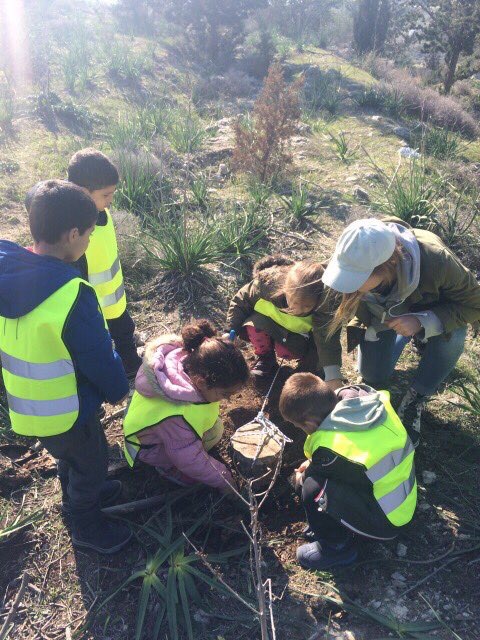
Two years ago, Little Gems Montessori Nursery received its second ECO School Award – an achievement of which we are very proud. But receiving an award does not mean that the work is finished. Quite the opposite. For us, sustainability is an ongoing journey, one that involves the youngest citizens of Cyprus, that is our children, together with teachers, their families and the wider community.
This year, Little Gems will embark on UN Sustainable Development Goal (SDG) #4 – Quality Education, continuing our ECO School journey for our eighth consecutive year. As in previous years, we will report our work to the Cyprus Marine Environment Protection Association (CYMEPA), and sustainability will remain an integral part of life across our two Montessori settings in Nicosia and Larnaca.
Maintaining ECO School status requires commitment throughout the year. Together with our school, parent and student committee, we identify areas where we can make a difference and turn ideas into action. It is a wonderful reminder that when we work together, we can achieve far more than we can individually.
Research Pilot Study – Montessori, Sustainability and the SDGs
There is another exciting development that is particularly close to the heart of Little Gems Montessori – and one that places our work here in Cyprus within a much wider international context.
Our principal, Carola Lång-Howard, is a board member of Montessori Europe and lead of its Sustainability Working Group. Since 2021, the Working Group has been exploring how Montessori education can contribute to the UN Sustainable Development Goals and, importantly, how naturally the SDGs connect with the Montessori approach.
At the heart of this connection is Maria Montessori’s concept of Cosmic Education.
Cosmic Education, developed particularly for children in the second plane of development, encourages children to explore the interconnectedness of the universe, the Earth and all living things, and to understand that humanity has a role and a responsibility within this larger whole. Montessori believed that children should not simply learn about individual subjects in isolation but should gradually develop an understanding of how everything is connected – the natural world, human beings, science, history, culture and society.
Maria Montessori’s way of thinking links perfectly to sustainability today. The 17 UN SDGs ask us to consider poverty, health, education, equality, climate, biodiversity, responsible consumption, peace and partnerships not as isolated issues, but to see how everything is interconnected and being interdependent upon each other. In many ways, Montessori education has been nurturing this way of thinking for generations.
The task of the Montessori Europe Sustainability Working Group has therefore been to recognise the work that Montessori schools are already doing, strengthen it, and explore how it can be taken further.
Together with two colleagues, Heidi Van Staden and Susanne van Niekerk, Carola and the Working Group first developed a Montessori Europe Sustainability Handbook, introducing the SDGs and exploring their relationship with Montessori education. This work was presented at the Montessori Europe Congress in Oslo in 2025.
The next step was the development of a much more detailed Montessori Europe Sustainability Audit Tool, which looks at sustainability through the different planes of development, from birth to 18 years. The Audit Tool was presented at the Montessori Europe Congress in Riga in 2026, where it generated considerable interest among Montessori educators from around the world.
The ME Sustainability Working Group has now reached its next exciting stage: a pilot project and research study.
Montessori schools from across Europe, as well as Canada, Seychelles and South Africa, have been invited to participate. The schools will use the Audit Tool within their own communities, document their experiences and share their findings. These results will contribute to a wider research study exploring how Montessori education can support the achievement of the UN Sustainable Development Goals.
And, of course, Little Gems Montessori in Cyprus is delighted to be part of this international journey.
This year, two of our Casa classrooms will participate in the Montessori Europe pilot study – one in Nicosia and one in Larnaca. At the same time, our remaining classrooms will continue their work within the CYMEPA ECO School programme.
This means that our children and teachers in Cyprus will be contributing to two complementary strands of sustainability work: our long-standing commitment to the ECO School programme here at home, and an international Montessori research initiative involving schools across several continents.
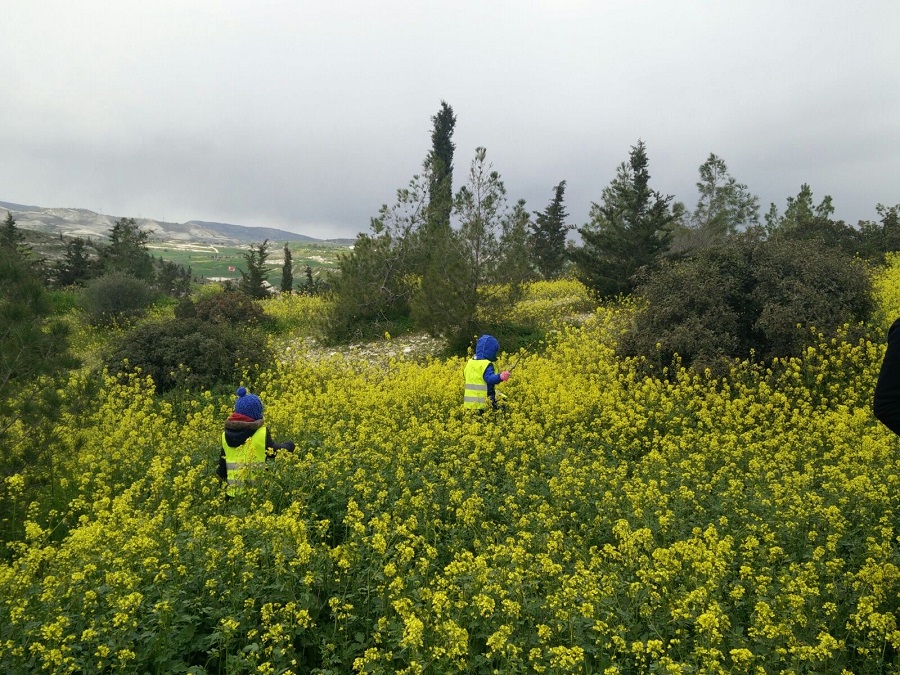
From Cyprus to the wider Montessori world
For us, this is an exciting opportunity to demonstrate that meaningful educational work towards a more sustainable future is not something that needs to happen somewhere else. It is happening here in Cyprus, in our classrooms, our gardens, our communities and through the everyday choices made by our children and teachers.
We are particularly proud that a small Montessori school in Cyprus can contribute to a dialogue that reaches our communities and beyond. Through Montessori Europe, our ideas and experiences can become part of a wider international exchange, while the knowledge and experiences of Montessori schools around the world can, in turn, enrich our own practice.
Ultimately, sustainability is not simply about teaching children to recycle or to protect nature. It is about helping them understand their relationship with the world and their place within it – and giving them the knowledge, skills, confidence and sense of responsibility to become active participants in shaping its future.
That perhaps is where Cosmic Education, and the Sustainable Development Goals meet most beautifully.
We are very excited about this next chapter and look forward to involving our children, our staff and our families every step of the way.
From Cyprus, to Europe, and beyond.
The Montessori Europe Sustainability Audit Tool is available through the Montessori Europe website for schools wishing to explore this approach further.
If you would like to learn more about UN Sustainable Development Goals and the ME Audit Tool, contact Little Gems Montessori Nursery: [email protected].


Click here to change your cookie preferences