
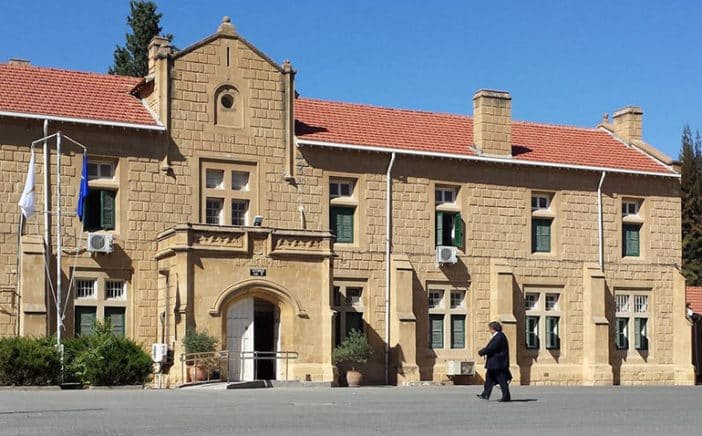
14-year-old Stylianos, who took his own life in 2019, was “malnourished” and had dark circles under his eyes, indicating that “he was a child that was suffering”, a witness in the ongoing trial over responsibility attributable to civil servants told Nicosia district court on Monday.
The witness has worked with Stylianos while he was in the third grade at the Ayia Varvara primary school.
In a previous hearing, the speech therapist described Stylianos as a child with low self-confidence, who had little trust in his abilities and would often tell her that he would not succeed.
Defence lawyer Constantinos Kazantzis argued that low self-confidence was not unusual.
The witness responded that her assessment was not based solely on the child’s words, but also on his body language, noting that Stylianos was always hunched over and kept his eyes downcast, which she linked to what he was experiencing at home.
She told the court that Stylianos often told her that he was tired and did not have hot water to have a shower when he returned from the family’s farm after having milked the animals in the early morning hours.
Referring to the school’s actions, she said that the team responsible for tackling violence and anti-social behaviour had been made aware of Stylianos’ reports.
She said that, when Stylianos reported incidents of violence to her, his teacher and the headteacher were informed, as was the school’s liaison officer.
The witness disagreed with the defence’s allegation that she had not lodged a formal complaint with the social welfare services or the police because she did not believe the boy’s reports, underlining that she believed him fully and had acted within the scope of her responsibilities.
Responding to the defence’s suggestion that Stylianos might have lied to her, the witness argued that a child of the boy’s age would not be able to invent and maintain the same false story over a long period of time.
According to the witness, the boy started telling her about his living circumstances approximately a month and a half after they met.
The witness recalled Stylianos’ accounts, saying that the boy had often told her that he was scared of his father and that he had repeatedly beaten him.
The defence then referred to marks on Stylianos’ back which the boy had told the speech therapist were caused by his father hitting him with a belt, arguing they might have been caused by other children at school.
The witness responded that no incident of school violence had been reported on the day in question, underlining that all breaks were supervised by teachers.
The cross-examination then moved on to an incident in May of the same school year when Stylianos allegedly left home after being beaten by his father and walked all night until he reached the school in the morning, with the witness describing him looking distressed with dirt on his feet and red eyes.
“My view is entirely objective based on what I saw,” the witness said.
The defence argued that earlier accounts of the witness, who said that Stylianos had told her that he wished the speech therapist was his mother, were incorrect, saying that the child had never said such a thing.
The witness responded that Stylianos used to leave notes for her in her diary, which she tried to find after his death, but was unable to do so.
“Just think what state he had reached to say to a teacher who was giving him a lesson, ‘I wish you were my mum’,” she said.
The defence concluded the hearing by arguing that Stylianos’ parents had provided him with everything they could.
The proceedings are set to continue on Tuesday, November 17 at 11am.

Click here to change your cookie preferences