
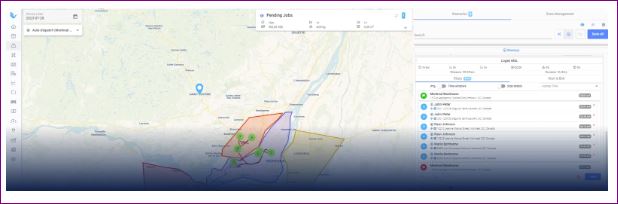
In today’s fast-paced logistics industry, timely delivery is more than a customer expectation; it’s a competitive advantage. Businesses that rely on delivery services face challenges such as rising fuel costs, traffic congestion, and unpredictable weather conditions. These hurdles make it crucial to leverage technology that can streamline operations. Delivery route planning software is one such solution, designed to optimize delivery routes, reduce operational costs, and improve customer satisfaction.
What is delivery route planning software?
Delivery route planning software is a digital tool that helps businesses create efficient delivery routes for their fleet. Unlike traditional manual planning, which can be error-prone and time-consuming, this software uses algorithms and real-time data to generate optimal routes. These tools consider factors like traffic patterns, delivery windows, vehicle capacity, and driver availability to ensure that deliveries are made on time while minimizing fuel consumption.
The software integrates with GPS and telematics systems, enabling fleet managers to track vehicles in real time. It also provides insights into delivery performance, helping managers make data-driven decisions to improve operations.
Benefits of using delivery route planning software
Implementing delivery route planning software offers numerous benefits for businesses of all sizes. Here are the most significant advantages:
1. Increased efficiency
Optimized routes reduce unnecessary travel, helping drivers complete more deliveries in less time. By minimizing idle time and avoiding congested roads, businesses can achieve faster turnaround times.
2. Reduced operational costs
Fuel expenses account for a significant portion of logistics costs. Delivery route planning software calculates the most efficient routes, reducing fuel consumption and vehicle wear and tear. This leads to substantial cost savings over time.
3. Enhanced Customer Satisfaction
Timely deliveries are crucial for maintaining a positive customer experience. With real-time tracking and accurate estimated arrival times, customers are informed about their orders, leading to higher satisfaction and loyalty.
4. Better Resource Management
The software helps fleet managers allocate vehicles and drivers efficiently. By analyzing delivery volumes and routes, managers can make informed decisions about staffing and fleet utilization.
5. Data-Driven Insights
Modern delivery route planning tools provide analytics on driver performance, delivery times, and route efficiency. These insights allow businesses to continually refine their operations for maximum productivity.
Key Features of Delivery Route Planning Software
Choosing the right delivery route planning software involves understanding its core features. Here are some of the essential functionalities:
Route optimization
The software generates the most efficient routes for multiple deliveries, considering traffic, distance, and delivery priorities. This ensures minimal delays and maximum productivity.
Real-time tracking
Fleet managers can monitor the exact location of vehicles in real time. This feature is crucial for responding to unexpected delays and maintaining transparency with customers.
Automated scheduling
Scheduling deliveries manually can be complex and time-consuming. The software automates this process, taking into account time windows, delivery priorities, and driver availability.
Integration with other systems
Many software solutions integrate seamlessly with existing ERP, CRM, or warehouse management systems, providing a unified platform for logistics operations.
Reporting and analytics
Advanced reporting tools help businesses analyze delivery efficiency, identify bottlenecks, and make data-driven decisions to improve performance.
Industries that benefit from delivery route planning software
Delivery route planning software is valuable across various industries, including:
- E-commerce: Ensures fast and reliable deliveries, enhancing customer satisfaction.
- Food and Beverage: Maintains freshness and timely delivery for perishable goods.
- Pharmaceuticals: Guarantees on-time delivery for sensitive medicines.
- Retail: Optimizes last-mile delivery, reducing costs and improving service.
- Logistics and Courier Services: Maximizes fleet efficiency and reduces operational expenses.
How to choose the right delivery route planning software
Selecting the right tool requires careful evaluation. Here are some key factors to consider:
- Ease of Use: The software should have an intuitive interface that drivers and managers can easily navigate.
- Scalability: It should support the growth of your business and handle increasing delivery volumes.
- Real-Time Updates: The ability to adapt to traffic, weather, and other disruptions is crucial.
- Cost-Effectiveness: Ensure that the software provides a positive ROI by reducing costs and improving efficiency.
- Customer Support: Reliable support is essential for resolving technical issues quickly.
Future trends in delivery route planning
As technology evolves, delivery route planning software is becoming smarter. Some emerging trends include:
- AI and Machine Learning: Predictive analytics help anticipate traffic patterns and optimize routes proactively.
- Electric and Autonomous Vehicles: Integration with EVs and self-driving vehicles is expected to reshape delivery logistics.
- Sustainability Focus: Eco-friendly routing reduces emissions and supports green logistics initiatives.
Conclusion
In a competitive delivery landscape, efficiency, accuracy, and customer satisfaction are key. Delivery route planning software empowers businesses to streamline their operations, reduce costs, and ensure timely deliveries. By leveraging advanced route optimization, real-time tracking, and data-driven insights, companies can stay ahead of the competition and provide exceptional service. Investing in delivery route planning tools is no longer optional; it’s a strategic necessity for businesses aiming to thrive in the modern logistics environment.
DISCLAIMER – “Views Expressed Disclaimer – The information provided in this content is intended for general informational purposes only and should not be considered financial, investment, legal, tax, or health advice, nor relied upon as a substitute for professional guidance tailored to your personal circumstances. The opinions expressed are solely those of the author and do not necessarily represent the views of any other individual, organization, agency, employer, or company, including NEO CYMED PUBLISHING LIMITED (operating under the name Cyprus-Mail).





Click here to change your cookie preferences