
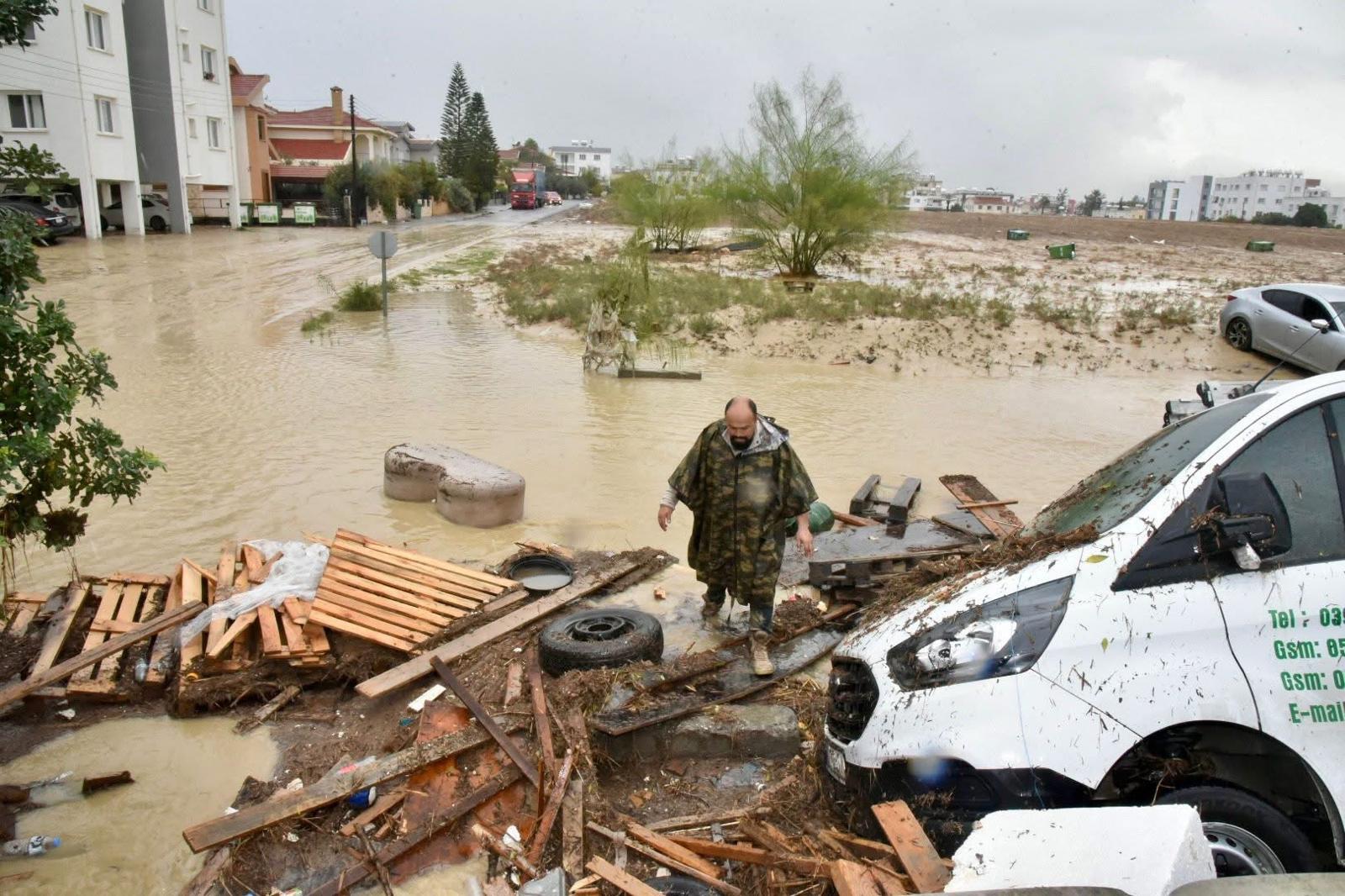
One man has died after severe floods hit swathes of northern Cyprus on Monday night and Tuesday.
The man, named as 57-year-old Ercin Fevzi, had been missing since Monday night, and was found dead in his car near Alagadi beach, which is located in the Kyrenia district.
It is believed that Fevzi was driving in and around Bellapais and the Kyrenia district village of Kazafani when the floods hit, with landslides also having been reported in the area.
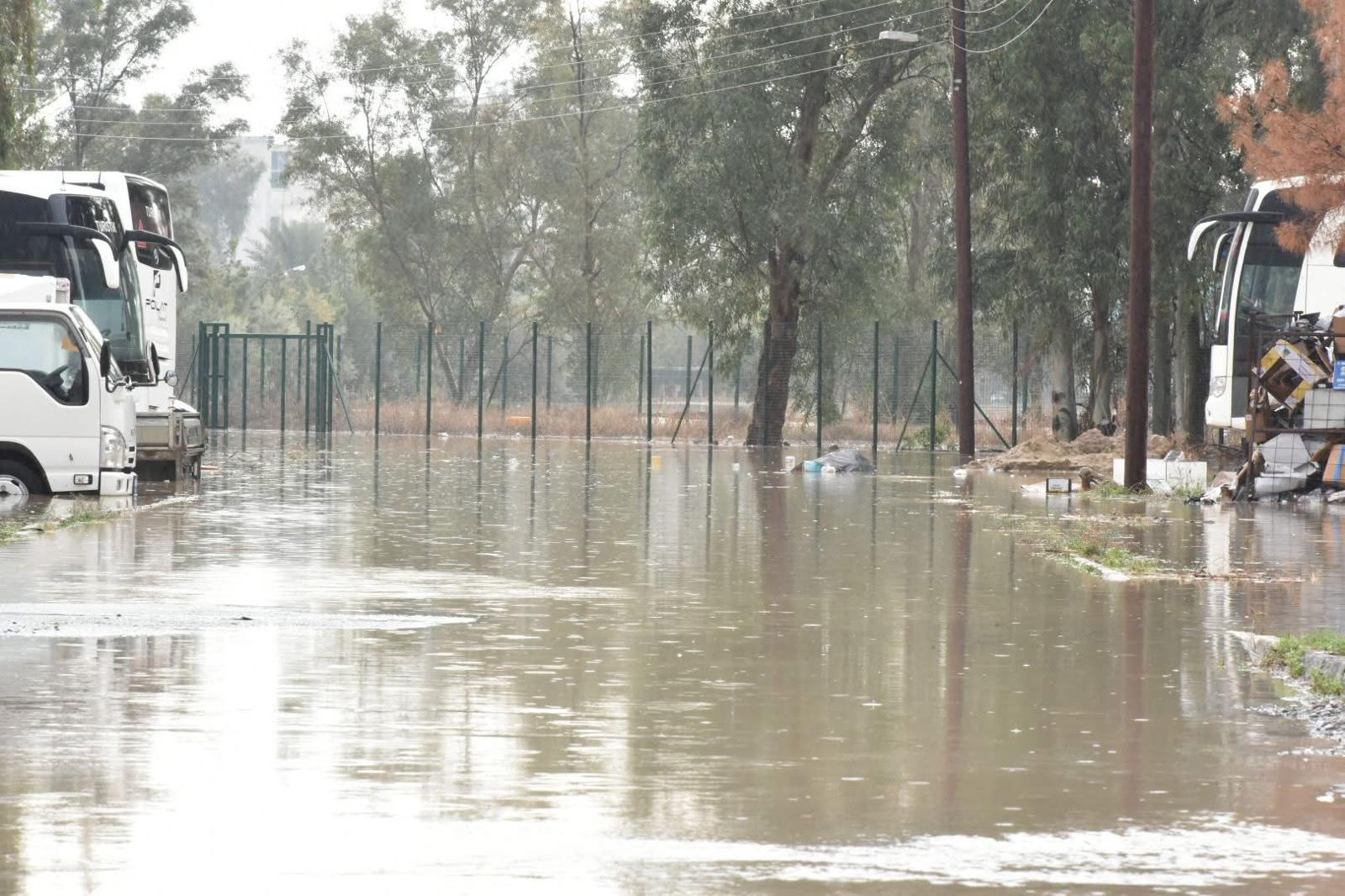
Homes and businesses across the north were left under feet of water, while roads were submerged and reservoirs overflowed.
The town of Kioneli, located immediately northwest of Nicosia, was among the worst-affected areas after the town’s reservoir and the reservoir which is located in the adjacent village of Kanli both overflowed overnight.
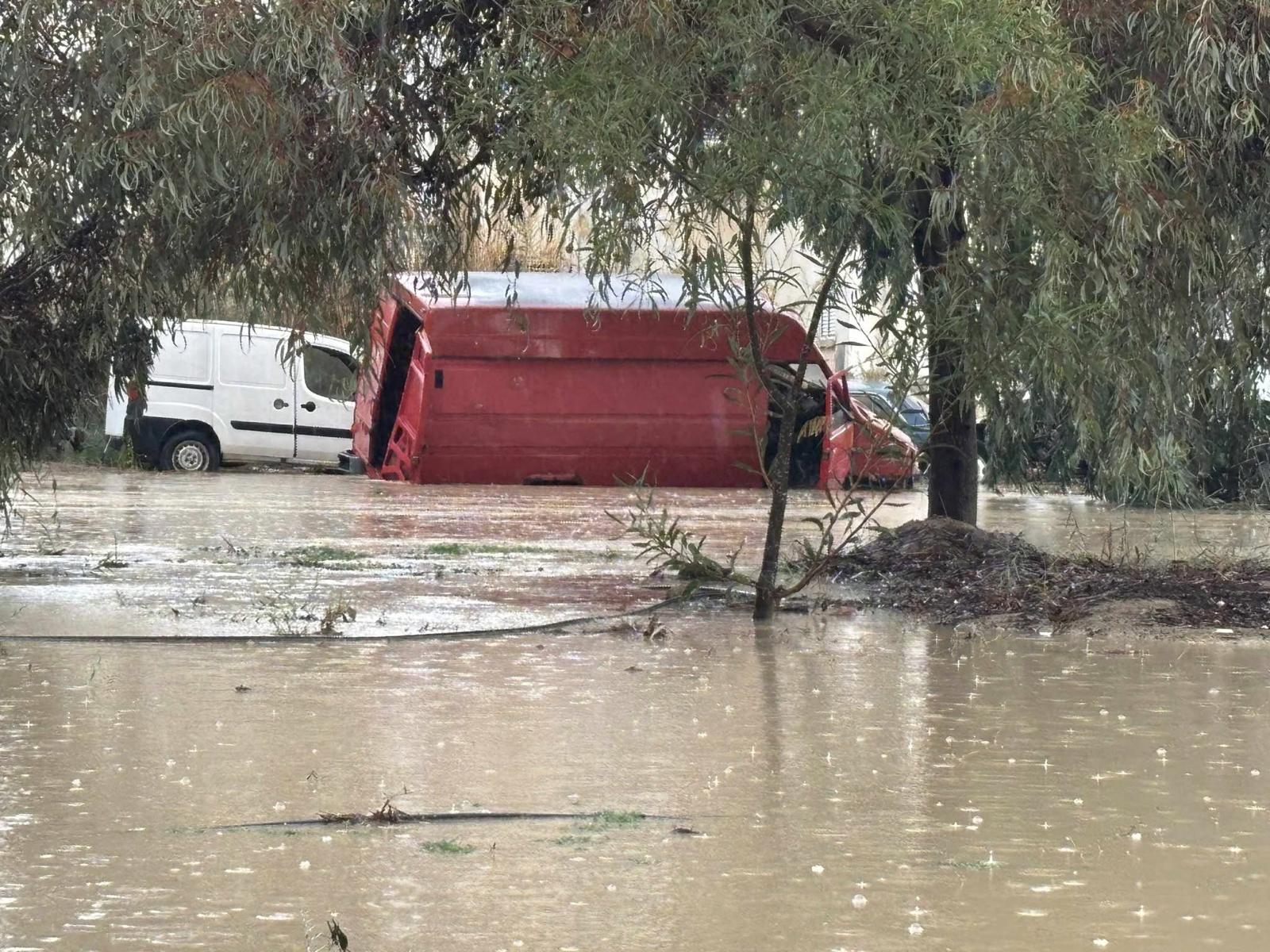
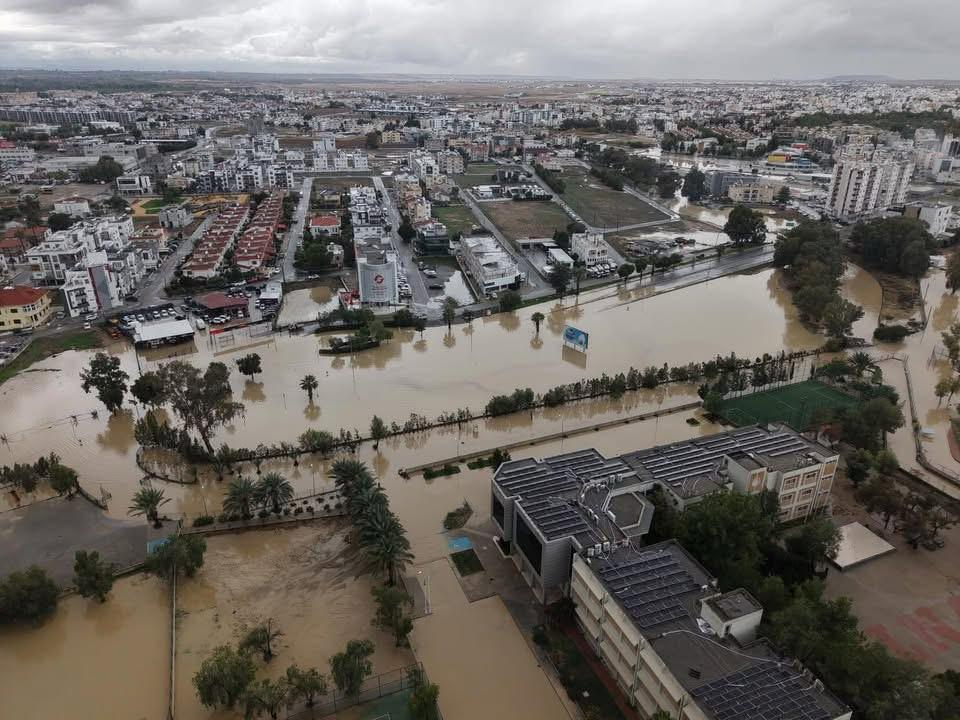
Those reservoirs were built to collect water from streams which take runoff from the foothills of the Kyrenia mountains and run into the Pedieos river, with much of the streambeds now residential neighbourhoods in Kioneli and the northern sector of the Nicosia suburb of Ayios Dhometios.
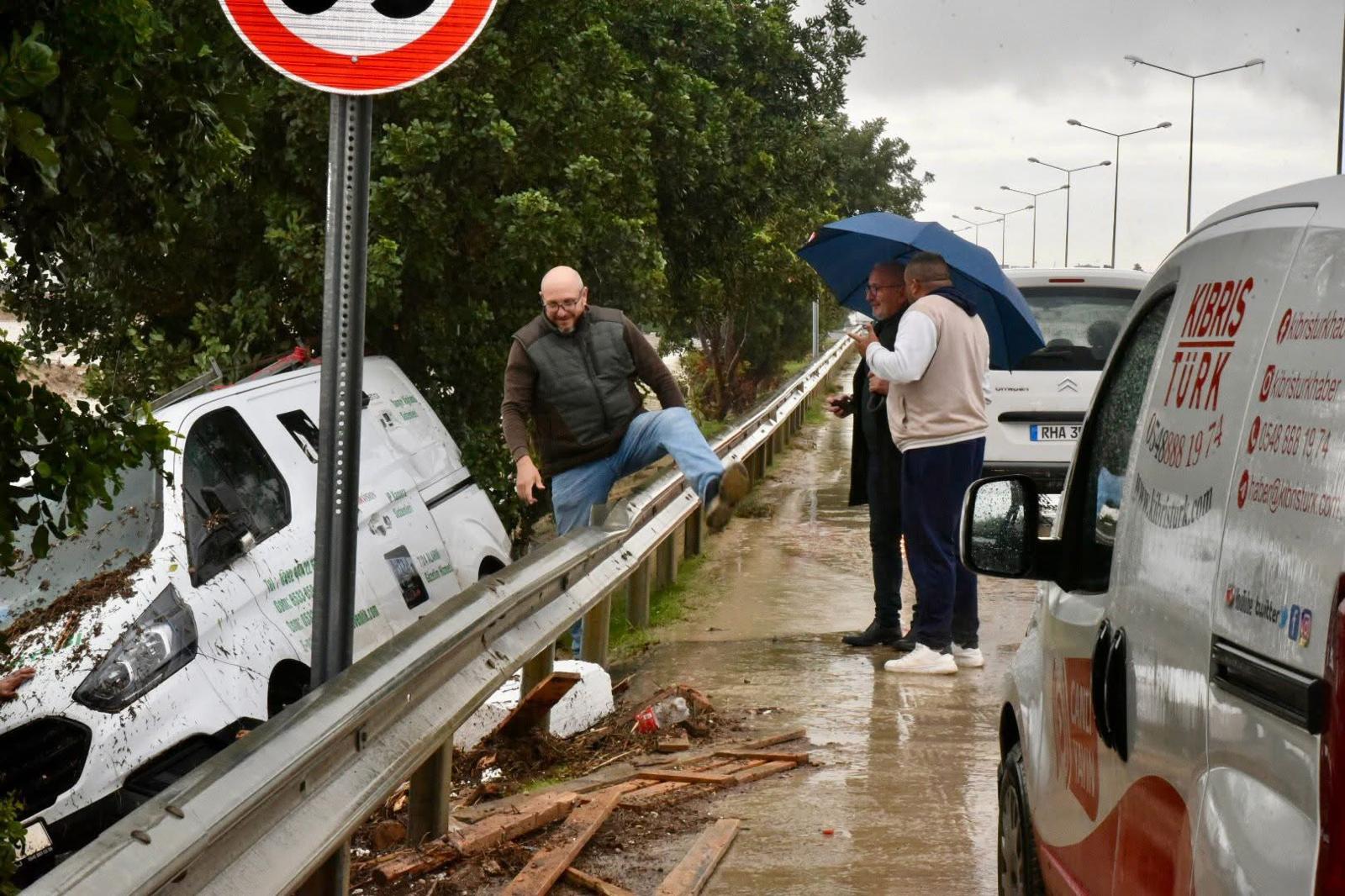
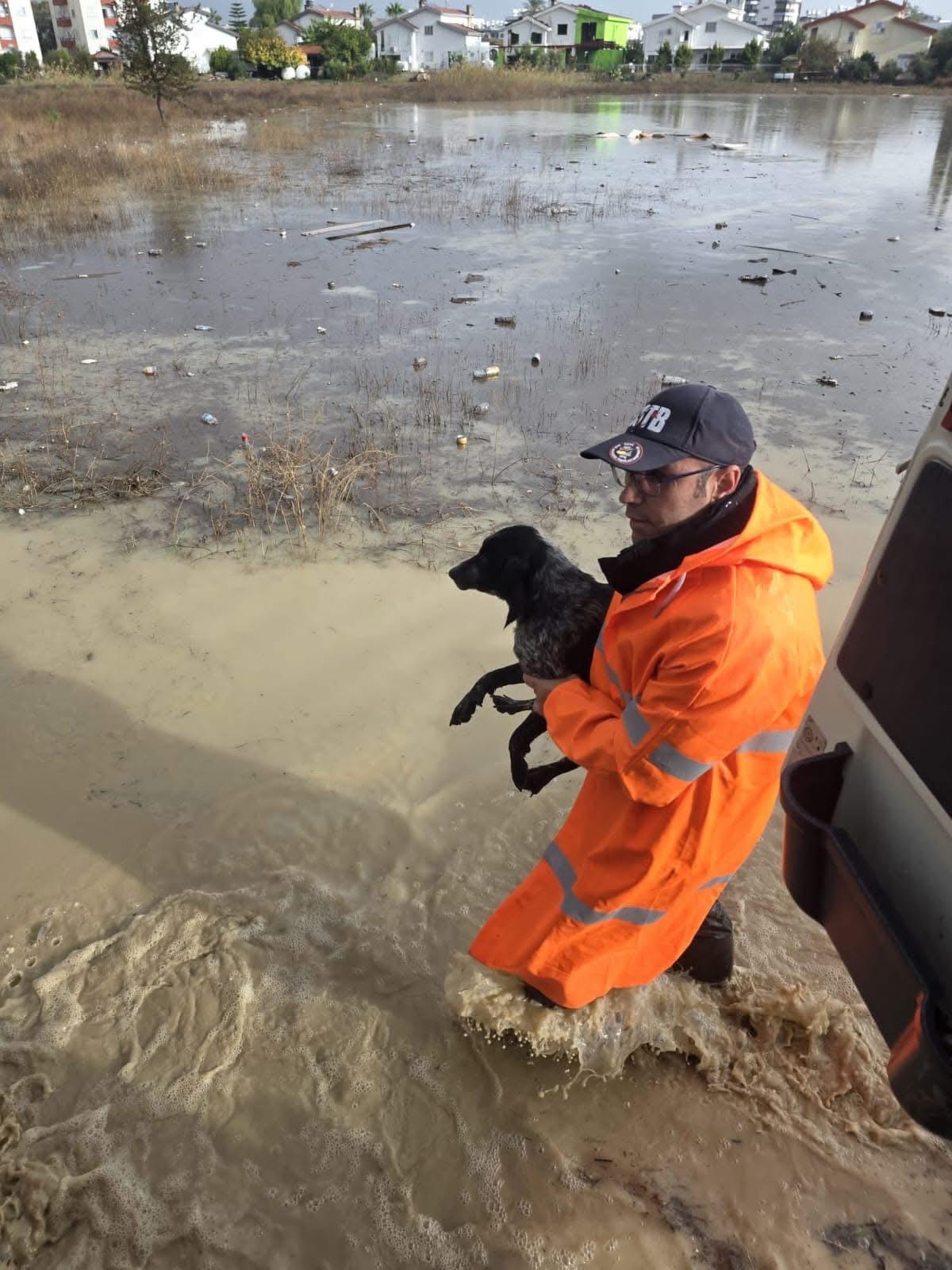
The ensuing floods saw cars swept away and debris strewn across roads, while the Turkish Cypriot civil defence deployed teams to affected areas to help evacuate people whose homes were flooded.
At the same time, a team from the Turkish Cypriot civil defence was also sent to rescue dogs housed at the dog shelter in the Kioneli suburb of Yenikent, which had also flooded.
As flood waters continued to rise, the Cyprus Turkish hoteliers’ association announced that people whose homes were flooded will be able to stay at any hotel affiliated with the association free of charge until their homes are once again habitable.
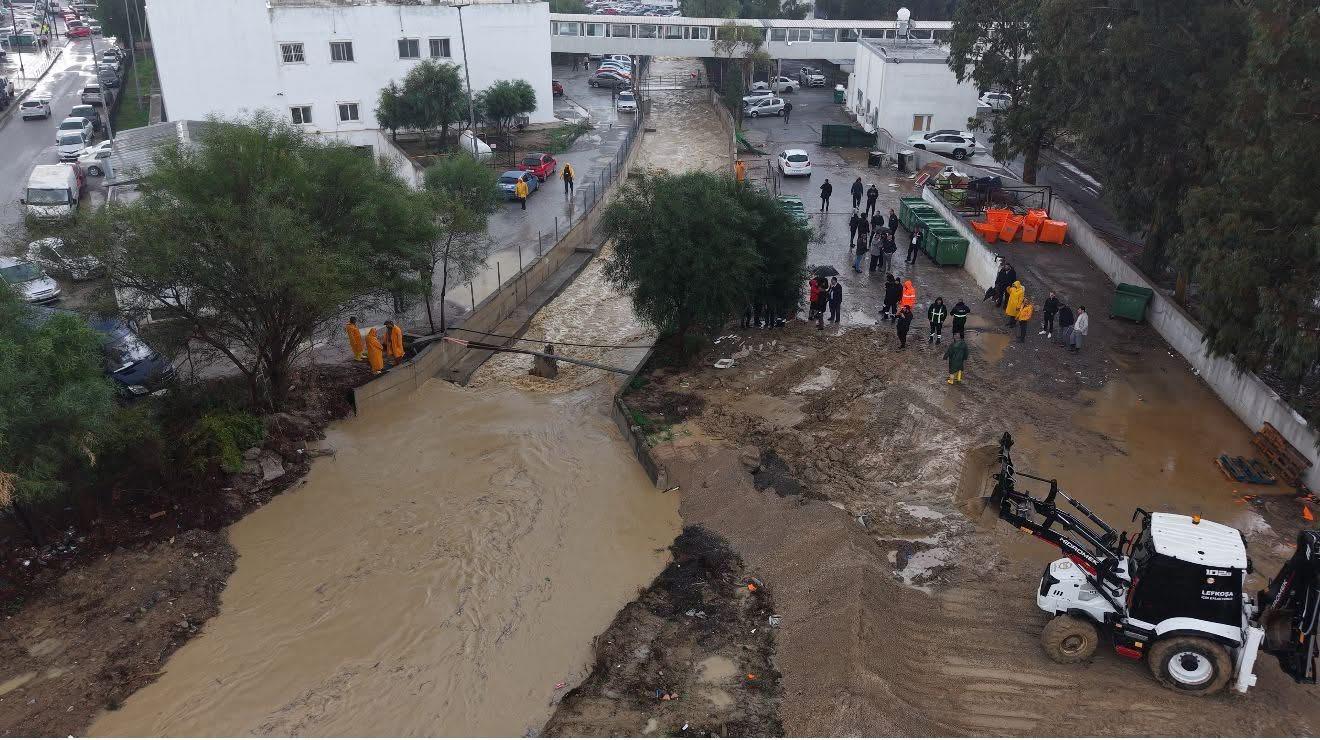
With rain unrelenting on Tuesday morning, attention swiftly turned to northern Nicosia’s Dr Burhan Nalbantoglu hospital – the largest in the north – which was also built above a streambed.
The road in front of the hospital flooded in its entirety, while the streambed underneath the hospital grounds filled with water, with construction vehicles deployed to the hospital to reenforce the streambed’s banks and an evacuation plan drawn up for the worst-case scenario. As of Tuesday afternoon, the hospital remains operational.
Other roads that were closed or partially closed mainly connected major towns with villages in mountains, though the motorway connecting Morphou and Nicosia, as well as other roads in the Morphou area, were also closed, effectively cutting Morphou off from the rest of the island for a number of hours.
Calls were made loudly for schools across the north to close early on Tuesday morning among fears that school buildings may flood should conditions worsen.
The ‘education ministry’ initially refused to countenance a closure, announcing ahead of the start of the school day on Tuesday that “the current situation is under control” and saying that schools would open as normal.
However, as rain continued to fall, it announced on Tuesday afternoon that schools will close on Wednesday, saying that it is believed that “the effect of rain will increase” between Tuesday afternoon and Wednesday afternoon.
Given that two reservoirs in the north had overflowed, fears also arose that reservoirs located on the other side of the Green Line, some of which prevent the flow of water into the north, may also overflow.
Those fears were allayed following a telephone call held between Turkish Cypriot leader Tufan Erhurman and President Nikos Christodoulides, with the former saying that “the reservoirs in the south are around 10 per cent full at the moment” and that “the reservoirs close to the north are less than five per cent full”.
“Therefore, there is no risk of the south opening the floodgates, as of now. We will keep in touch regarding any updates,” he said.
According to the Cyprus News Agency, Christodoulides in the same telephone call “expressed his sympathy over the difficult situation” and “expressed readiness to provide any assistance which the Turkish Cypriot side may need”.
The north’s ‘interior minister’ Dursun Oguz, meanwhile, confirmed that civil defence teams, the fire brigade, the north’s forestry department, and the police are “all on duty 24/7”, and called on the public to “adhere to official instructions” and “avoid going out unnecessarily”.
He also warned people to “not stand idly by and take photographs of flooding”, given the potential risk of being caught up in rising waters and stressed that “our greatest goal is to avoid a loss of life”.
His words were largely echoed by the north’s civil defence chief Hakan Balaban, who said that “the safety of people’s lives must also be the priority”.
Turkish Cypriot Kyrenia mayor Murat Senkul, meanwhile, was keen to stress that the issues faced in the north were not the fault of a lack of infrastructure, but instead a natural disaster.
“Because there is no sea in Nicosia or Kioneli, there were floods in low-lying areas. The problem is not the amount of rain falling on the cities, it is the heavy rainwater coming down from the mountains,” he said.
“Anyone who attributes the events in Kioneli to a lack of infrastructure is, to use an everyday phrase, talking out of their arse. If infrastructure which could prevent natural disasters could possibly be created, there would not be an average of ten or more floods per year in the heart of Europe.”





Click here to change your cookie preferences