
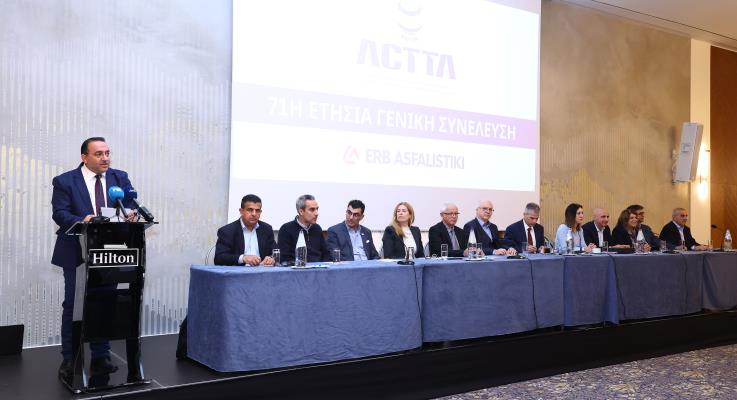
Cyprus is stepping up efforts to strengthen the overall quality of its tourism offering as the sector prepares for a new phase of development, Deputy Minister of Tourism Kostas Koumis told travel agents in Nicosia.
Addressing this week’s annual meeting of the Association of Travel and Tourism Agents of Cyprus (Actta), Koumis said the year closes with strong results, while the country also moves towards a demanding period, particularly in 2026 when Cyprus holds the EU Council Presidency.
He noted that the past three years marked a full recovery in tourism and a clear sign of its resilience, as the industry not only regained momentum after the pandemic but, in many cases, exceeded earlier performance levels.
He pointed to improved air connectivity across European markets and to official figures showing that Cyprus recorded the largest rise in hotel overnight stays between 2024 and 2023, well above the EU average.
The island also registered the strongest growth in tourism revenue among Mediterranean destinations in the first half of the year.
Even so, he said that “the government’s strategy is evolving”. “Tourism”, in his view, “should no longer be assessed solely on visitor numbers or revenue, but on the strength and depth of the experience offered”.
For this reason, issues such as seasonality must be re-examined, while greater emphasis is needed on digital upgrades, environmental priorities and support for local communities.
Tourism, Koumis noted, “must, in addition to being productive, be primarily rewarding”.
These priorities sit comfortably within the EU’s Tourism Agenda 2030, which places sustainability and community benefit at the centre of long-term planning.
In line with this, the Deputy Ministry has channelled funding through the Recovery and Resilience Facility (RRF) to upgrade rural, mountain and remote areas, support accommodation in those regions and encourage more authentic experiences. Total allocations are expected to exceed €20 million.
Recent initiatives, including the draft law on diving tourism, the development of a national tourism app, a study on medical tourism and a project documenting the history of the sector, also point in the same direction.
As Koumis put it, the government has invested not only in performance but in strengthening “the characteristics that define Cyprus as a destination”.
Although 2024 set records for arrivals and revenue, and 2025 performed even higher, he said the industry must now look ahead and plan the next decade collectively.
The goal, he added, is a more modern tourism model that feels genuine to visitors and offers tangible benefits to residents, enriching the experience “with the flavour of Cyprus”.
Turning to tour operators, he said they have the influence to drive this shift and will play a central role once the new national tourism strategy is announced.
Promoting lesser-known areas and expanding authentic tourism products, he suggested, will be essential in the next stage.
The wider challenge, Koumis concluded, is to “ensure that progress in tourism translates into broader prosperity across society.”



Click here to change your cookie preferences