
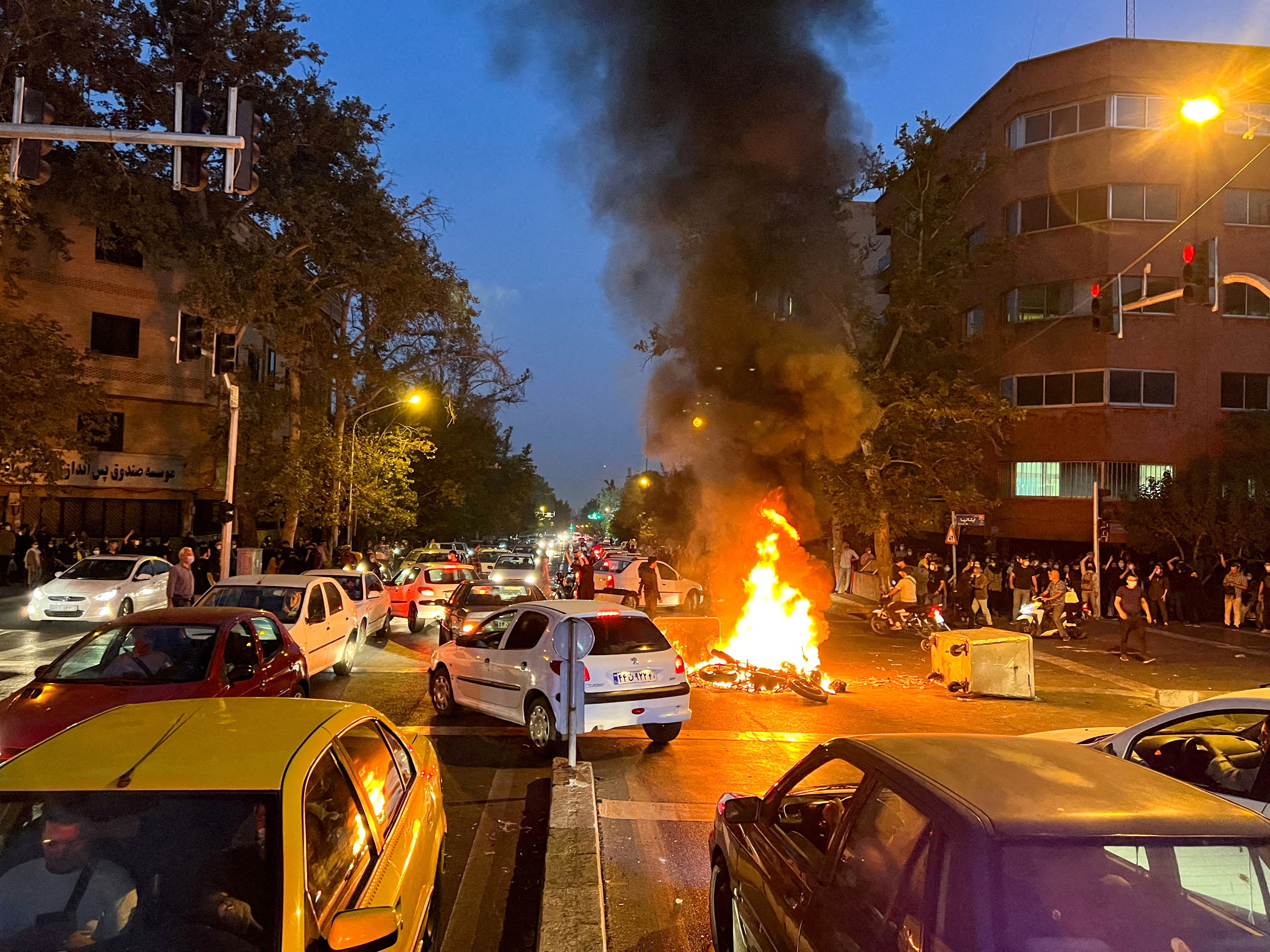
Iran was largely cut off from the outside world on Friday after authorities blacked out the internet to curb expanding protests, with phone calls not reaching the country, flights cancelled and online Iranian news sites only intermittently updating.
Supreme Leader Ayatollah Ali Khamenei accused protesters of acting on behalf of U.S. President Donald Trump, saying rioters were attacking public properties and warning that Tehran would not tolerate people acting as “mercenaries for foreigners”.
The protests that began over soaring inflation in the Islamic Republic late last month have spiralled into the biggest for three years, with unrest reported in every province and rights groups documenting dozens of deaths.
Iran’s fragmented external opposition factions called for more protests on Friday with Reza Pahlavi, exiled son of the late ruling shah, telling Iranians in a social media post: “The eyes of the world are upon you. Take to the streets.”
Trump, who bombed Iran last summer and who last week warned Tehran it could come to the protesters’ aid, said on Friday he would not meet Pahlavi and was “not sure that it would be appropriate” to back him.
The images published by state television overnight showed what it said were burning buses, cars and motorbikes as well as fires at metro stations and banks. It accused the People’s Mujahedin Organisation, an opposition faction that splintered off after the 1979 Islamic Revolution and also known as the MKO, of being behind the unrest.
A state television journalist standing in front of the fires on Shariati Street in the Caspian Sea port of Rasht said “this looks like a war zone – all the shops have been destroyed”.
Iran has quelled far bigger bouts of unrest before, but it now faces a graver economic situation and intensifying international pressure with global sanctions over its nuclear programme reimposed since September.
A French diplomatic source on Friday said Iran should show maximum restraint towards protesters.





Click here to change your cookie preferences