
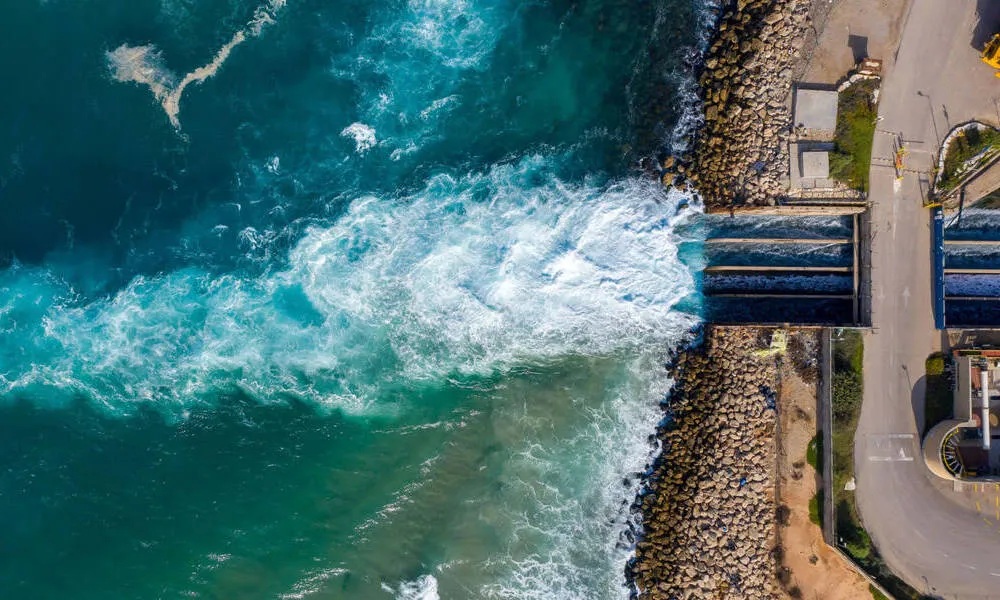
Plans to install a mobile desalination plant in Ayia Napa face uncertainty, following strong opposition from local government bodies and business interests forced the government to pause the project intended to avert water shortages as early as next summer.
The water development department (WDD) was reportedly in the final stages of signing a contract for a mobile desalination unit when objections from Famagusta municipality and tourism stakeholders brought the process to a halt.
The unit, planned for state forest land at a former camping site on the outskirts of Ayia Napa, was designed to produce 10,000 cubic metres of water per day, with provision for expansion to 15,000 or even 20,000 cubic metres.
The tender was launched on December 2 of last year under an accelerated timetable because of critically low dam reserves and pressure on the southern pipeline during peak summer demand.
Bids were opened in mid-January, objections expired on February 17 and the unit was expected to be operational by October.
Instead, the project is now under review, with alternative locations being examined.
In a letter sent earlier this month by the local government authority’s president, Yiannis Karousos, to agricultural minister, Dr Maria Panayiotou, voiced his strong opposition to the plan, warning that the proposed site was incompatible with the character and economic role of the area.
“The entrance to the country’s largest tourist resort cannot be turned into a desalination plant attraction,” he wrote, arguing that the development would undermine the image of a destination built around natural landscape.
Local authorities and hotel operators say the decision was taken without meaningful consultation and without an environmental impact assessment, despite the sensitivity of the coastline.
“We all want water security, but not at the cost of the very product that brings people here”, an Ayia Napa hotelier remarked.
Concerns have focused on the proximity of Nissi beach and Makronissos, two of the island’s most heavily visited beaches, and on the cumulative effects of intake and brine discharge on marine ecosystems.
“This was presented to us as a fait accompli,” one local official said.
“We were informed after the evaluation process had effectively finished, when the contract was about to be signed.”
In response, the authority and municipalities have proposed alternative sites further east, including the Kapparis area near Protaras and the Potamos Liopetriou area towards Xylofagou.
Business groups in Ayia Napa have also floated the Ayia Thekla area, closer to the marina, as a possible compromise.
“We are not rejecting desalination,” the authority said.
“We are insisting on solutions that do not damage the tourism product.”
The government, however, has warned that relocating the plant carries significant technical and timing risks.
Officials say any new site would require fresh studies, permits and infrastructure, potentially delaying delivery by at least 18 months.
That delay could leave the district exposed to water cuts next summer if reserves fall further or if existing desalination units suffer outages.
Large stretches of coastline in the district fall within the Natura 2000 network or are designated bathing and recreation zones, complicating the installation of marine pipelines.
In addition, none of the alternative sites have ready-made infrastructure to connect a plant to the water network, meaning long overland pipelines would be needed to link to existing reservoirs.
Cyprus is entering another year of drought with dam levels hovering near historic lows and desalination already supplying around 70 per cent of drinking water.
The cabinet approved the Ayia Napa unit in October 2025 for a five-year term, extending it to seven years and increasing capacity in a follow-up decision in January.
“The addition of a new unit is vital for the stability of water supply and the smooth functioning of the local economy,” the water development department has insisted.
Famagusta EOA counter that urgency cannot justify bypassing consultation or environmental scrutiny.
They also question why Ayia Napa should shoulder the visual and environmental burden for a plant whose output would be distributed across the district.
“Any other option does not have our agreement and cannot proceed without serious reactions,” Karousos warned.




Click here to change your cookie preferences