
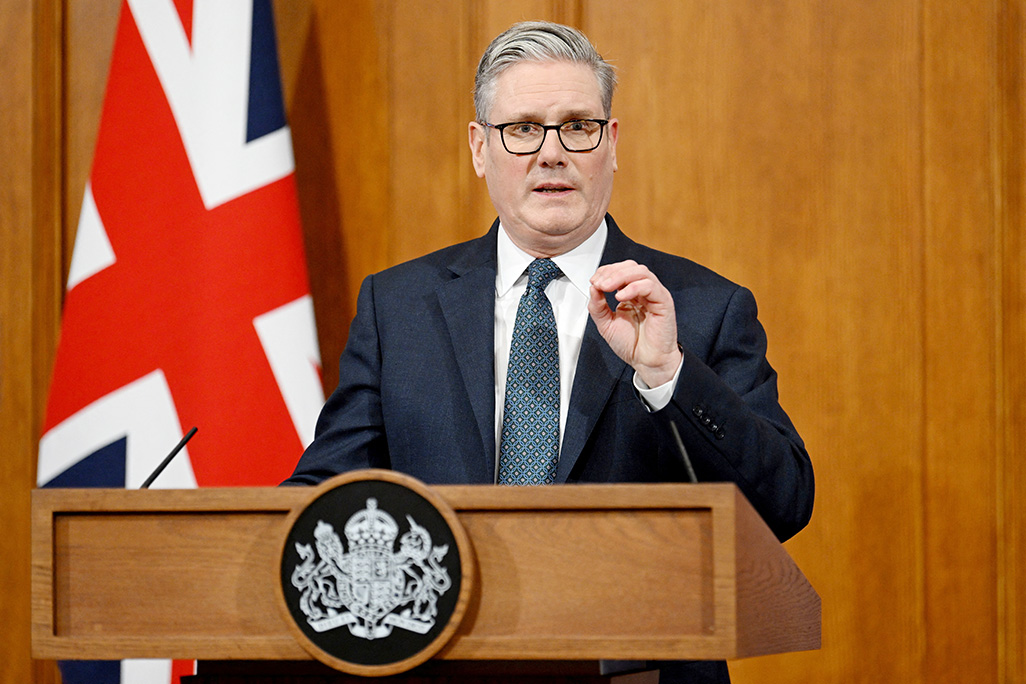
The “special relationship” between Britain and the United States remains intact and they continue to share intelligence, Prime Minister Keir Starmer said on Thursday, after Donald Trump rebuked him for hesitating to support U.S. strikes on Iran.
After initially refusing to allow the United States to use British bases for the U.S.-Israeli campaign, Starmer has come under personal attack from the U.S. president, who said the British leader was “not Winston Churchill”.
Speaking at a press conference, Starmer defended his decisions both to withhold initial access to bases, and then to participate in “defensive” operations against Iran, once Tehran had responded by attacking its neighbours.
“The special relationship is in operation right now,” Starmer said. “We are working together in the region, the U.S. and the British working together to protect both the U.S. and the British in joint bases, where we’re jointly located and we’re sharing intelligence on a 24/7 basis in the usual way.”
As well as the tongue-lashing from Trump, Starmer has also faced criticism for his cautious response from other allies in the region, including Cyprus where an Iranian-made drone hit one of Britain’s military bases on the island.
He has also faced criticism at home, including from Reform UK leader Nigel Farage, a right-wing Trump supporter, who has accused the prime minister of dithering.
“What Keir Starmer has done in alienating the American administration is not to just put that relationship personally at stake, but frankly to risk a relationship with a country without whom we are defenceless,” he told Reuters on Thursday.
Starmer’s government said this week it would deploy a warship, as well as helicopters with counter-drone capabilities, to help blunt Iran’s retaliatory strikes, and on Thursday he announced he would send four more Typhoon fighter jets to Qatar to provide additional protection.
Britain, like other European countries, is searching for ways to repatriate citizens stranded in the Middle East by a conflict that has shut some of the world’s busiest airports.
Starmer said more than 4,000 people had arrived back in the United Kingdom on commercial flights from the UAE, while 140,000 British nationals had registered their presence in the region.




Click here to change your cookie preferences