
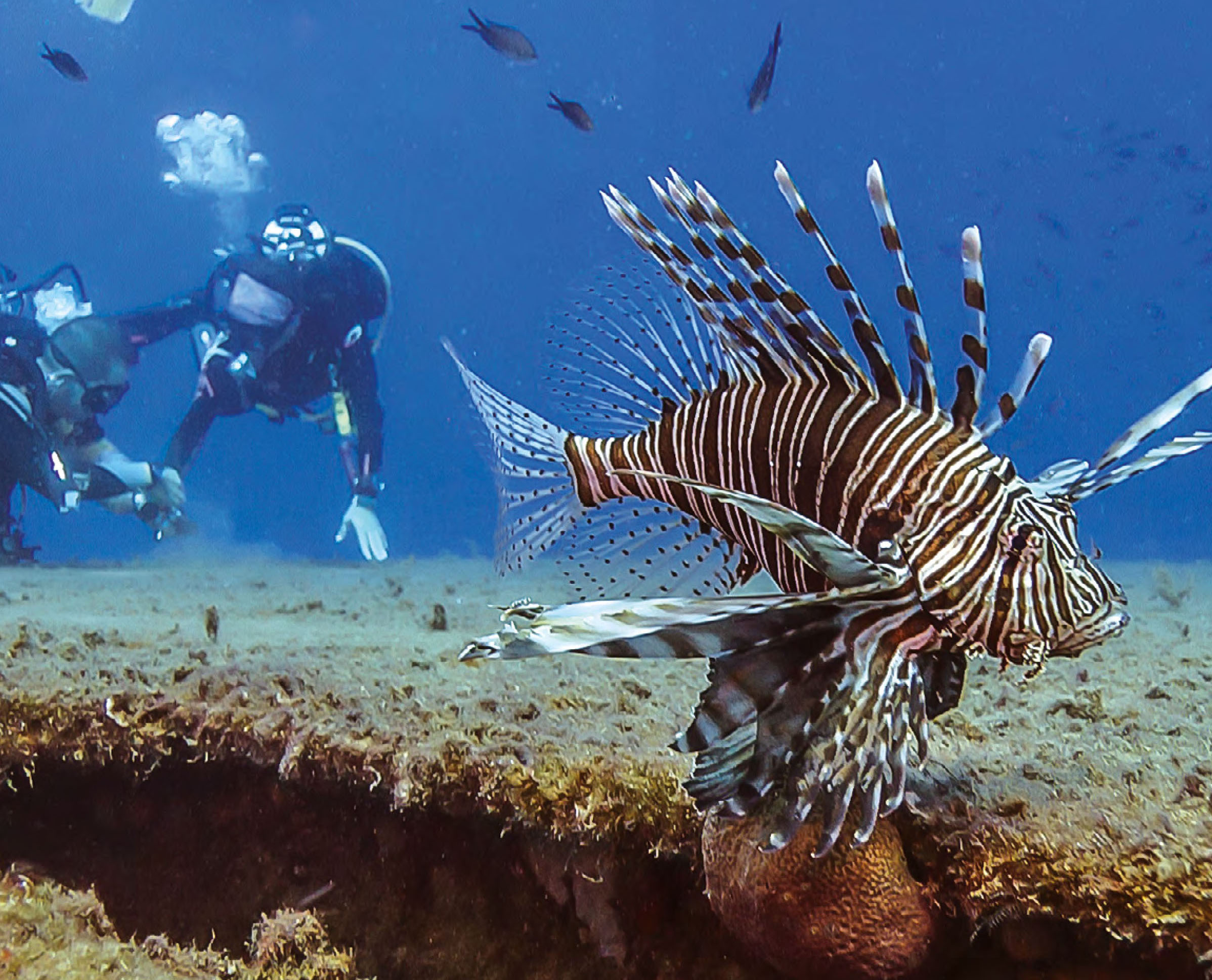
From removal to reality: lionfish in waters around the island
Despite efforts to limit the spread of lionfish in Cyprus waters, this visually striking but invasive species has become increasingly prevalent in the Mediterranean Sea. First detected in Cyprus in the early 2010s, lionfish numbers increased rapidly, prompting scientists, divers and policymakers to launch the EU-funded RELIONMED project focused on monitoring the species, removing fish from critical areas and promoting the development of a market for lionfish as a food source.
Years after the completion of the project, the species has successfully established itself in the region.
Lionfish, which are native to the Indo-Pacific region, were introduced to the Mediterranean via the Suez Canal and first appeared in the vicinity of Cyprus in the mid 2010s. Because lionfish have very few natural predators in the Mediterranean and can reproduce quickly, they have rapidly dispersed throughout the area, prompting concerns about their potential effects on local ecosystems and fish.
The RELIONMED project sought to develop an early stage response to the invasion, aiming to provide information that could be used to inform management decisions in the long term while also testing the hypotheses that market demand for lionfish could be used to control their populations in the wild.
According to marine researchers who took part in the project, lionfish have now firmly established themselves in Cyprus waters. “The lionfish population has spread and has established itself,” said research director of the environmental organisation Enalia Physis Carlos Jimenez, who worked on the RELIONMED project. “Their size has increased significantly, and it is now quite common to see larger specimens than before.”
Though their numbers in shallow waters vary, greater numbers are being seen at greater depths. “Large numbers can be recorded in deeper waters, deeper than 40 meters,” he said, adding that some sites consistently record more than 50.
Fishermen are also reporting more encounters with the species. “Even though lionfish catches in nets are sometimes impressive- more than 40kg of lionfish per catch – there are fluctuations in the number of individuals in shallow waters,” Jimenez said.
Similar observations have been made in other reports on the issue. In a recent interview with an Austrian broadcaster FM4, researchers involved in monitoring lionfish in Cyprus said that the species continues to expand across the Eastern Mediterranean.
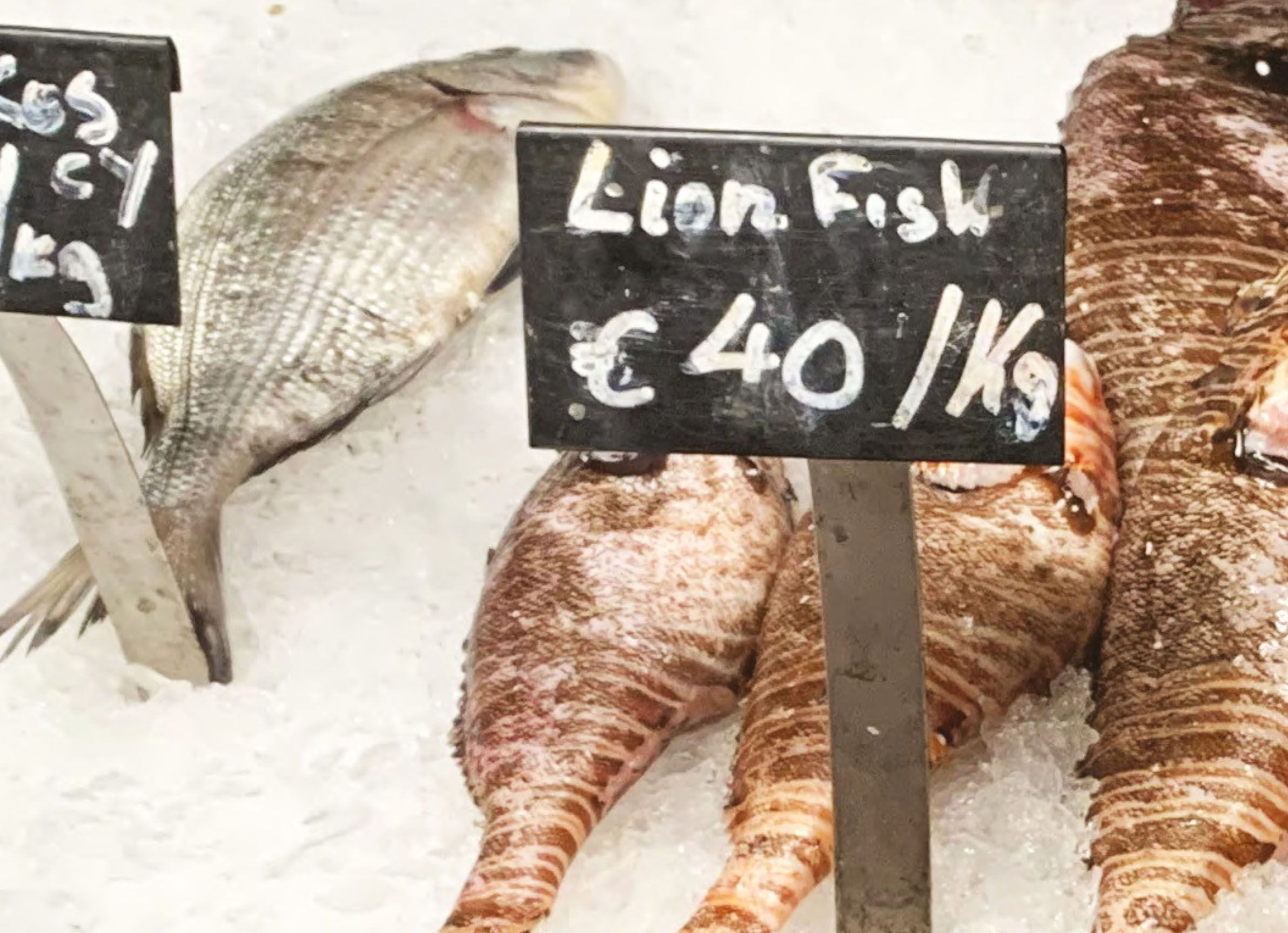
One of the approaches that was considered during the RELIONMED programme was to market lionfish as food, hoping that this might encourage more fishing of the species. “Consumers and restaurants have proven to be reticent to add the species to their menus,” Jimenez said. Lionfish can be found in some fish markets and supermarkets, although not in a consistent way.
“When we asked them about the inconsistency in the offer, the common reply is about the sporadic or opportunistic supply by fishers,” he said.
Some of the restaurants have attempted to incorporate lionfish in their menus, but many have stopped serving it due to limited demand or unreliable supply. Nonetheless, some of the restaurants have continued to incorporate lionfish in their menus, especially during tourist season.
“With a smile on their faces, the managers tell us that lionfish is one of, if not the most expensive fish dish on their menus and it is highly popular during the tourist season,” Jimenez said.
Questions remain about how lionfish management has evolved in Cyprus following the conclusion of the RELIONMED project. Marine biologist Antonis Petrou said the project produced a management guide designed to inform future actions, but many of its recommendations were not carried forward.

“When RELIONMED finished, there was an expectation that some elements of the project would be utilised by the authorities to continue or make available some form of mitigation,” he said.
Petrou said that the guide suggested methods for monitoring, removal and development of lionfish. “None of the strategies proposed were followed through,” he said, adding that in practice, lionfish are largely caught incidentally by fishermen and sold when possible. “Essentially, there is no management. Fishermen catch the fish and sell it,” Petrou said.
The department of fisheries describes lionfish as a rapidly established invasive species in Cyprus waters, and growing quickly, especially along the southern coast of the island.
According to the department, the species poses ecological and economic risks, preying on small fish and invertebrates, including juvenile commercial species, and affecting marine food webs. Further, its venomous spines also present safety concerns for fishers, divers and tourists.
Lionfish is also included in ongoing data collection efforts under the EU Common Fisheries Policy aimed at supporting evidence-based management.
Overall, the available data indicate a species that is currently well established in Cyprus waters. While researchers and field observations suggest the species is expanding, what began as a rapid response through initiatives like RELIONMED has since shifted into a more uncertain phase.
Although interventions such as removals, monitoring and the development of a market for lionfish have shown partial results, uncertainties remain regarding the long-term sustainability of these strategies and what direction future management may take.
For now, fishermen and divers around the island still come across lionfish, and the question of how to best manage their presence in the Mediterranean remains open.





Click here to change your cookie preferences