
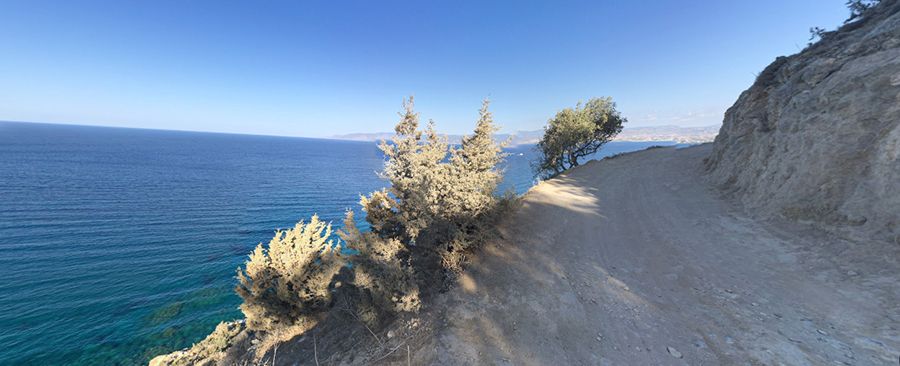
Environment Commissioner Antonia Theodosiou has requested the immediate cancellation and withdrawal of environmental approval for the Baths of Aphrodite-Fontana Amorosa roadwork in Akamas, citing both legal and ecological breaches.
In her letter addressed to both the agriculture ministry and presidential palace on Monday, Theodosiou called for the “immediate cancellation” of the approval.
She says the project should not proceed under current conditions and raises concerns over compliance with environmental obligations.
She also warns of risks of irreversible damage to protected coastal and forest ecosystems.
She states that the approved design exceeds limits set in earlier ecological assessments, with widening works extending beyond thresholds established for the route, previously capped at a maximum of 300 metres.
She warns coastal protection requirements have not been adequately studied and says this exposes Cyprus to what she describes as a “risk of violating the provisions of the Barcelona Protocol”.
She further drew attention to discrepancies in road width parameters, with official planning documents indicating narrower specifications than those now being implemented.
The commissioner raises governance concerns, pointing to the forestry department acting both as project promoter and participant in the committee that reviewed the ecological assessment.
According to news outlet Stockwatch, she alleged this creates a potential conflict of interest.
She reiterated that dissenting opinions from environmental organisations were not fully reflected in the final approval, despite being attached to the environmental decision.
She also remarked that her office was not invited to key Akamas meetings, unlike earlier practice.
Further criticism focuses on the ecological sensitivity of Akamas national forest park within the Natura 2000 network.
The commissioner says the management plan prohibits disturbance of structural landscape elements and stresses that no transformation of the natural environment is permitted under conservation decrees.
She warns failure to comply could undermine binding protections and lead to devastating impacts on habitats, flora and fauna.
She adds that road widening and increased access risk altering a sensitive coastal landscape.
Environmental groups including Friends of Akamas have called for withdrawal of the decision, arguing the findings “effectively support increased vehicle access” including safari jeeps.
They say this contradicts commitments to reduce private traffic and protect the area from degradation.
The groups also claim controlled access measures have not been fully implemented, increasing pressure on the ecosystem and visitor safety.
The organisations argue restricting private vehicles would reduce fire risk and environmental strain while improving sustainable access.
Authorities maintain the works are linked to firefighting access and safety needs, while insisting environmental safeguards remain in place.
The forestry department says the intervention is limited and necessary for emergency response capability.



Click here to change your cookie preferences