
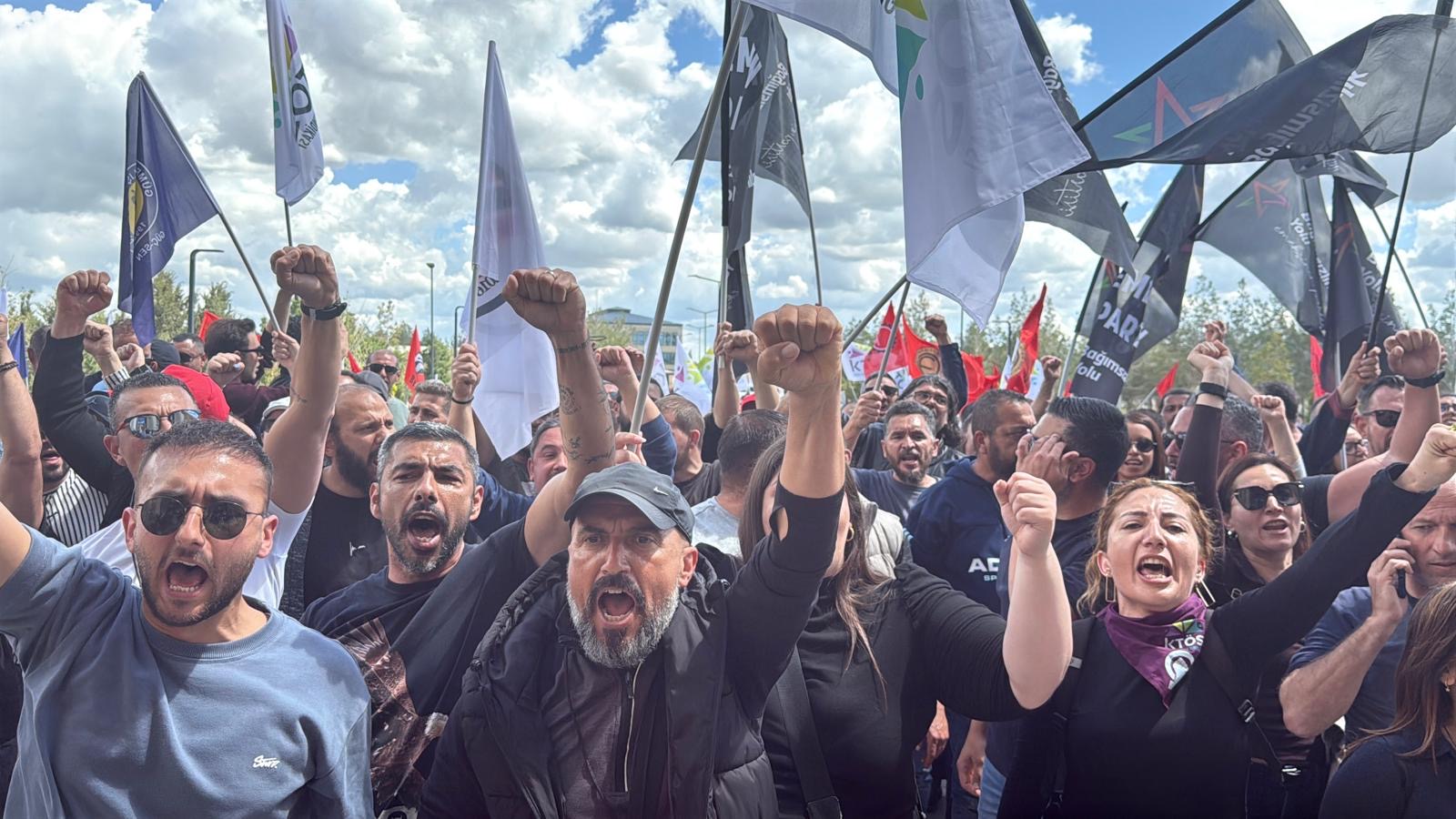
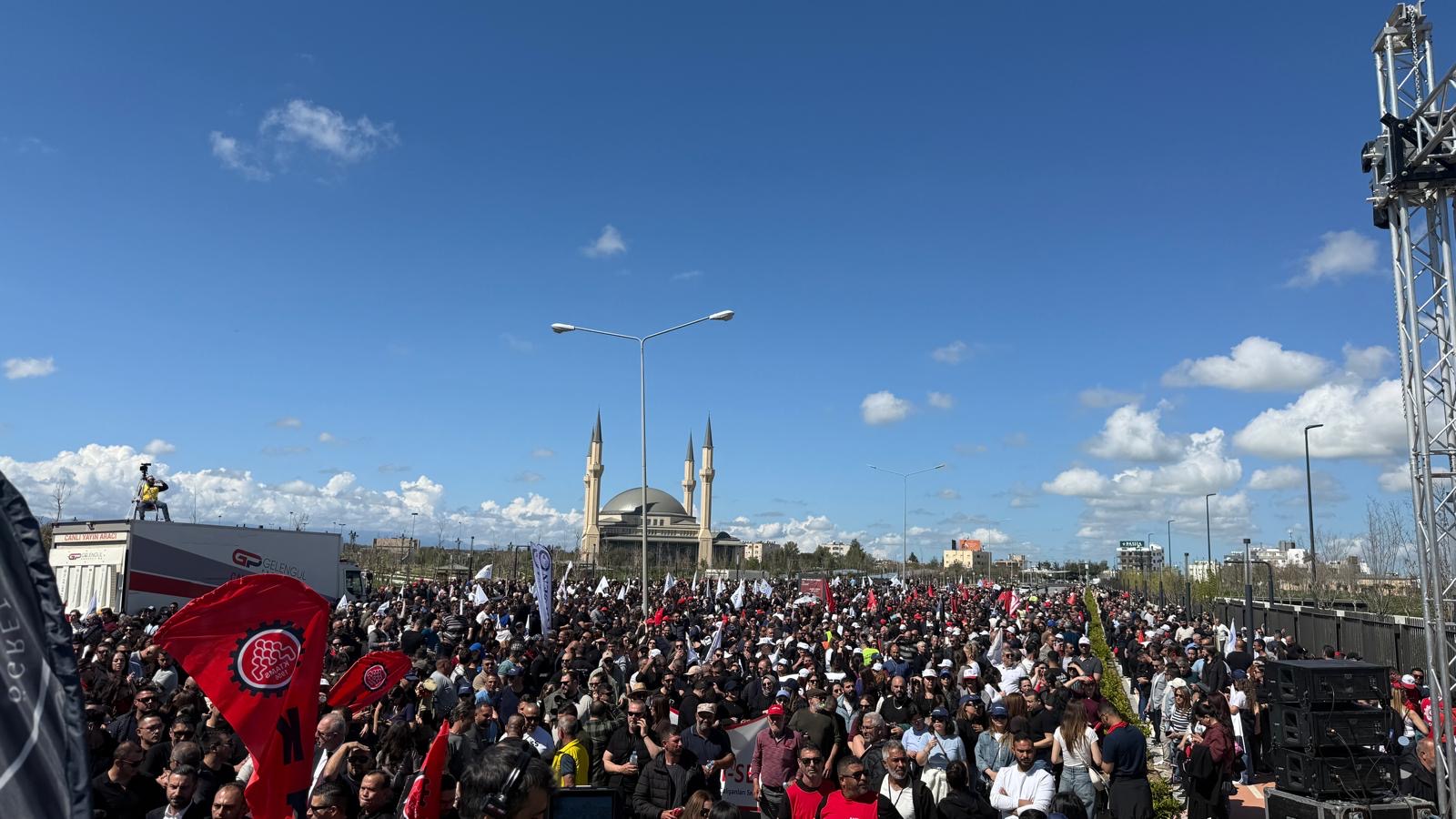
Thousands of people descended on the Turkish Cypriot legislature on Monday, with a general strike of Turkish Cypriot public sector workers also called, to protest the north’s ruling coalition’s decision to cancel all payments of the cost-of-living allowance until next year at the earliest.
Demonstrators marched on the legislature from three directions, converging on the building, which is located in the northern sector of Ayios Dhometios, from the east, north, and west.
They initially congregated on the dual carriageway which is located to the building’s south, with a stage having been set up for trade union leaders to make speeches.
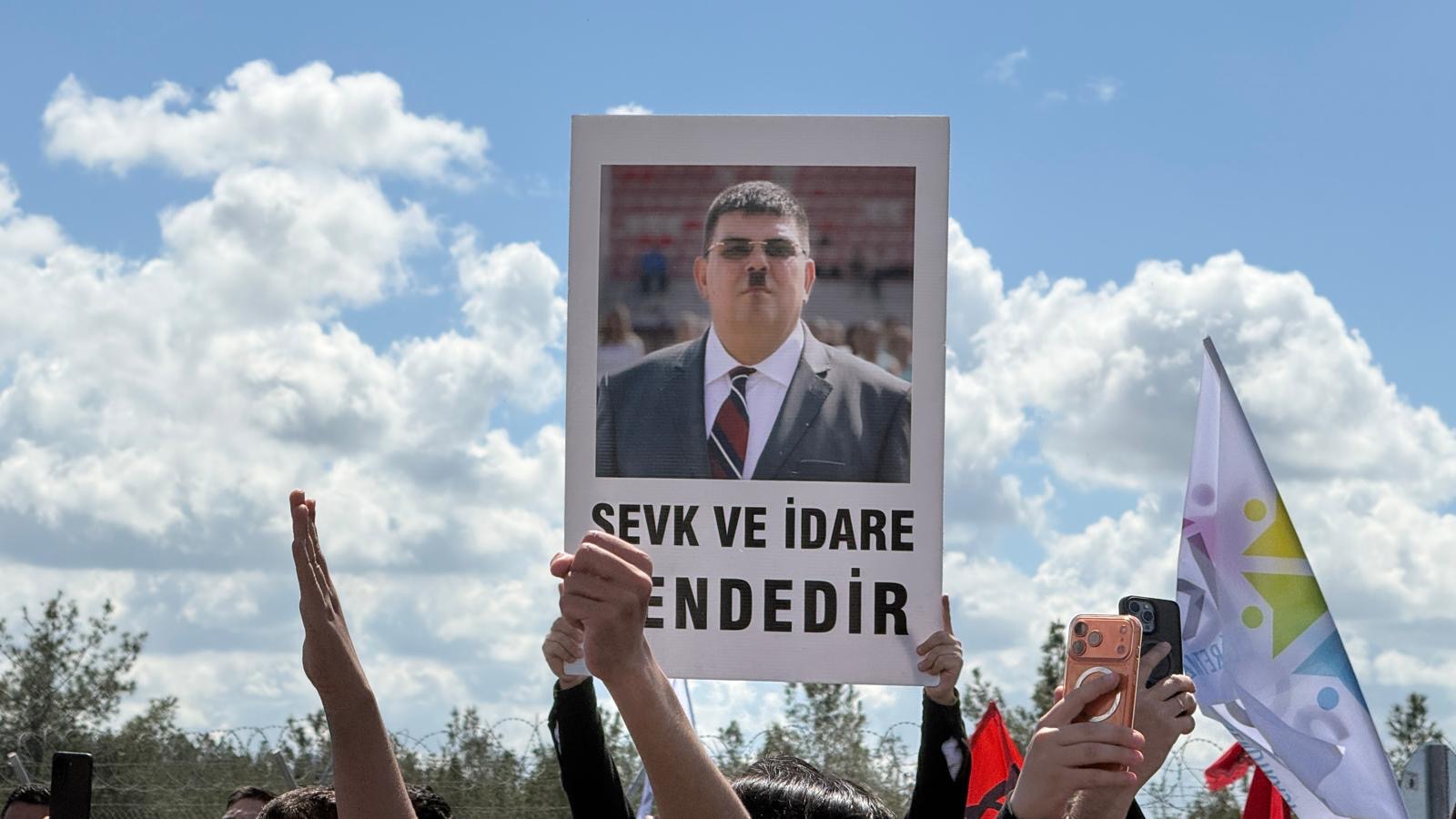
Some demonstrators brought with them placards, with one reading; “Do not be afraid, Unal, you cannot run away from the people”, aimed at ‘prime minister’ Unal Ustel, and another depicting ‘finance minister’ Ozdemir Berova as Adolf Hitler.
After listening to a few speeches given the by trade union leaders, the demonstrators moved to the complex’s main entrance, which is located on the eastern side.
Once there, they powered through a riot fence and came face-to-face with riot police, with whom they engaged in a tussle, before pushing them back as far as the building’s security gate.
This episode saw tensions boil over, with water bottles thrown from the crowd at the police, and the police then throwing them back, while errant hands and riot shields did draw blood on both sides in a limited number of cases.
At this point, the matter turned into a game of chess, with a number of demonstrators taking to the complex’s southern perimeter road, stretching the line of riot police thinner.
The crowds on the perimeter road and at the security gate then took it in turns to attempt to break the police’s line, and at 1pm, three hours after the protest had begun, they succeeded, and thousands of people streamed into the complex, reaching the legislature’s front door.
In and round this period, a number of demonstrators were taken ill, with the mass of people in confined spaces both at the security gate and on the perimeter road in combination with the spring sun and a lack of shade sending temperatures on the ground soaring.
Among those taken ill was Cyprus Turkish trade unions’ federation (Hur-Is) leader Ahmet Serdaroglu, though he later returned to the scene after having been seen by doctors.
Meanwhile, ‘MPs’ from opposition party the CTP had joined the protest, having appearing on the dual carriageway early in the morning and then once again joining demonstrators later in the day.
CTP leader Sila Usar Incirli was unequivocal in her statements to reporters outside the legislature building, saying, “this government is finished”.
“They should immediately withdraw this law and say we are going to have an election. At this point, the only thing they can do is tell us when the election is,” she said, before criticising the ruling coalition for “putting the police in a difficult situation” in dealing with the protests.
She added that “there is no way out of this other than the ballot box”.
Monday’s protest and strike come a week after Turkish Cypriots had first demonstrated against the cut to the cost-of-living allowance, with the ruling coalition a week ago having attempted to pass the plans through the legislature.
However, after failing to do so by the early hours of last Tuesday morning, they appeared to be open for talks with the trade unions, who then cancelled their planned strike and demonstrations for that day.
With last Tuesday’s strike having been cancelled, the coalition then issued a decree with the force of law stipulating the exact cut they had failed to pass through the legislature hours earlier.
At the time, ‘labour minister’ Oguzhan Hasipoglu had insisted the move was necessary, so as to ensure that the new rules would be in force before the end of March.
The unions were less than convinced, however, and took the matter to court last Thursday, claiming that the decree runs contrary to the ‘TRNC’s’ constitution.
Article 112 of the ‘TRNC’s’ constitution does allow the Turkish Cypriot authorities to issue decrees on economic matters “in cases of urgency”.
As such, it is expected that the coalition and the unions will argue in court whether the matter of cutting the cost-of-living allowance was sufficiently urgent that it could not have waited until the next session of the legislature, which would, under normal circumstances, have been last Tuesday.
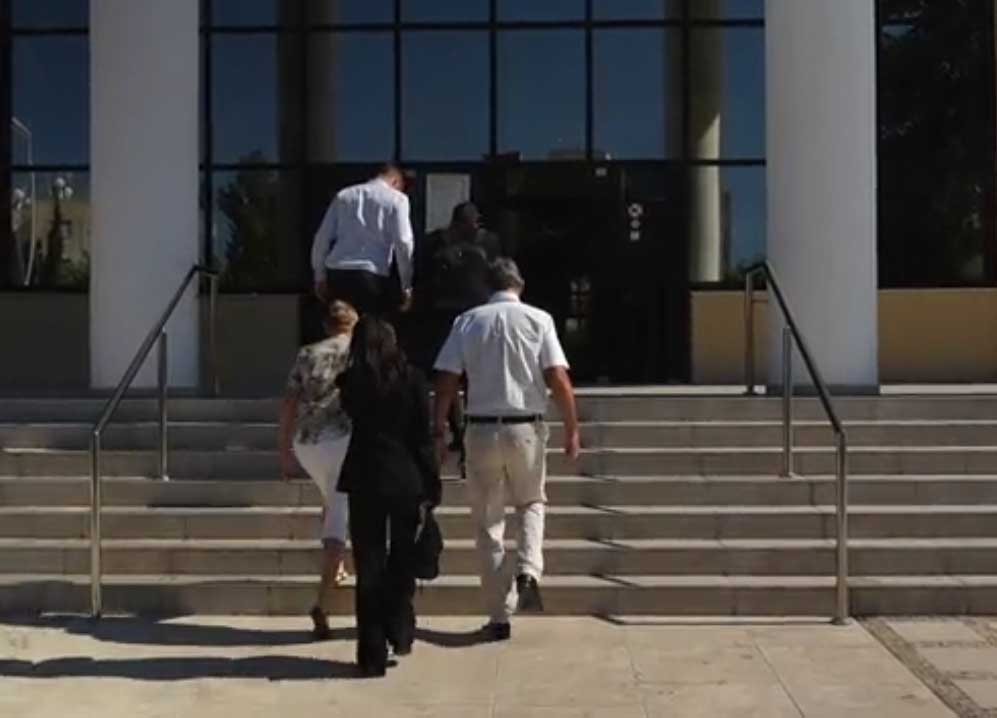
The case’s first hearing was held on Monday morning while the protest was ongoing, and was adjourned until Thursday so as to allow the coalition’s lawyers to present their case.


Click here to change your cookie preferences