
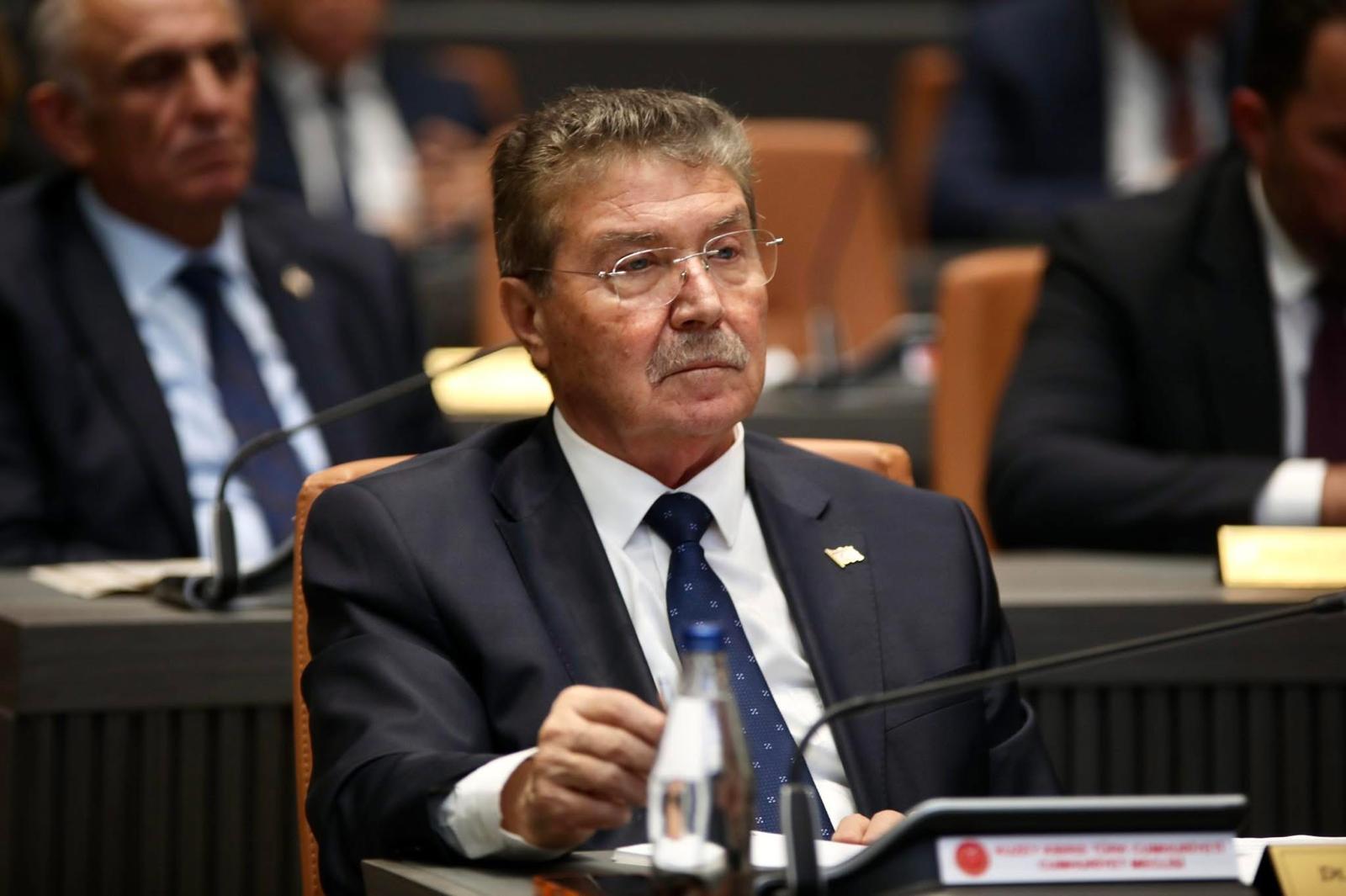
The north’s ‘prime minister’ Unal Ustel on Tuesday evening expressed fury at Turkish Cypriot leader Tufan Erhurman, who had himself lambasted Ustel’s ruling coalition’s decision to bypass the Turkish Cypriot legislature and halt payments of the cost-of-living allowance without allowing elected representatives to vote on the matter.
“I have followed with regret the unfortunate statements made by President Tufan Erhurman on Facebook, a social media platform, regarding the decree enacted by our government,” he said, adding that Erhurman’s statements were “incompatible with the seriousness of the state and constitutional norms”.
He said that “state administration is not driven by day-to-day political concerns or populist rhetoric, but by seriousness, minimum respect between institutions, and, above all, the rule of law”.
“It is unacceptable for the highest office, which should represent the unity of the state and of society, to attempt to create a perception of a ‘crisis of confidence’ by sending messages to the public via social media without exhausting institutional channels of dialogue or utilising formal legal appeal mechanisms,” he said.
To this end, he said that “Erhurman’s preference for Facebook over official state channels unfortunately demonstrates that he has not yet overcome the political reflexes of a party leader and has not fully internalised the weight of the neutral and inclusive office of the presidency”.
He then took umbrage at the fact that Erhurman had described the decree which halted payments of the cost-of-living allowance as a move which “shattered trust” and said that his coalition “bears a heavy and historic responsibility in the face of global economic challenges which have profoundly affected our country”.
On this matter, he said that as ‘prime minister’, he is empowered by the ‘TRNC’s’ constitution to issue such decrees, and that that power exists “precisely to prevent interruptions in the functioning of the state in such urgent, essential, and public interest-related situations, in the face of delays and deadlocks in parliamentary proceedings”.
These comments reflect those made by his ‘labour minister’ Oguzhan Hasipoglu, who had earlier in the day been keen to draw attention to the fact that Tuesday is the last day of the month, and that salaries had to be paid, one way or another.
“This is not an action which was carried out ‘behind the backs of the state’s institutional infrastructure, but rather, this is a government which does not shy away from responsibility and transparently takes on the burden for the best interests of the country,” Ustel said.
This, too, was a reference to Erhurman’s earlier statement, and he added to this that the decree was “issued by our government within the framework of the will of the parliament and the powers granted by the constitution”, and was as such “entirely legal and in accordance with our constitution”.
He then challenged Erhurman to take the coalition to court over the matter, saying, “if the president believes that this decree is unconstitutional, he should not create unwarranted public outrage and anxiety by sitting behind a keyboard”, but instead refer the matter to the judiciary.
“Respecting the principle of separation of powers, judicial processes, and the institutional functioning of the state, rather than creating inter-institutional conflict, is the primary duty of the office bearing the title of ‘head of state’,” he said.
Erhurman had said earlier that the decree “shatters the very thing we need most in terms of constitutional order, relations within the state structure, and most importantly in crisis management, trust”.
He also pointed out that in his role, he is “obliged to ensure respect for the constitution and the uninterrupted and orderly conduct of public affairs”, and as such, said that it is “impossible” for him to remain “indifferent”, given that the issuing of the decree took place “behind the backs of all segments of society, including the institutional structure of the state”.
As such, he said, “this will not be ignored”.
The decree stipulates that Turkish Cypriot public sector workers will not be paid the cost-of-living allowance until next year at the earliest after this month, and was issued hours after the coalition had failed to pass a bill to do the same through the Turkish Cypriot legislature.




Click here to change your cookie preferences