
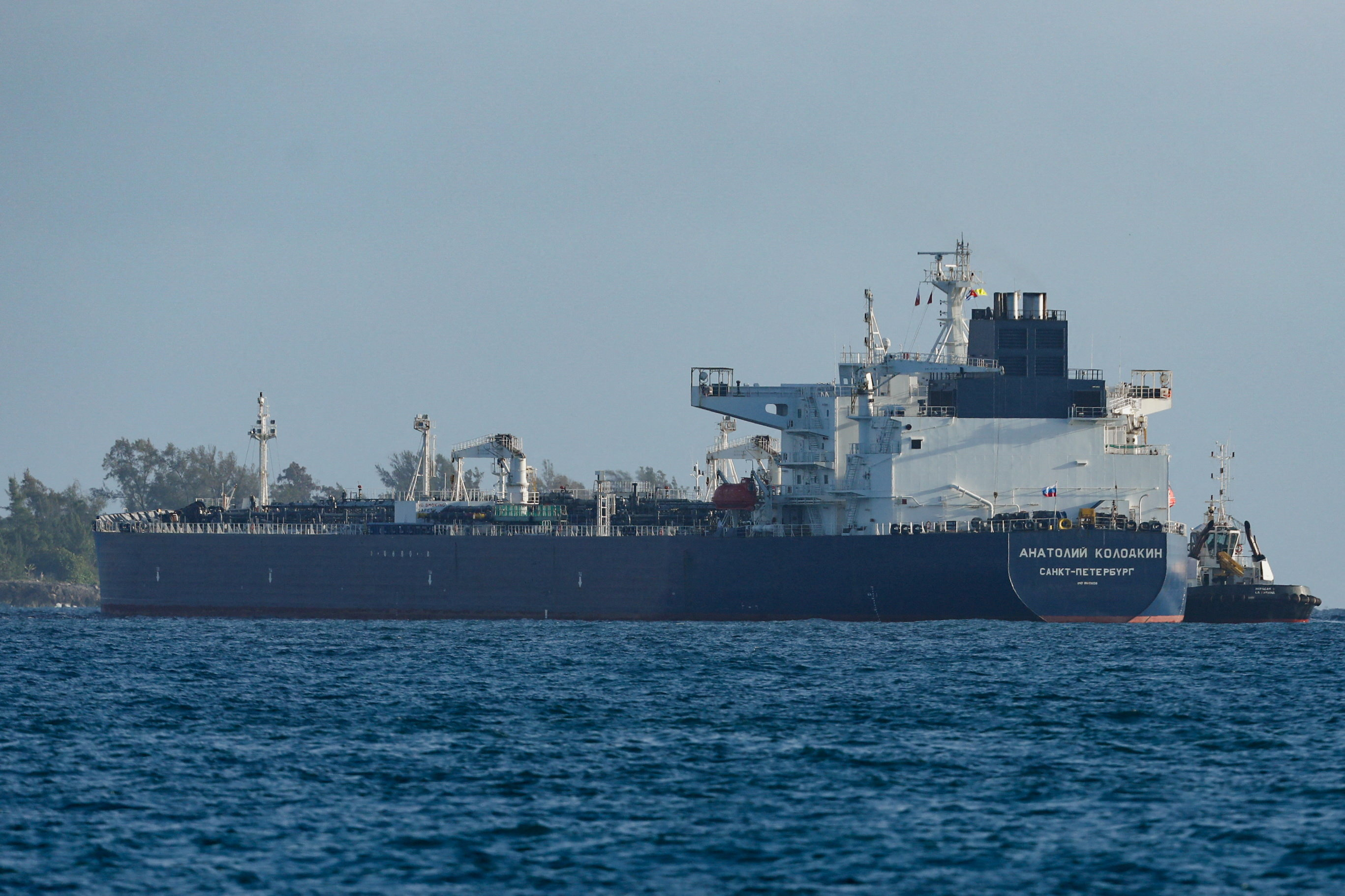
The Kremlin said on Tuesday there were a huge number of requests for Russian energy from a range of different places amid a grave global energy crisis that was shaking the foundations of the oil and gas markets.
The U.S. and Israeli war against Iran has triggered an energy crisis for the global economy by trapping a large volume of oil in the Gulf due to Iran’s closure of the Strait of Hormuz to most vessels.
The crisis comes just as European consumers were trying to end their reliance on Russian energy to punish Moscow for the invasion of Ukraine, and as Russia itself looks set to cut its output in the wake of Ukrainian attacks on its oil infrastructure.
President Vladimir Putin has suggested switching supplies more swiftly away from European customers if they do not want Russian energy.
“Now that the world has confidently embarked on the path of a rather serious economic and energy crisis, which is growing day by day, the market and market conditions in the field of energy and energy resources have completely changed,” Kremlin spokesman Dmitry Peskov told reporters.
“There are a huge number of requests for the purchase of our energy resources from alternative sources. We are negotiating, we are negotiating in such a way that this situation best suits our interests.”
Russia, the world’s second largest oil exporter after Saudi Arabia, produces around 10 million barrels of crude per day and about half are exported. Russia holds the world’s largest natural gas reserves.
Still, Russia may in fact have to reduce oil production because Ukrainian strikes on ports, pipelines and refineries have cut export capability by 1 million barrels per day, or a fifth of total capacity, Reuters reported last week.
SELLING EASTWARDS
Asian countries including Vietnam, Thailand, the Philippines, Indonesia and Sri Lanka are lining up to buy Russian oil as the Iran war blocks supplies, raising the possibility that demand may exceed supply, Reuters reported last month.
In a sign of the demand, prices for Russia’s Urals blend traded at a premium of $5.00 to $8.00 per barrel to Brent last month. Usually, Urals trades at a discount.
Beyond oil, Russia is also moving LNG eastwards.
Yamal LNG, controlled by Russia’s largest liquefied natural gas producer Novatek NVTK.MM, has sent its first cargo to China since last November, LSEG data showed on Tuesday, weeks before the gradual enforcement of Europe’s ban on Russian LNG imports.
The project, located on the Yamal peninsula in the Arctic, has previously mostly exported its frozen gas to Europe.
Putin said last month that Russia could divert gas away from Europe, given the European Union’s decision to ban imports of Russian pipeline gas by late 2027 and new short-term Russian LNG contracts from April 25 this year.





Click here to change your cookie preferences