
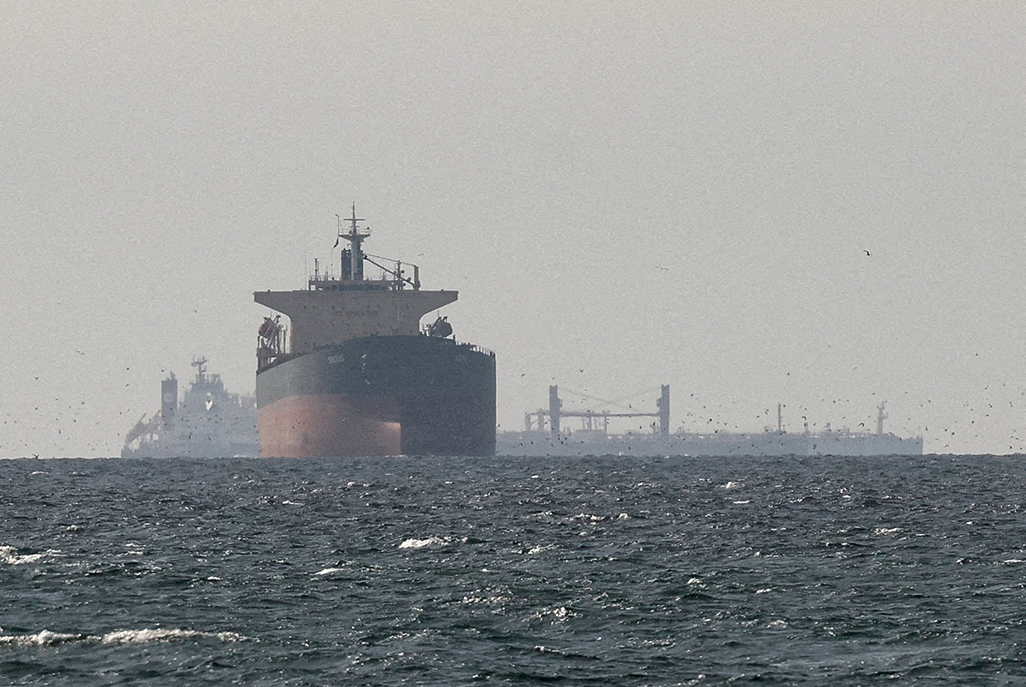
Iran warned that the Strait of Hormuz remains closed and that any ship attempting passage without permission from the Revolutionary Guards will be “targeted and destroyed,” escalating tensions just days after a conditional US-Iran ceasefire was agreed.
Shipping brokerage SSY confirmed the message, transmitted on maritime alert channels, signalling a critical threat to global shipping through the Persian Gulf and Sea of Oman.
The closure followed Israeli air strikes on Hezbollah positions in Lebanon.
Iranian media cited unnamed sources saying Tehran “will punish” Israel for violating the ceasefire, while the Tasnim news agency reported that Iran could withdraw from the agreement if attacks on Lebanon continue.
Tehran also informed mediators that it will not attend Friday’s talks in Pakistan unless a ceasefire is enforced across all fronts.
US President Donald Trump stressed that Israel and Lebanon were not included in the ceasefire, describing ongoing strikes in Lebanon as “a separate conflict.”
Trump condemned circulating reports of agreements, claiming they came from “people that have nothing to do with the US-Iran negotiations” and calling them “fraudsters, charlatans, and WORSE.”
He insisted that only one set of points is under discussion in closed negotiations.
US Defence Secretary Pete Hegseth said there was “a real chance at peace,” though his statements were marked by contradictions.
The White House pushed back on reports that a 10-point Iranian proposal circulating in media outlets represented the working framework, insisting the public accounts are not accurate.
A senior official said: “We’re not going to negotiate in public out of respect for the process.”
Israeli strikes in Lebanon continued, killing at least 89 people and injuring more than 700, including 12 medics, according to health authorities.
The Israel Defence Forces described the attacks as its “biggest strike” since launching its ground operation last month. Residents reported widespread panic.
A BBC Arabic correspondent in Beirut described explosions near his home as “terrifying,” hearing “screams of my family members, including my mother, sisters, and niece,” prompting him to rush to their safety.
Raymond Essayan, living several miles from Beirut, said: “There is widespread panic in the country, hospitals are full of the wounded, and everyone in Beirut is in a state of fear.”
The closure of the Strait of Hormuz threatens the flow of oil and gas through one of the world’s most strategically critical shipping lanes.
Claire Grierson, head of tanker research at SSY, confirmed that vessel crews had received the warning from the Revolutionary Guards: “Transiting the Strait of Hormuz remains closed and you need permission from the IRGC before sailing through the strait. Any vessel trying to travel into the sea will be targeted and destroyed.”
Pakistan’s Prime Minister Shehbaz Sharif, a mediator in US-Iran negotiations, warned that violations of the ceasefire “undermine the spirit of the peace process.”
The two-week truce had been intended to provide a window for diplomacy and de-escalation, but attacks across Lebanon, the UAE, Kuwait, and a refinery in southern Iran have already challenged its effectiveness.
UK Prime Minister Keir Starmer, visiting Saudi Arabia, urged all sides to make the truce “permanent” and to respect the ceasefire, including in Lebanon.
Starmer emphasised that his government was in “close contact with the US and other partners” while maintaining that military action must always have a lawful basis and a thought-through plan.





Click here to change your cookie preferences