
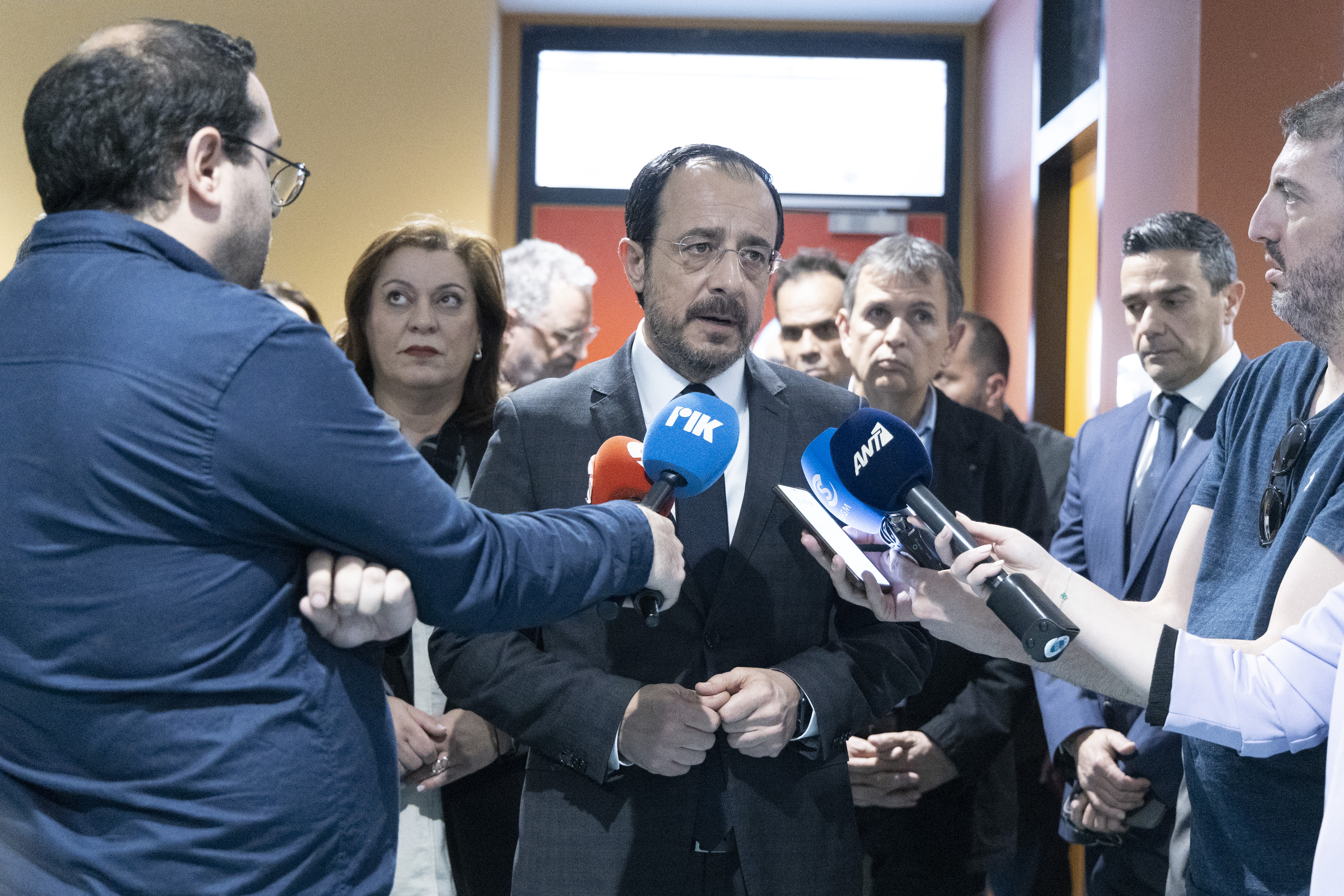
Strict adherence to European Union protocols is essential in addressing the threat of foot and mouth disease, President Nikos Christodoulides on Monday while signalling his willingness to meet livestock farmers amid rising tensions.
“I have no problem meeting with anyone who asks to meet me,” he said, referring to livestock farmers, noting that without cooperation from all sides “we will not have positive results.”
Responding to a remark that farmers are warning of escalating measures while claiming the presidential palace is refusing to meet them, the president told journalists that “from the very first moment I have been in contact with all farmers. The European Commissioner himself came.
“We are in contact with the European Union. What I want to impress on everyone is that if the necessary cooperation had existed up to today, the results would clearly have been better. As long as there is no cooperation from those concerned, unfortunately we will not have positive results.”
He emphasised that the priority is to follow the protocols applied across EU member states to manage the disease risk.
“What truly matters is that first and foremost we comply with and follow the protocols applied in all countries, so that we can address this major threat, and we are here to deal with all the challenges and problems that arise,” he said.
The president also pointed to a specific government plan to address income losses in the sector, including compensation measures.
“For us, the livestock sector is very important and we are here to support all farmers, whom we approach as partners, despite developments that were not positive, such as those we saw recently during the informal European Council,” he added.
On Thursday demonstrations reached a peak when farmers effectively closed the Rizoelia roundabout, calling for the president to intervene after an unsuccessful meeting with the agriculture minister.
Veterinary services have issued eight fines totalling €45,000 for illegal animal movements linked to the spread of the disease, and six further cases have been referred to police.
The outbreak has already affected more than 100 livestock units across Cyprus, with tens of thousands of animals culled as part of containment efforts.





Click here to change your cookie preferences